


非殖民化、依附性与发展
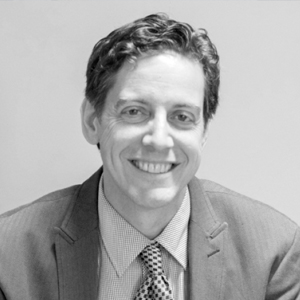
课程教师
DAN SLATER
教师简介
Dan Slater is the James Orin Murfin Professor of political science at the University of Michigan, where he has taught since 2017. From 2005-2017 he was a professor of political science and affiliated professor of sociology at the University of Chicago. He received his Ph.D. in political science from Emory University in 2005. He specializes in the politics and history of states and regimes, with a focus on Southeast Asia. His books have been published with Princeton University Press and Cambridge University Press, and his published articles can be found in journals such as the American Journal of Political Science, American Journal of Sociology, Annual Review of Political Science, Comparative Politics, Comparative Political Studies, International Organization, and World Politics. He has recently served as a consultant and nonresidential fellow at policy organizations such as the Organization for Economic Cooperation and Development (OECD) and the Carnegie Endowment for International Peace.
课程内容
This course examines processes of economic development in contexts marked by long histories of colonialism and international dependency. We will collectively tackle these difficult analytical problems conceptually, theoretically, and empirically. What does economic development mean, and how is it generated, forestalled, embraced, or resisted? How did the world come to have the radically uneven patterns of development that it has? What role have factors such as colonialism, racism, and neoliberal market reforms played in shaping patterns of development and underdevelopment across the globe and across history? How can poorer countries escape legacies of dependency and colonization and achieve more independent and prosperous ways of life for their citizens?
课程安排
Lecture | Topic (2.5 teaching hours) |
1 | What is Development? |
2 | The Belated Rise of Europe |
3 | Dependency in the World-System |
4 | Resistance to Development in Southeast Asia |
5 | Reversals of Development in Africa |
6 | Decolonization as a Political Problem |
7 | Overcoming the Violence of Colonialism |
8 | The Dark Economic Underbelly of Colonialism |
9 | Revolutions Against Colonialism |
10 | Labor Organization in the Global Economy |
Reading list
Amartya Sen, Development as Freedom
Robert Marks, The Origins of the Modern World
Immanuel Wallerstein, The Modern World-System Vol. I
James Scott, The Art of Not Being Governed
James Ferguson, Expectations of Modernity
Adom Getachew, Worldmaking after Empire
Frantz Fanon, The Wretched of the Earth
Diana Kim, Empires of Vice
Jeff Goodwin, No Other Way Out
Marissa Brookes, The New Politics of Transnational Labor
Student Assessment
Students will be expected to read the course assignments and engage in class discussions. To facilitate this, every student will share a question that arose in their mind from the readings with the entire class before we meet. The final assignment will be a short (~10 page) essay showing engagement with course material on a topic of the student’s choosing, in consultation with the instructor.

