


重塑中国城市未来:全球语境下的城市转型
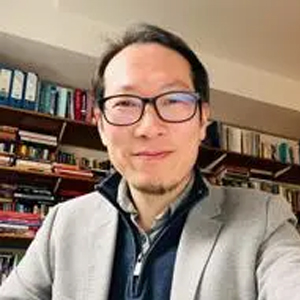
课程教师
Hyun Bang Shin
教师简介
Professor Hyun Bang Shin is Professor of Geography and Urban Studies and Head of the Department of Geography and Environment at the London School of Economics and Political Science. Elected Fellow of the Academy of Social Sciences in the UK, Professor Shin has contributed to reshaping the understanding of contemporary urban transformation, emphasising the socio-political dynamics of cities in rapidly developing regions, particular in East and Southeast Asia. From 2018 to 2023, he served as Director of the Saw Swee Hock Southeast Asia Centre at LSE, fostering interdisciplinary research on Asia. He was the Editor of the International Journal of Urban and Regional Research from 2021 to 2024 and a trustee of the Urban Studies Foundation from 2016 to 2023, contributing to global urban scholarship and mentorship. His books include Planetary Gentrification (2016, Pluto Press), Neoliberal Urbanism, Contested Cities and Housing in Asia (2019, Palgrave Macmillan), Exporting Urban Korea? Reconsidering the Korean Urban Development Experience (2021, Routledge), and The Political Economy of Megaprojects (2025, Routledge) among others.
课程内容
China’s urban transformation has been one of the fastest and most consequential remaking of space in modern history. “The urban” in China is not only where growth happens; it is how the state governs, how capital accumulates, and how social inequality and environmental risk are produced and managed. This course examines China’s urbanisation, urban development, and urban policy across national, regional, and global scales, discussing how they are planned, financed, built, and governed. Throughout the course, students engage debates on uneven development (city-regions, hierarchies, and spatial inequality), state entrepreneurialism and policy experimentation, land and local finance as infrastructures of accumulation, and the politics of mega-projects and urban risk. The course then turns to the contemporary shift from expansion to urban renewal and regeneration, and to the urban geographies of globalising China, including outward investment and policy mobility. It also broadens the perspective beyond major cities to examine rural futures and urban–rural integration and concludes by assessing the governance of sustainability and “smart” urbanism. The course is relational and comparative, tracing how China’s experiences can be interpreted against those of the global North and Asia and using China to rethink what “the urban” means today.
课程安排
Lecture | Topic (2.5 teaching hours) |
1 | Remaking China through the Urban: Introduction |
2 | Uneven Urban Futures: City-Regions, Hierarchies, and Spatial Inequality |
3 | Governing Urban Futures: Planning, Experimentation, and State Entrepreneurialism |
4 | Land as Capital: Finance, Local States, and Urban Accumulation |
5 | Building the Future: Mega-Projects, Spectacle, and Urban Risks |
6 | Remaking the City: Urban Renewal, Gentrification and Everyday Politics |
7 | Urban Manifestations of Globalising China |
8 | Beyond the Metropolis: Urbanising Rural Futures |
9 | Governing Sustainability and “Smart” Urban Futures |
10 | Rethinking the Urban through China: Conclusions and Comparative Insights |
Reading list
Harvey, D. (2016) The Ways of the World. Profile Books
Hsing, Y-t. (2010) The Great Urban Transformation: Politics of Land and Property in China. Oxford University Press
Lees, L., Shin, H.B. and López-Morales, E. (2016) Planetary Gentrification. Polity Press
Shin, H.B. and Gimm, D-W. (eds.) (2025) The Political Economy of Megaprojects in Asia: State Power, Land Control, Financial Flows, and Dispossession. Routledge
Shin, H.B., Zhao, Y. and Koh, S.Y. (2022) The Urbanising Dynamics of Global China: Speculation, articulation, and translation in global capitalism - an introduction. Urban Geography 43(10): 1457-1468
Wu, F. and Zhang, F. (2025) Governing Urban Development in China: Critical Urban Studies. Routledge
Student Assessment
In-class participation, case study (group) presentation, and final essay that analyses a concrete urban project

