News


On July 10, 2026, Professor Yijia Jing was invited to attend the official side event of the United Nations High-Level Political Forum on Sustainable Development (HLPF), organized under the auspices of the United Nations Economic and Social Council. He delivered remarks during a roundtable discussion titled “Scaling Sustainable Cities and Communities through Multi-Stakeholder Partnerships.” The 2026 HLPF was held at United Nations Headquarters in New York from July 7 to July 15 under the theme “Advancing transformative, equitable, innovative and collaborative actions to implement the 2030 Agenda for Sustainable Development and the Sustainable Development Goals, and build a sustainable future shared by all.” Approved as an official HLPF side event, the session was organized by the Shanghai Songding Social Innovation and Development Center under the theme “Empowering Sustainable Urban and Community Development through Global Multi-Stakeholder Partnerships.” The event focused on SDG 6 (Clean Water and Sanitation), SDG 9 (Industry, Innovation and Infrastructure), SDG 11 (Sustainable Cities and Communities), and SDG 17 (Partnerships for the Goals). Representatives from governments, international organizations, academia, and the private sector gathered to explore cross-sector collaboration models, share scalable and replicable practices, and develop policy recommendations for advancing sustainable development.
In his remarks, Professor Jing emphasized that digital transformation has become a major driver of urban governance modernization worldwide. He noted that Chinese cities have undergone rapid development since the reform and opening-up period and, by leveraging their latecomer advantages in digital technologies, have made significant advances in smart city development in recent decades. Taking Shanghai as an example, he highlighted that the city has consistently ranked among the world’s top 10 cities in the United Nations’ Local Online Service Index (LOSI), which is published biennially. Shanghai’s “Government Online-Offline Shanghai” reform was recognized as a best-practice case in a 2020 United Nations report and has become a representative example of using digital governance to improve urban public services. Professor Jing stressed that building smart cities requires not only effective technological applications, strong leadership, continuous innovation, risk management, and sound fiscal capacity, but also, more importantly, a people-centered approach. Cities should be understood as living systems in which technology adapts to and empowers urban life rather than replacing or dominating it.
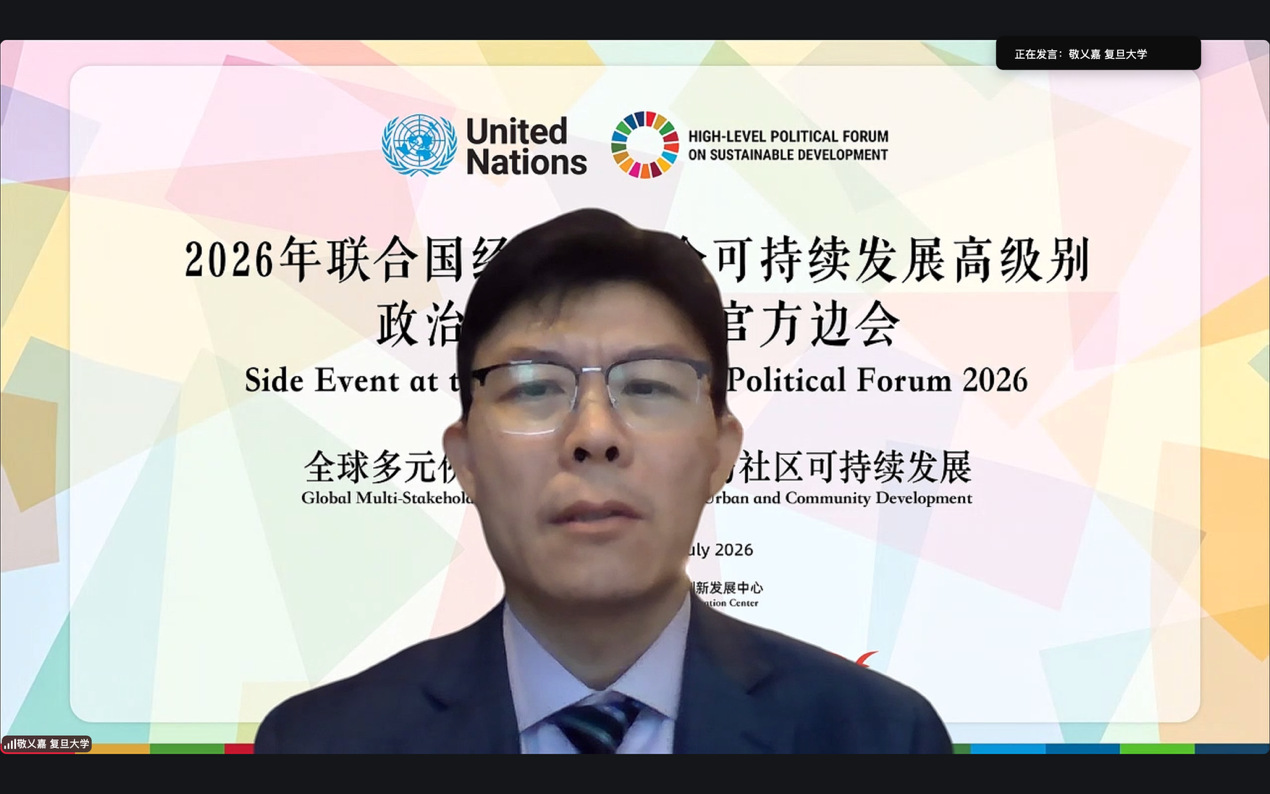
Using Shanghai’s reform as an example, Professor Jing further explained how technological innovation and institutional reform can be integrated through a people-centered approach to governance. The reform integrates multiple service channels, including online government portals, the mobile application “Suishenban,” mini-programs, the 12345 public service hotline, and offline administrative service centers and community service windows, thereby ensuring broad accessibility for diverse groups and service needs. At the same time, the reform introduced the “one matter” service model, which organizes integrated public services around citizens’ needs, continuously expands service coverage, and incorporates citizen feedback through satisfaction evaluation mechanisms. Professor Jing noted that the reform has broken down administrative silos among government departments and promoted a shift from department-centered to citizen-centered governance, as well as from government-centered administration to people-centered public services. By enabling “more data to travel and fewer people to make trips,” the reform has significantly improved the efficiency and satisfaction of public services and has become a hallmark of Shanghai’s efforts to improve its business environment.
In conclusion, Professor Jing highlighted that inclusiveness in smart city development is increasingly reflected in digital inclusion. He emphasized the importance of combining people-centered governance with technological empowerment to promote co-construction, co-governance, and shared benefits in urban development. Future reforms should respond to diverse and evolving citizen needs while bringing governments, markets, civil society, citizens, and international actors into a broader framework of collaborative governance and value creation. Professor Jing encouraged cities around the world to learn from one another and cited Singapore’s pedestrian infrastructure as an example of human-centered urban planning. He expressed confidence that, through joint efforts among international organizations, governments, research institutions, enterprises, and civil society, sustainable urban development can move from aspiration to reality.
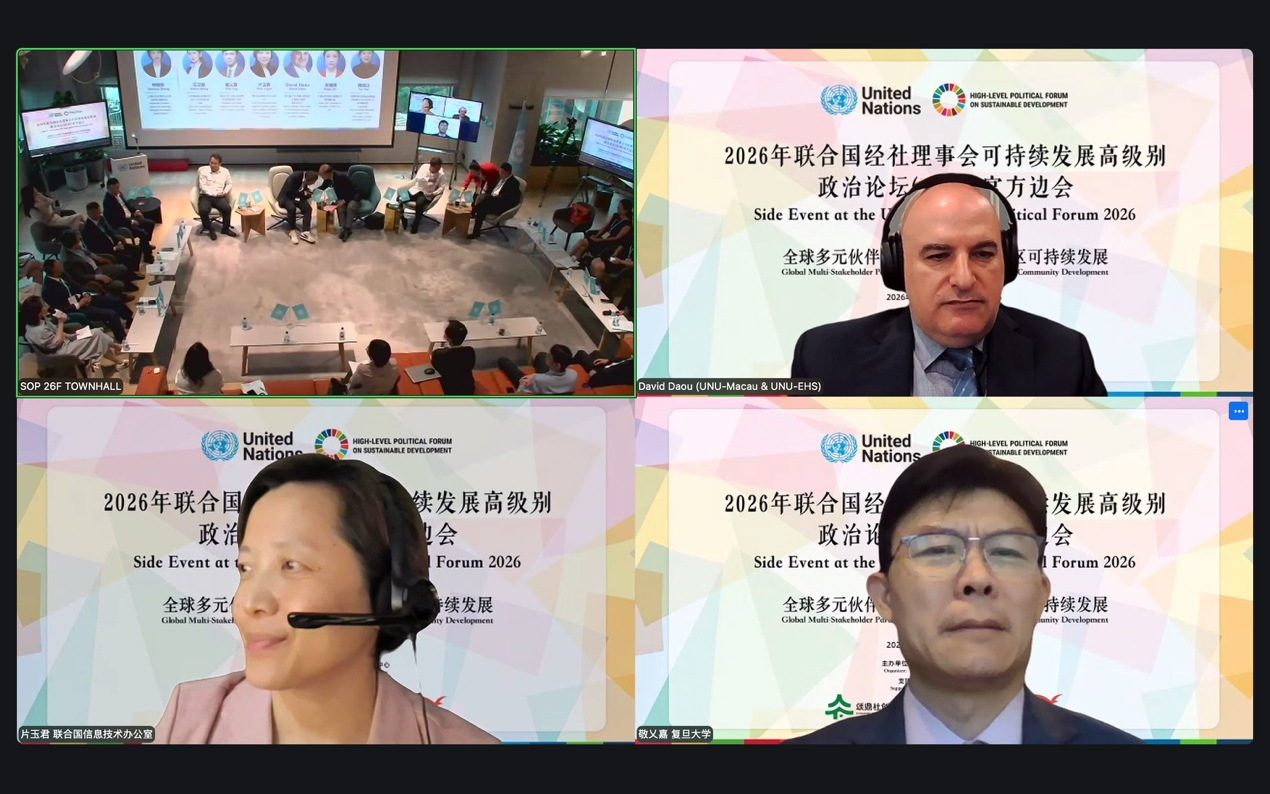
The side event also featured in-depth discussions on topics including collaborative approaches to building resilient urban infrastructure and strategies for scaling sustainable city initiatives through multi-stakeholder partnerships. Participants included Yujun Pian, Director of the United Nations Information Technology Office; David Daou, Research Fellow at the United Nations University Institute in Macau; and representatives from universities and enterprises.
The outcomes of the meeting will be developed into policy recommendations and submitted to relevant United Nations mechanisms.