Events


On June 24, 2026, the Fudan Institute for Global Public Policy (IGPP) organized the 12th lecture of the Young Scholars Symposium. The symposium featured keynote presentations on the theme of Latecomer Cities in the Global Innovation Landscape: Intellectual Property, Global Governance, and Catch-up in the Developing World by Associate Professor Deyun Yin. The symposium was chaired by Associate Professor Meijun Liu, with Associate Dean Haoqi Qian serving as discussant.
Associate Professor Yin is an Associate Professor at the School of Economics and Management, Harbin Institute of Technology, Shenzhen, and a Research Fellow and Consultant at the World Intellectual Property Organization (WIPO), a specialized agency of the United Nations. She received her Ph.D. from the University of Tokyo and previously worked at Japan’s Research Institute of Economy, Trade and Industry (RIETI). Her research focuses on science, technology and innovation policy, the geography of innovation, and intellectual property big data analytics. Her research has been published in journals including Nature Climate Change and China Economic Review.
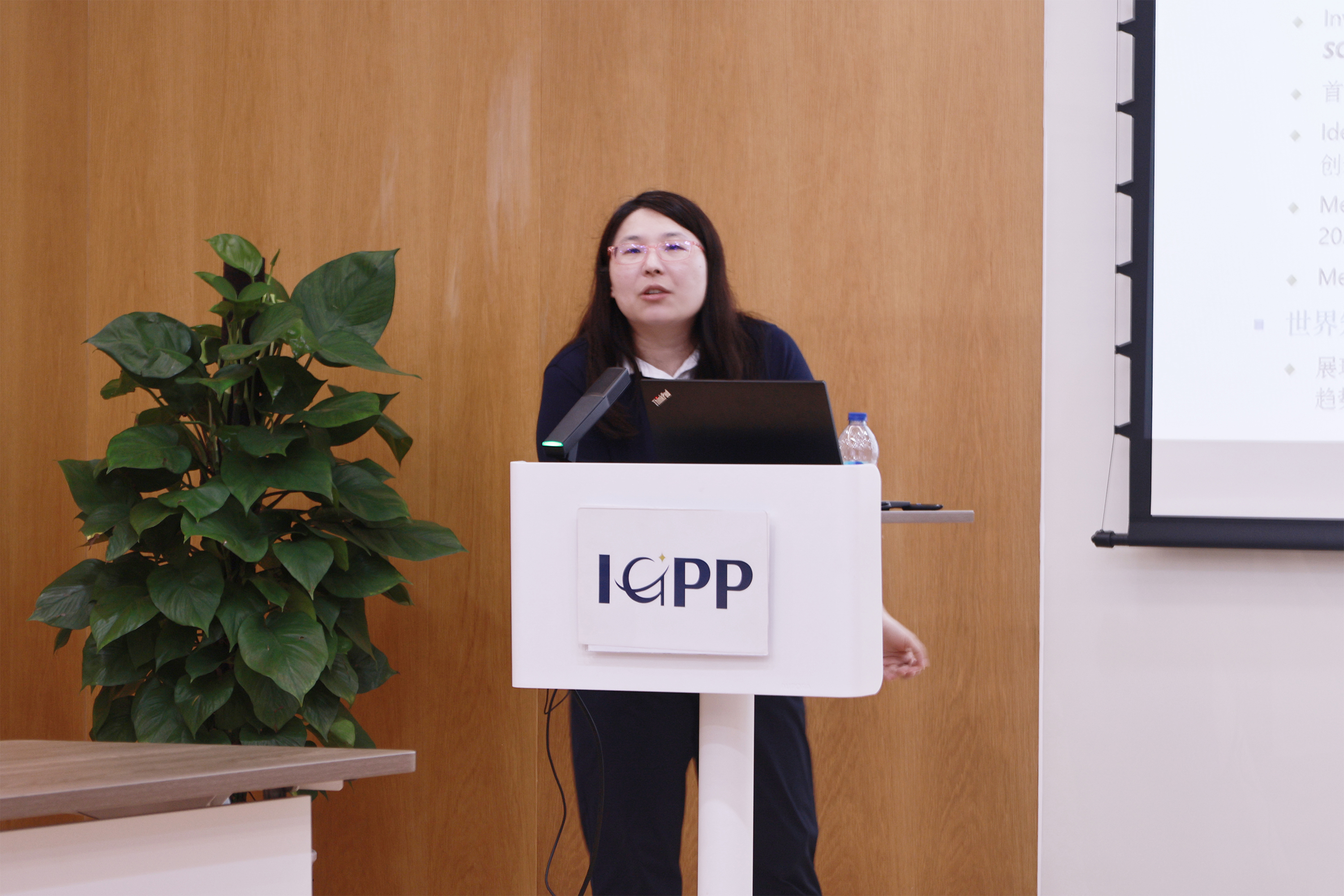
In her lecture, Associate Professor Yin explored how latecomer cities can rise within an increasingly concentrated, networked, and globally governed innovation landscape. Drawing on extensive geocoded datasets of patents, scientific publications, and trademarks, she combined artificial intelligence and network analysis to examine this question from multiple perspectives.
At the global level, she mapped the evolution of the geography of innovation over the past half-century by identifying major global innovation clusters, tracing the development of leading scientific and technological hub cities, and analyzing the structural characteristics of global innovation networks. She also examined the growing shift toward sustainability-oriented innovation, highlighting global research trends related to Sustainable Development Goal (SDG)-related technologies, climate adaptation, and methane reduction technologies, while discussing their implications for innovation and climate policy.
At the city level, Associate Professor Yin presented findings from WIPO research on Shenzhen, illustrating how a latecomer city successfully transitioned from technological imitation to frontier innovation within global innovation networks. Drawing on this experience, she identified key governance lessons for technological catch-up in developing countries, emphasizing the importance of what she termed a “patient government”—one that provides sustained and stable support for scientific research and innovation over the long term.
During the discussion session, Associate Dean Qian noted that, at a time when quantitative methods have become increasingly widespread, understanding the underlying realities of innovation remains essential. He observed that Associate Professor Yin’s presentation provided valuable empirical evidence from both global and local perspectives. In response, Associate Professor Yin explained two widely used approaches to measuring technological complexity: one based on the recombination probabilities of International Patent Classification (IPC) codes, and another developed by Harvard University’s Growth Lab using complex network analysis. She further illustrated how the highly integrated AI supply chain across the Yangtze River Delta has generated a “corps effect,” strengthening China’s broader intelligent technology ecosystem through cross-regional industrial collaboration.
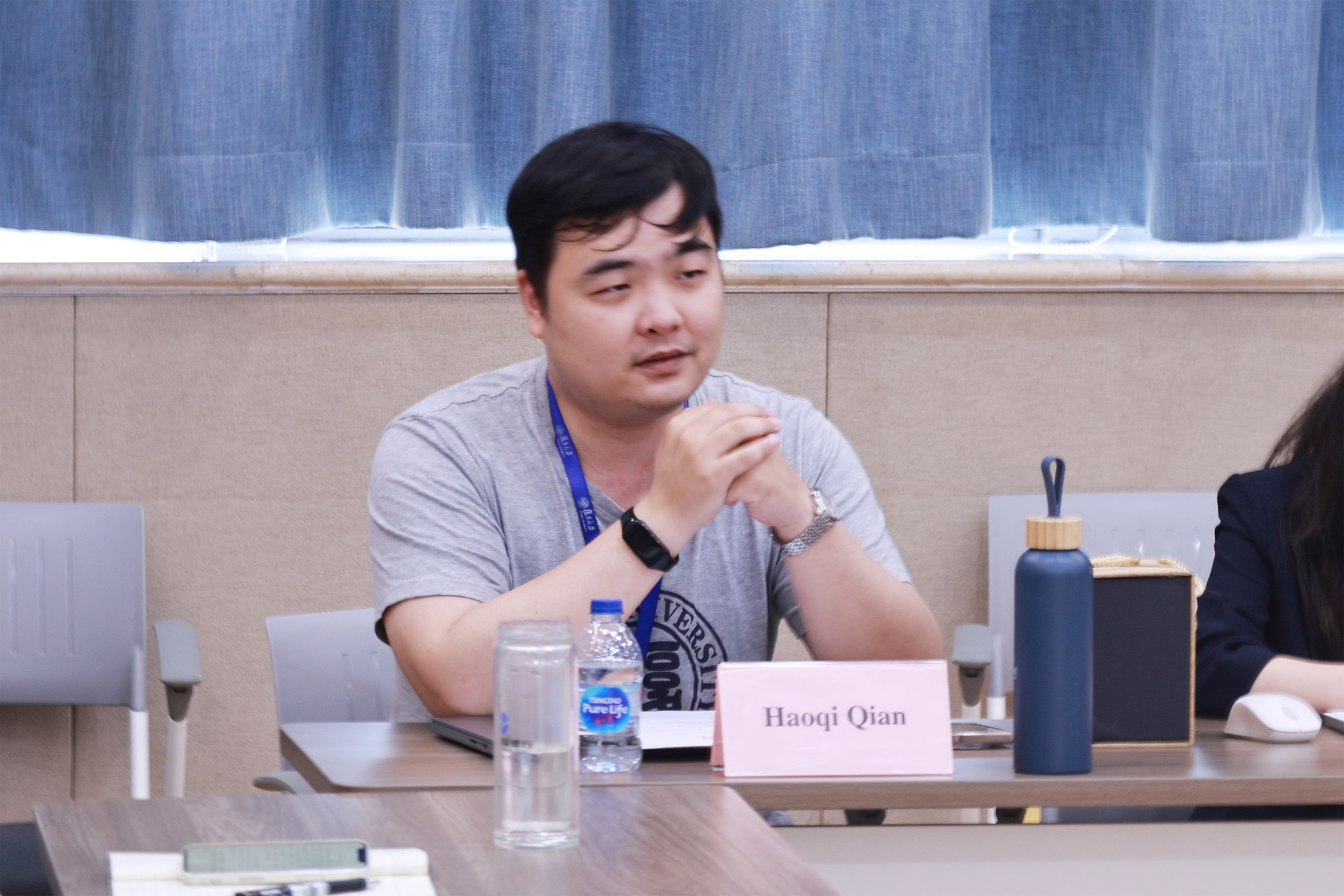
During the Q&A session, participants raised questions about the transmission of industrial policies between central and local governments. Associate Professor Yin noted that the world is experiencing a renewed emphasis on industrial policy and argued that governments should serve as early-stage “angel investors” by supporting foundational and original innovation. Using Hefei as an example, she highlighted how local governments can effectively nurture and support emerging industries.
Through Associate Professor Yin’s insightful presentation and the engaging discussion that followed, participants gained a deeper understanding of the evolving global innovation landscape and the pathways through which latecomer cities can pursue technological catch-up and innovation-driven development.
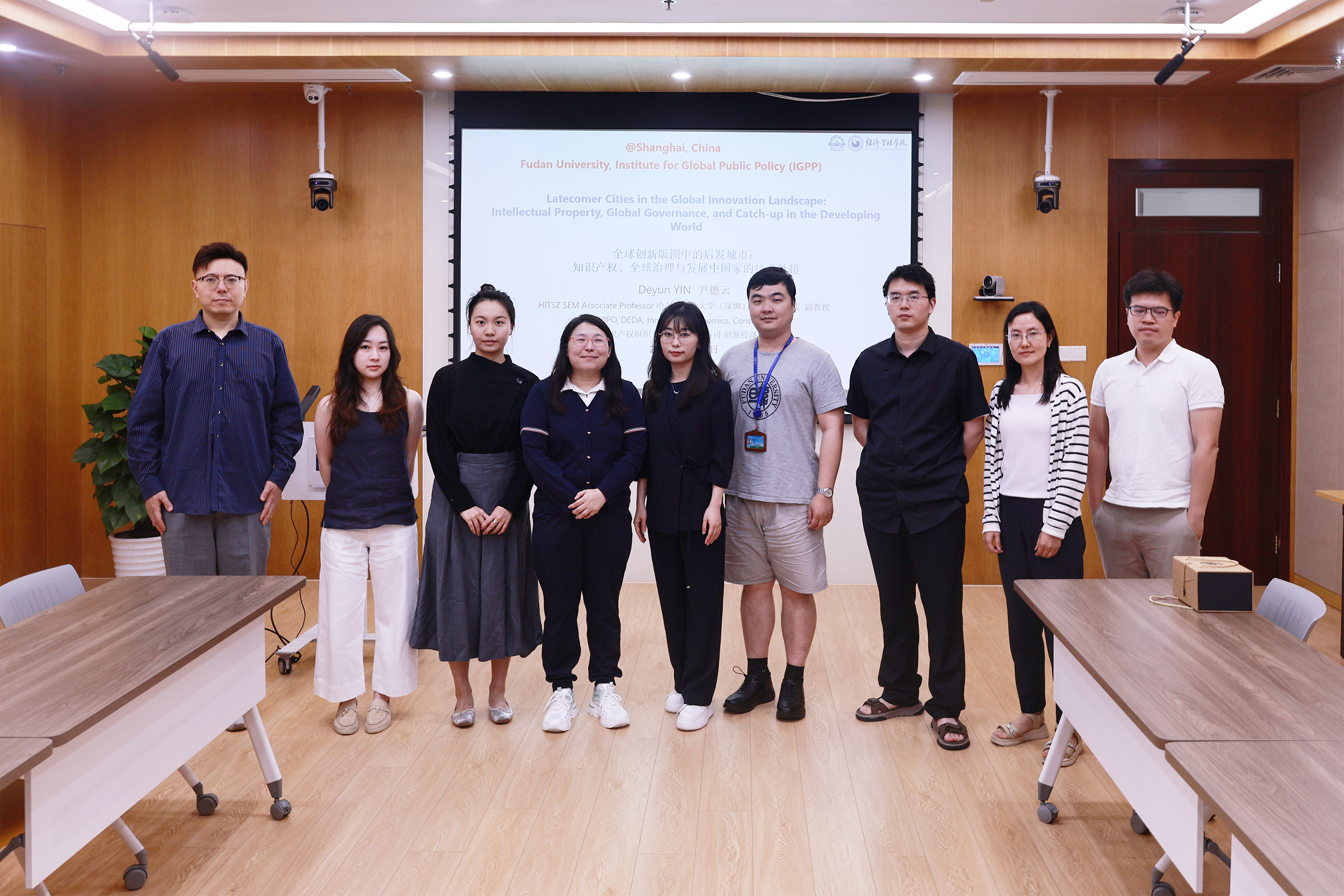
After the lecture, Associate Professor Liu presented a commemorative gift to Associate Professor Yin, and the lecture concluded successfully with a group photo.