CANSPPA


On April 28, 2025, the Fudan Institute for Global Public Policy (IGPP) organized the 21st lecture of the Fudan-Arab Lecture Series. Associate Professor Timothy Hildebrandt from LSE delivered a lecture on the theme of Understanding Non-Engagement in Philanthropic and Voluntaristic Activities in China. Dean Yijia Jing of IGPP, chaired the lecture. Professor Minna van Gerven from University of Helsinki, Finland served as the commenter.
Professor Hildebrandt is Associate Professor and Deputy Head of the Department of Social Policy at LSE. He serves as Co-Editor of The China Quarterly and on the editorial board of Global Public Policy and Governance. His areas of expertise include state-society relations and Chinese politics.
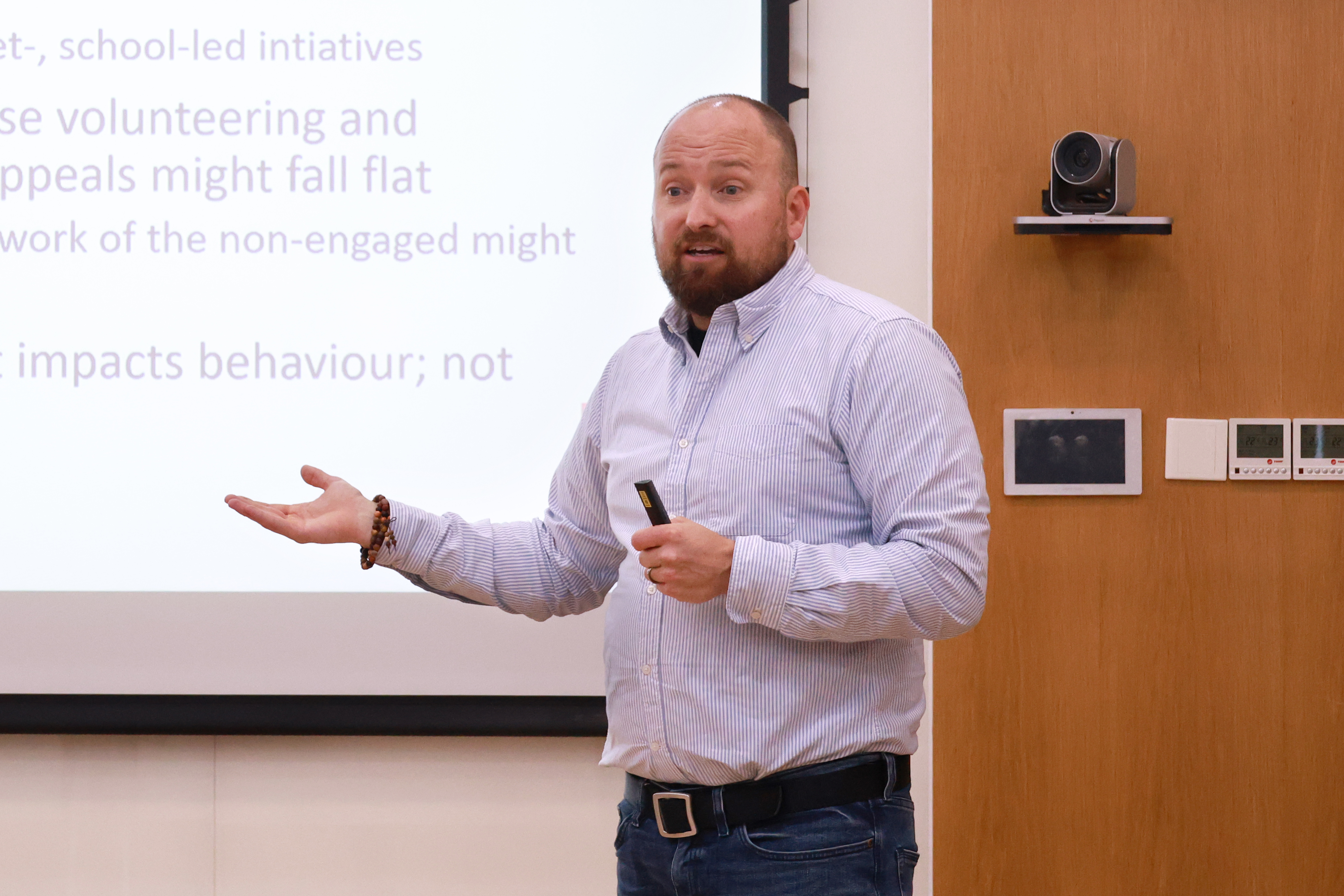
At the beginning of the lecture, Associate Professor Hildebrandt introduced his research by noting that the public has been consistently encouraged to participate in charitable donations and volunteer services as society increasingly values the concept of public welfare. This gradually shapes a public narrative around the “active citizen role.” However, longitudinal survey data show that a portion of the population has yet to engage in donations or volunteer activities. Focusing on this phenomenon, he raised the research question: why do some people choose not to participate despite widespread advocacy? His study seeks to explore the factors underlying this “non-participation” phenomenon.
Subsequently, Associate Professor Hildebrandt presented findings of the study. Drawing on four waves of the Chinese Citizen Participation Survey, the research categorizes citizens’ public welfare behaviors into four types: “good citizens,” “donors,” “volunteers,” and “non-participants.” It examines how individuals’ perceptions of and trust in public institutions, nonprofit organizations, and social networks shape their participation. The results indicate that certain groups exhibit relatively lower levels of engagement in public welfare activities, suggesting that initiatives to promote participation should more closely address the practical needs and motivational mechanisms of different populations. Moreover, individuals with limited understanding of the social significance of public welfare or a lack of positive role models in their environment show markedly lower willingness to participate. Associate Professor Hildebrandt noted that future research will investigate the role of altruism in behavioral decision-making and explore how social role identities influence individual pathways to public welfare participation.
During the discussion and Q&A session, faculty and students engaged in in-depth exchanges on the study’s theoretical framework, data sources, and the drivers and constraints of volunteer participation.
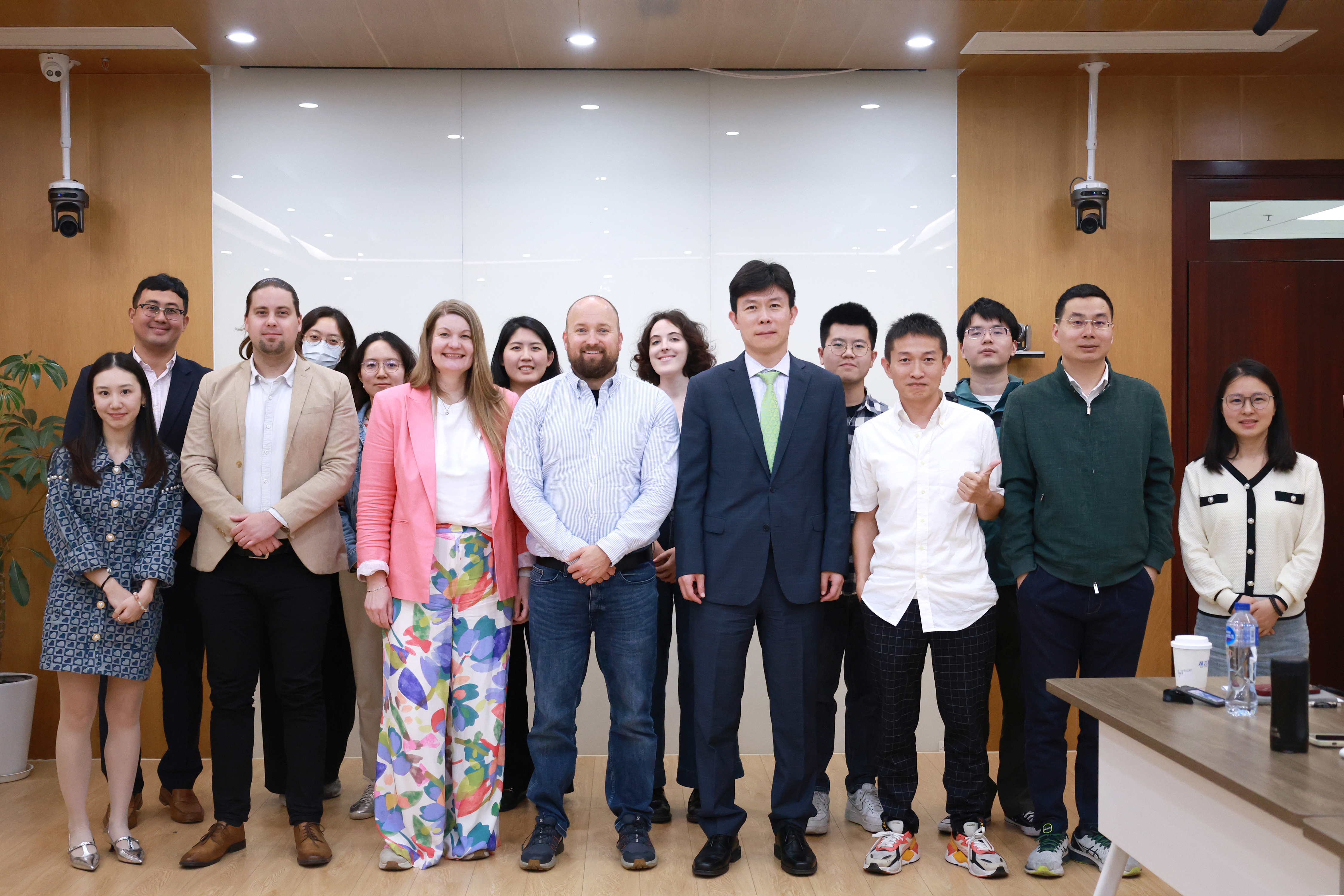
After the lecture, Professor Jing presented a commemorative gift to Associate Professor Hildebrandt. The event concluded with a group photo of the faculty and students.