News


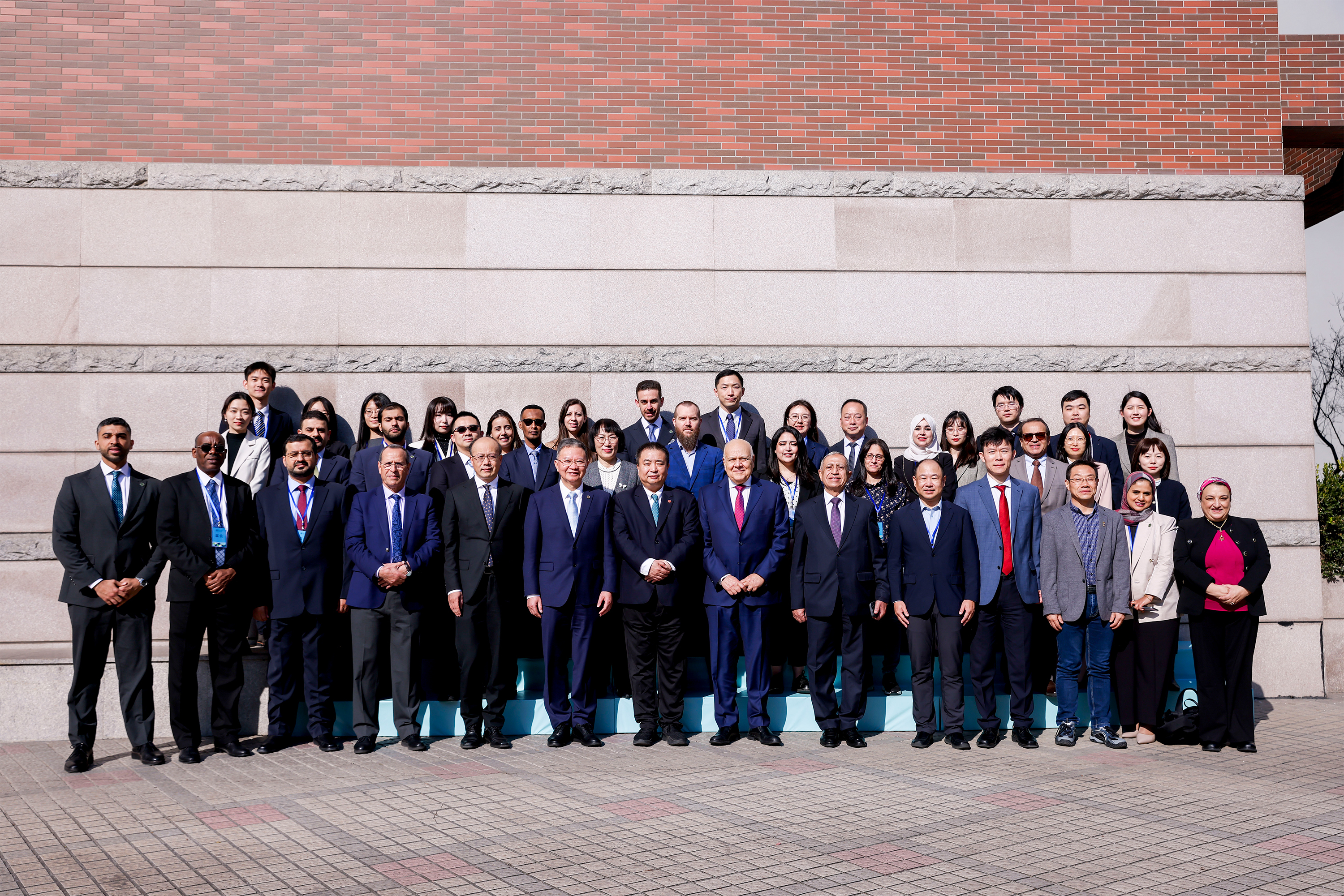
On November 20, 2025, Fudan University hosted the 3rd China–Arab Forum on Global Development and Governance. The forum was guided by the China Association of Higher Education (CAHE) and the Association of Arab Universities (AARU), with special support from the League of Arab States (LAS). The theme of the forum was “China–Arab Partnership Toward a Community with a Shared Future for Mankind.” Notable attendees included Chunhua Yan, Vice President of CAHE, Chinese Director of the China–Arab Consortium of Universities Exchange Mechanism, and Academician of the Chinese Academy of Sciences; Amr Ezat Salama, Secretary-General of AARU; Li Jin, President of Fudan University and Academician of the Chinese Academy of Sciences; and Faraj Ajmi, Director-General of the Department of Education and Research at LAS. Secretary-General Ahmed Aboul Gheit of LAS delivered the keynote speech. Other participants included Walid Salameh, Senior Advisor to AARU; Xiaojie Gao, Deputy Secretary-General of CAHE and Director of the Academic and Exchange Department; Yijia Jing, Dean of the Institute for Global Public Policy (IGPP) at Fudan University; and over 40 representatives from more than 20 Chinese and Arab universities. The forum was co-organized by IGPP, Fudan Office of Global Partnership, and the Center for Advancing Global Collaboration (CAGC). Vice President Zhimin Chen of Fudan University chaired the opening ceremony.
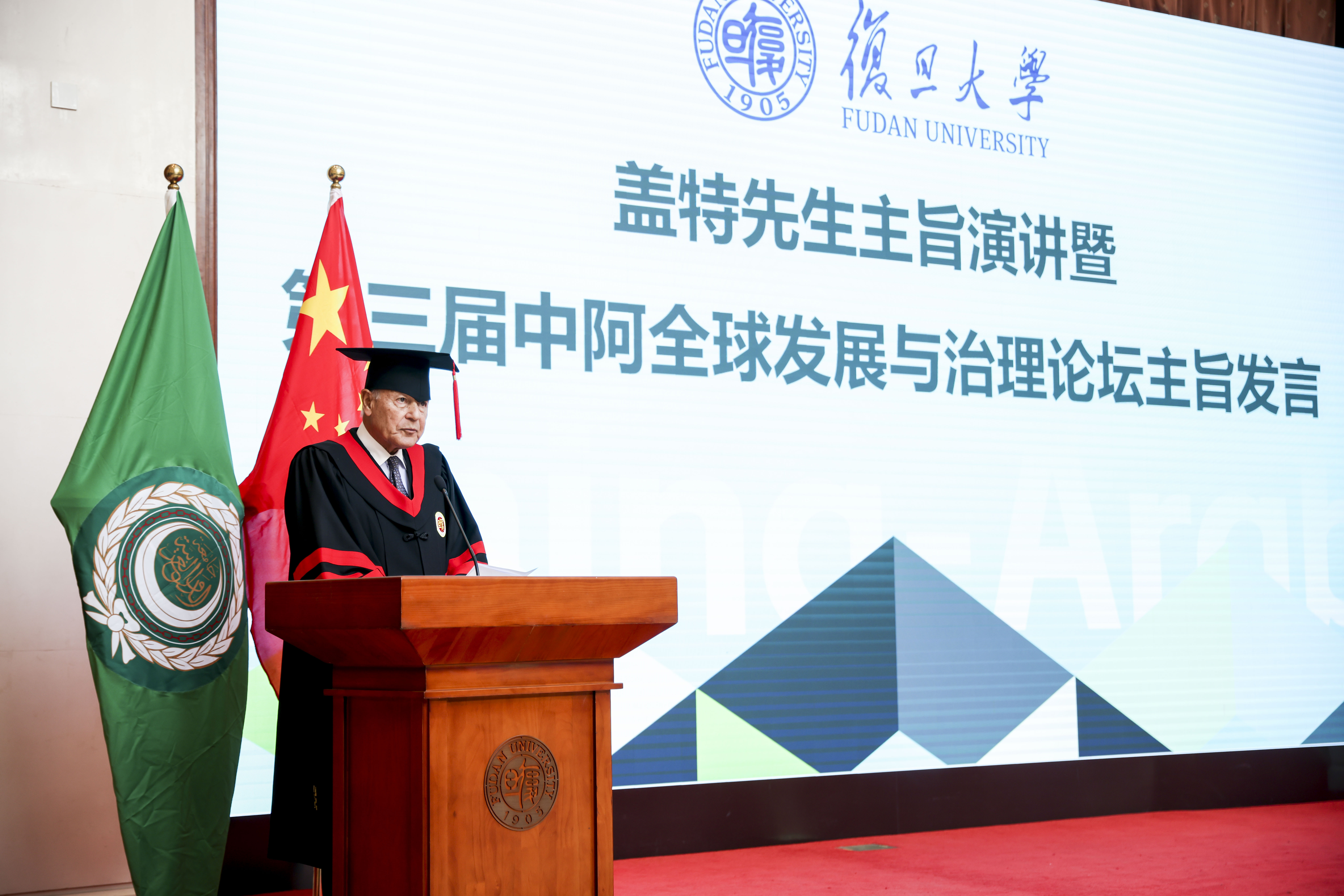
In his keynote address, Secretary-General Gheit underscored Fudan University’s pivotal role in advancing the forum, positioning it as a central platform for China–Arab collaboration in higher education and research. He highlighted that LAS regards education as a cornerstone of national development: primary education cultivates character and essential skills, higher education fosters innovation and critical thinking, and scientific research addresses pressing economic and social challenges. By facilitating knowledge exchange among universities, nations are better equipped to tackle global issues collectively. Over the past two years, LAS and Fudan University have achieved a series of concrete results in higher education and research, exemplifying strong collaboration and effective implementation—a model for international academic partnership.

President Jin highlighted Fudan University’s ongoing efforts to deepen partnerships with Arab universities. As the lead institution of the “China–Arab Universities 10+10 Cooperation Program” in public policy, Fudan has launched the “China–Arab Network of Schools of Public Policy and Administration (CANSPPA)” and established the “Fudan–Arab Research Centre for Global Development and Governance,” steadily strengthening cooperation platforms. Looking ahead, Fudan and the LAS Secretariat plan to jointly establish a Global Leadership Development Centre to further advance China–Arab collaboration in education and governance.
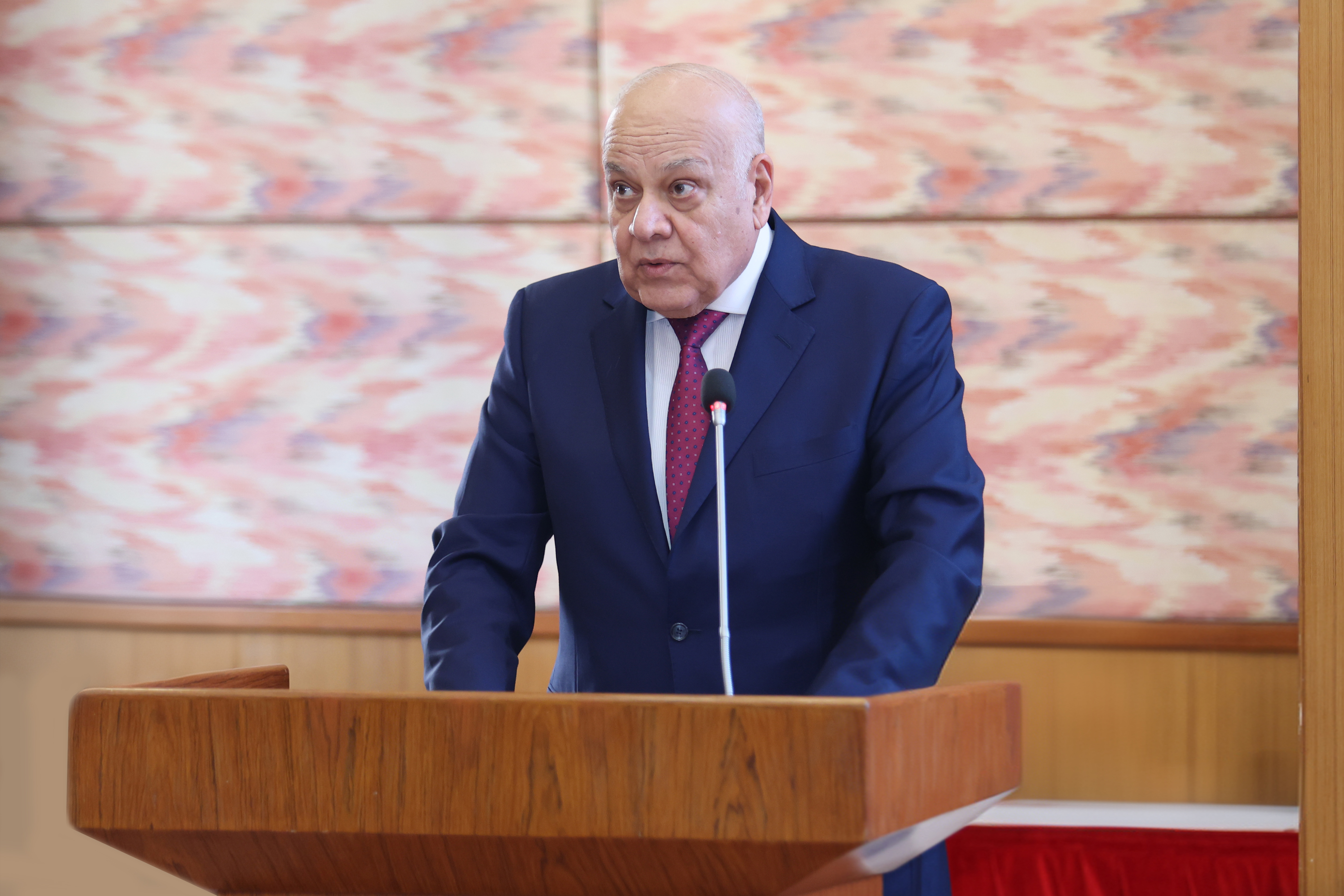
Professor Salama emphasized that the AARU has worked closely with the CAHE, successfully deepening university-level cooperation and creating new platforms and opportunities for scholars and students. He noted that the current period represents the best historical opportunity for China–Arab higher education collaboration. He also expressed his appreciation for Fudan University’s leadership and innovation in implementing the “China–Arab Universities 10+10 Cooperation Plan” and conveyed his best wishes for the full success of the forum.
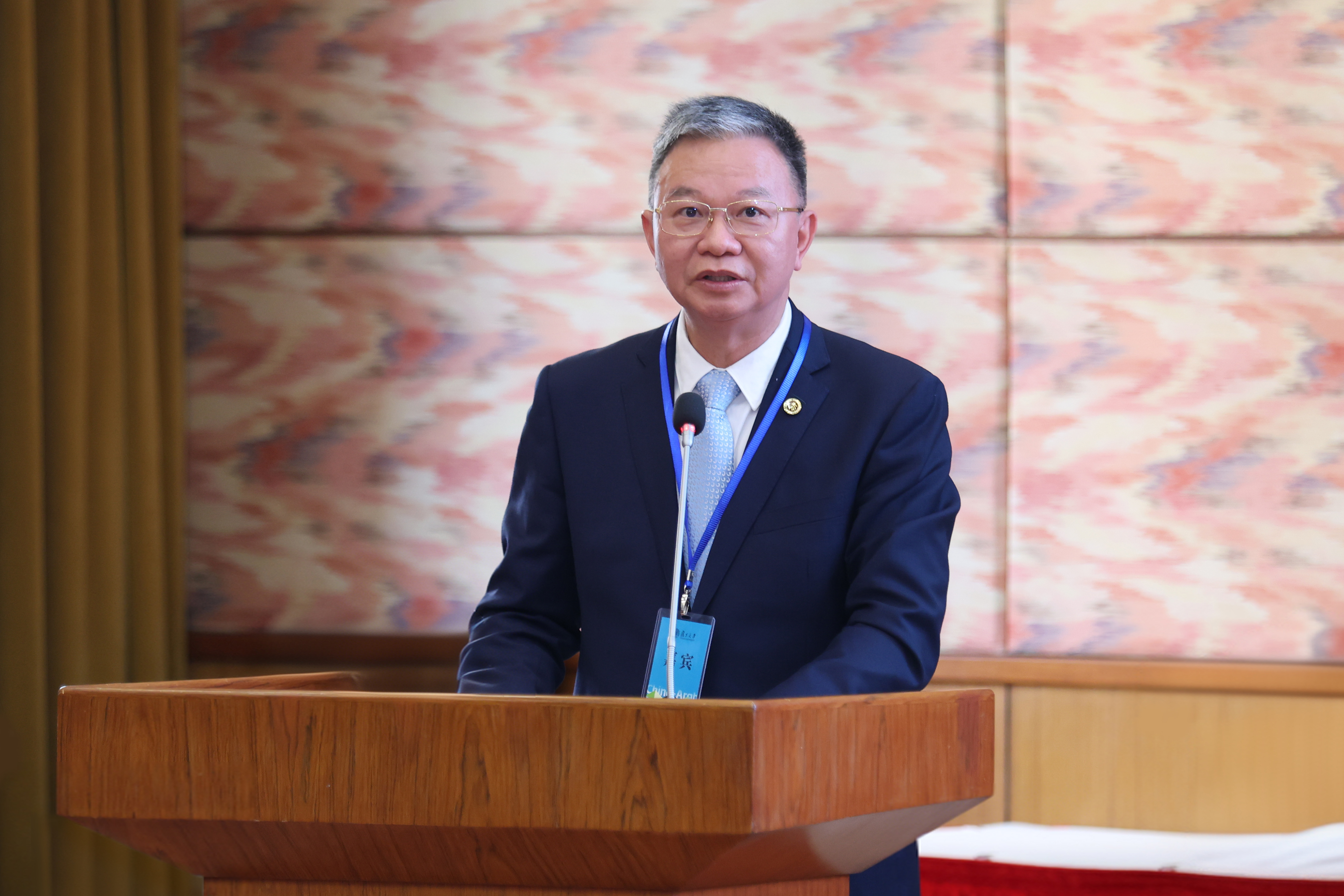
Professor Yan stated that in recent years, universities from China and Arab countries have engaged in two-way collaboration, conducting clustered cooperation across major fields including public policy. He noted that CAHE is committed to continuing close collaboration with Arab partners to jointly build an “equal and orderly” cluster-based cooperation network, pursue “problem-oriented” joint research, and promote the “open and shared” transformation of research outcomes.
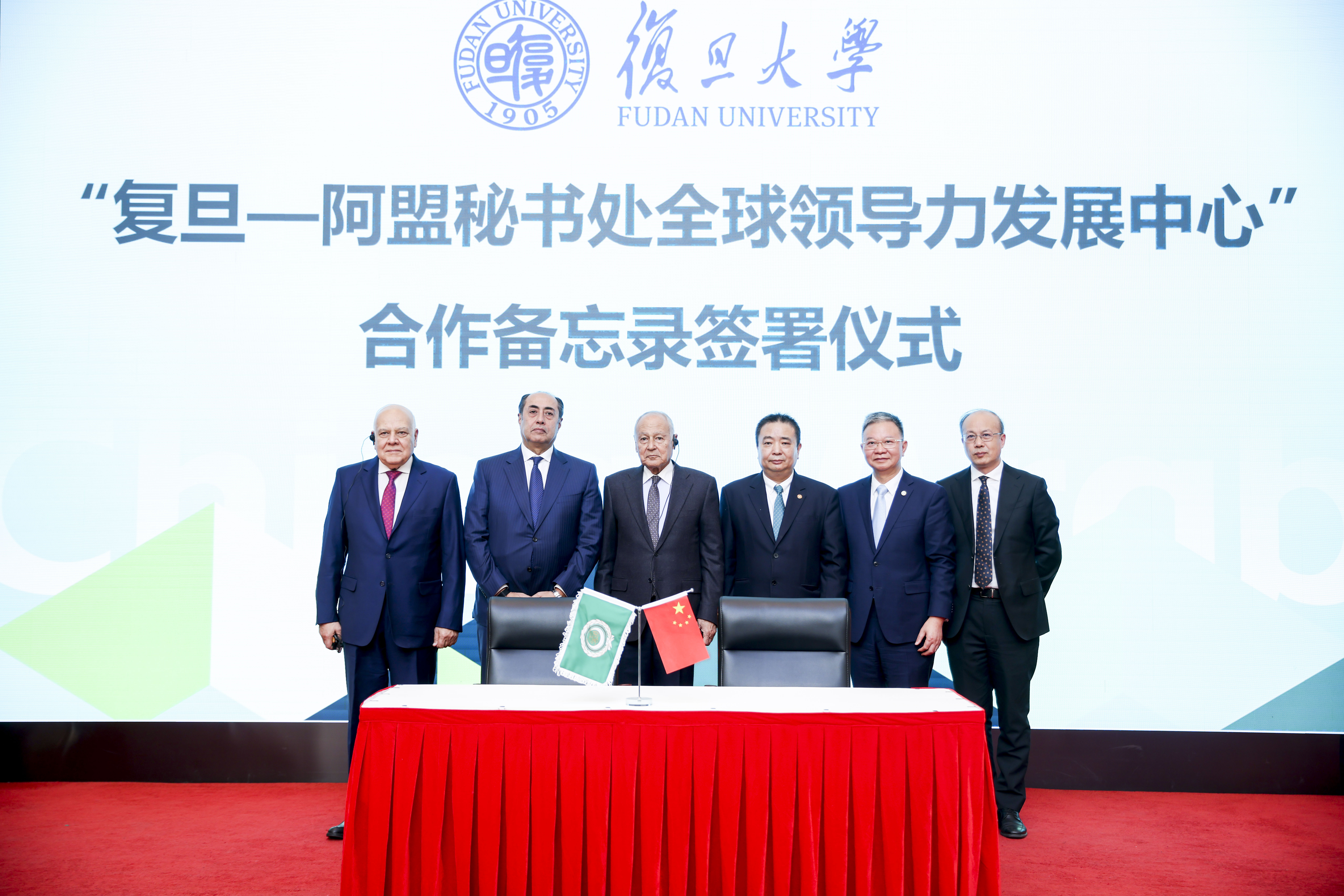
During the forum, Fudan University and the General Secretariat of the LAS signed a memorandum of understanding to establish the “General Secretariat of LAS-Fudan Centre for Global Leadership Development.” The Centre will be jointly operated by LAS and Fudan University, through the IGPP responsible for its daily operations and management on the university’s side. Through this Centre, LAS and Fudan University aim to jointly create high-level dialogue platforms, including hosting senior-level forums and global leadership development programs.
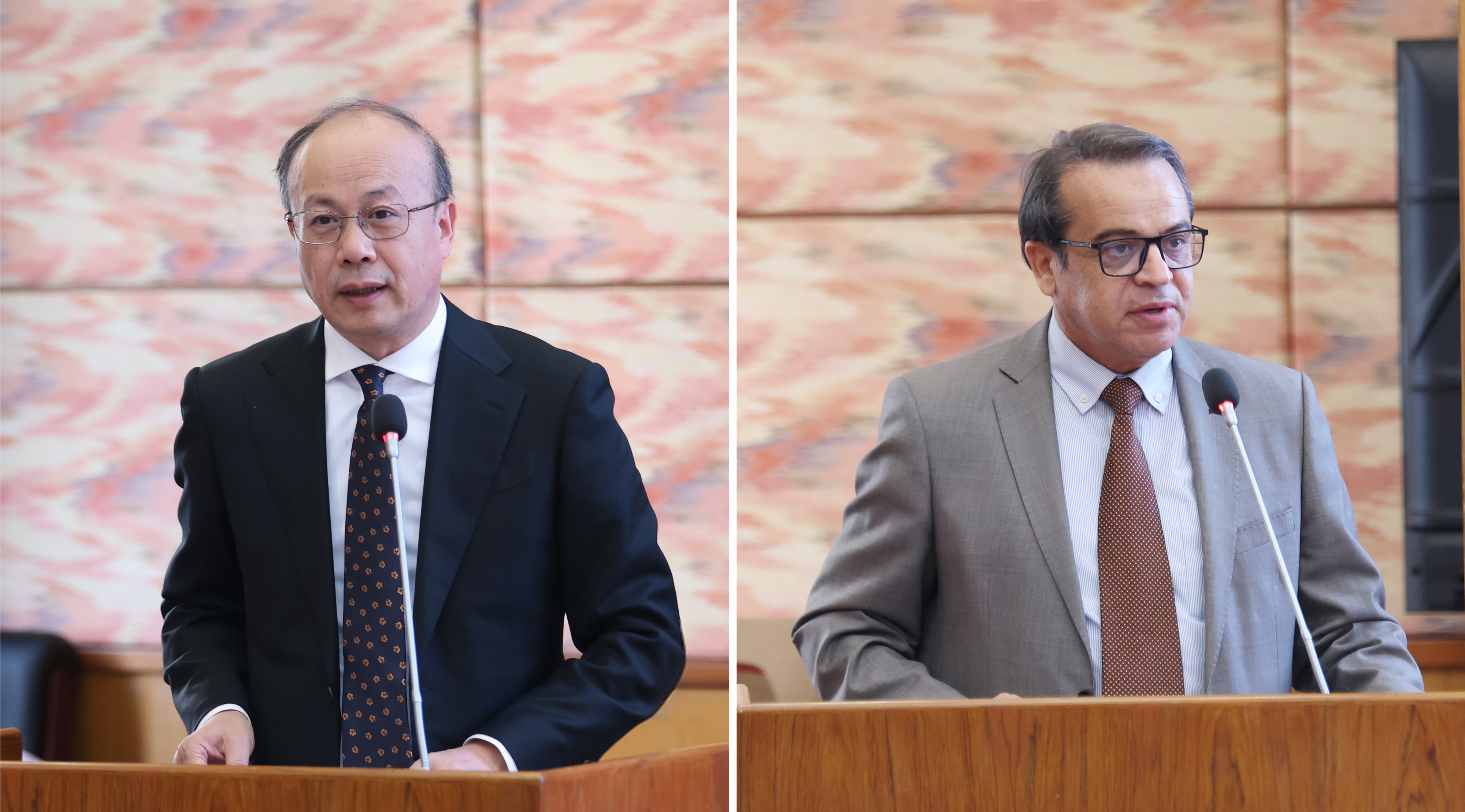
Professor Walid Salameh, Senior Advisor to the AARU, chaired over key launch ceremonies during the opening session.
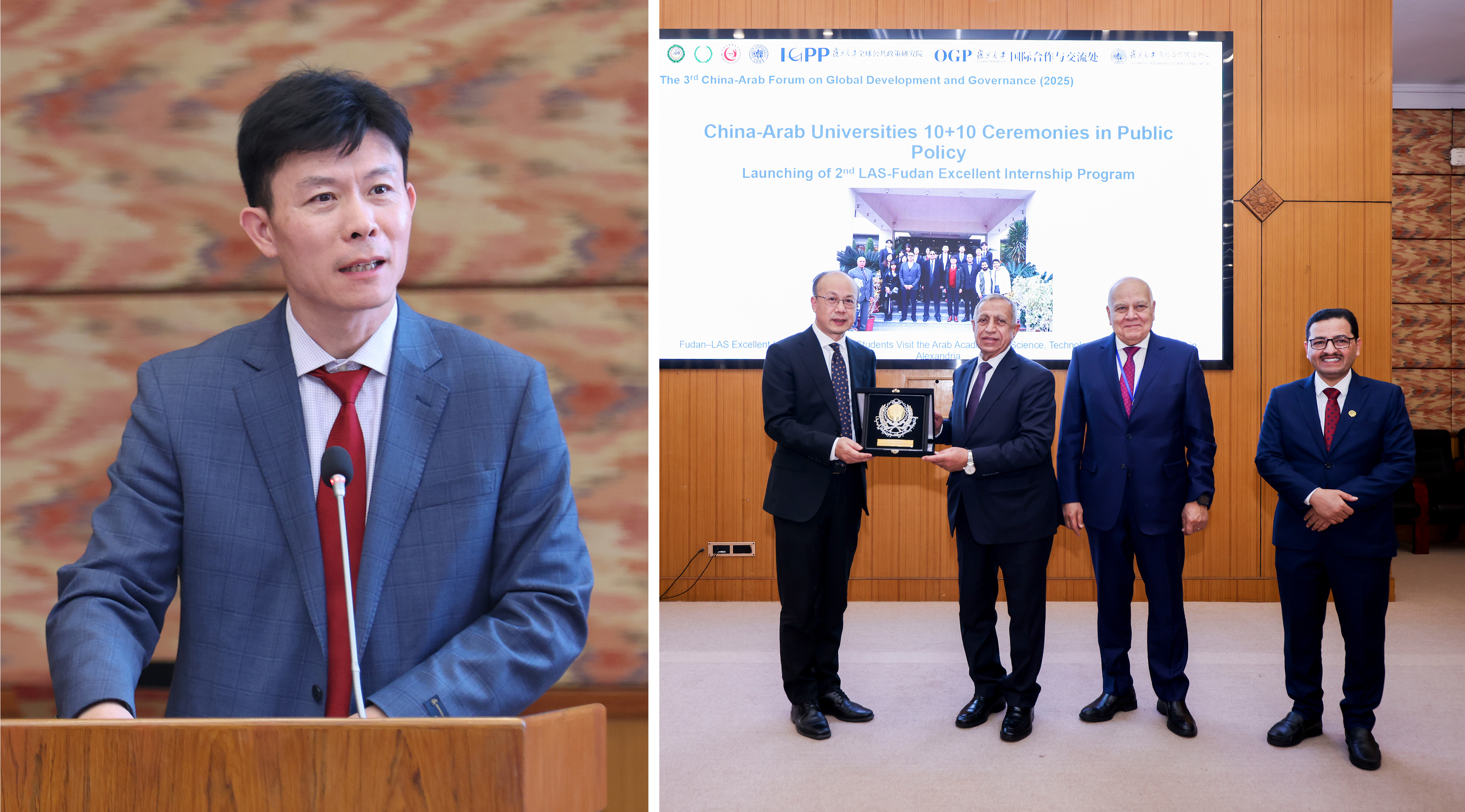
The forum hosted the launch ceremony of the “2nd LAS–Fudan Excellent Internship Program.” Dean Jing announced the official launch and introduced the key innovations of the program. Organized by the General Secretariat of LAS-Fudan Centre for Global Leadership Development, the 2nd cohort will recruit 20 interns nationwide. Following the internship at the LAS headquarters, a two-day “China–Egypt University Students Global Governance Dialogue” will be held at the American University in Cairo. Professor Noha El-Mikawy, Dean of the School of Global Affairs and Public Policy at the American University in Cairo, delivered a welcome address online. Vice President Chen expressed gratitude to the Arab Academy for Science, Technology and Maritime Transport for hosting the internship delegation in January and presented a gift to President Ismail Farag.
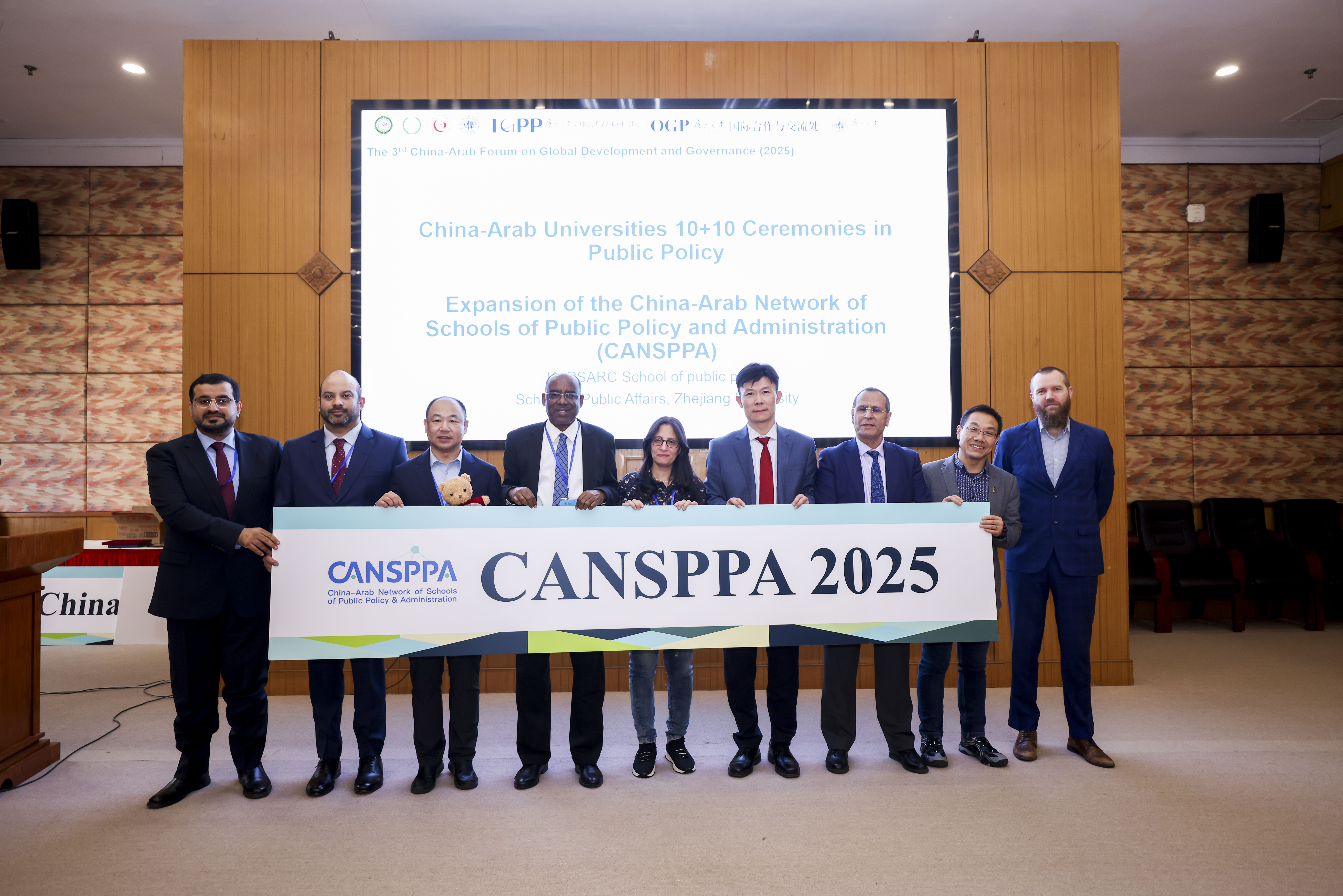
The forum also hosted a ceremony welcoming new members to CANSPPA. Initiated by the IGPP, CANSPPA currently comprises 20 leading schools of public policy and administration from China and Arab countries. At this forum, the KAPSARC School of Public Policy in Saudi Arabia and the School of Public Affairs at Zhejiang University joined as new members. Dean Jing, President of CANSPPA, presented gifts to the representatives of the new members, Professor Kamal and Professor Zhirong Zhao, followed by a group photo.
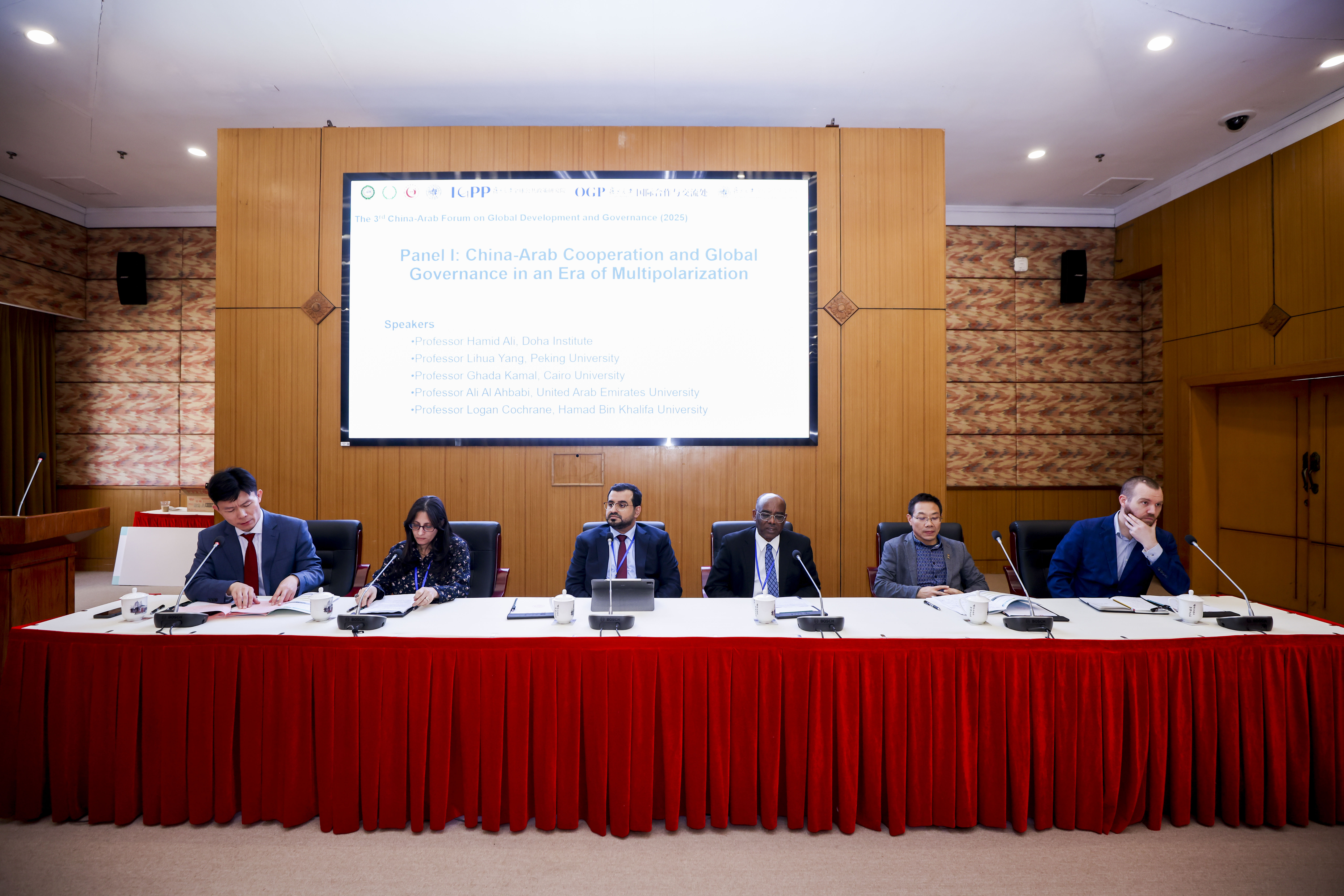
Two academic roundtables were held during the forum. Dean Jing chaired the roundtable on “China–Arab Cooperation and Global Governance in an Era of Multipolarization,” with participation from Professor Hamid Ali of the Doha Institute for Graduate Studies, Professor Lihua Yang of Peking University, Professor Ghada Kamal of Cairo University, Professor Ali Al Ahbabi of United Arab Emirates University, and Professor Logan Cochrane of Hamad Bin Khalifa University. The discussion focused on opportunities and challenges for China–Arab relations in a multipolar world, pragmatic cooperation under the Belt and Road Initiative, new frontiers in China–Arab higher education collaboration, and future directions for CANSPPA.
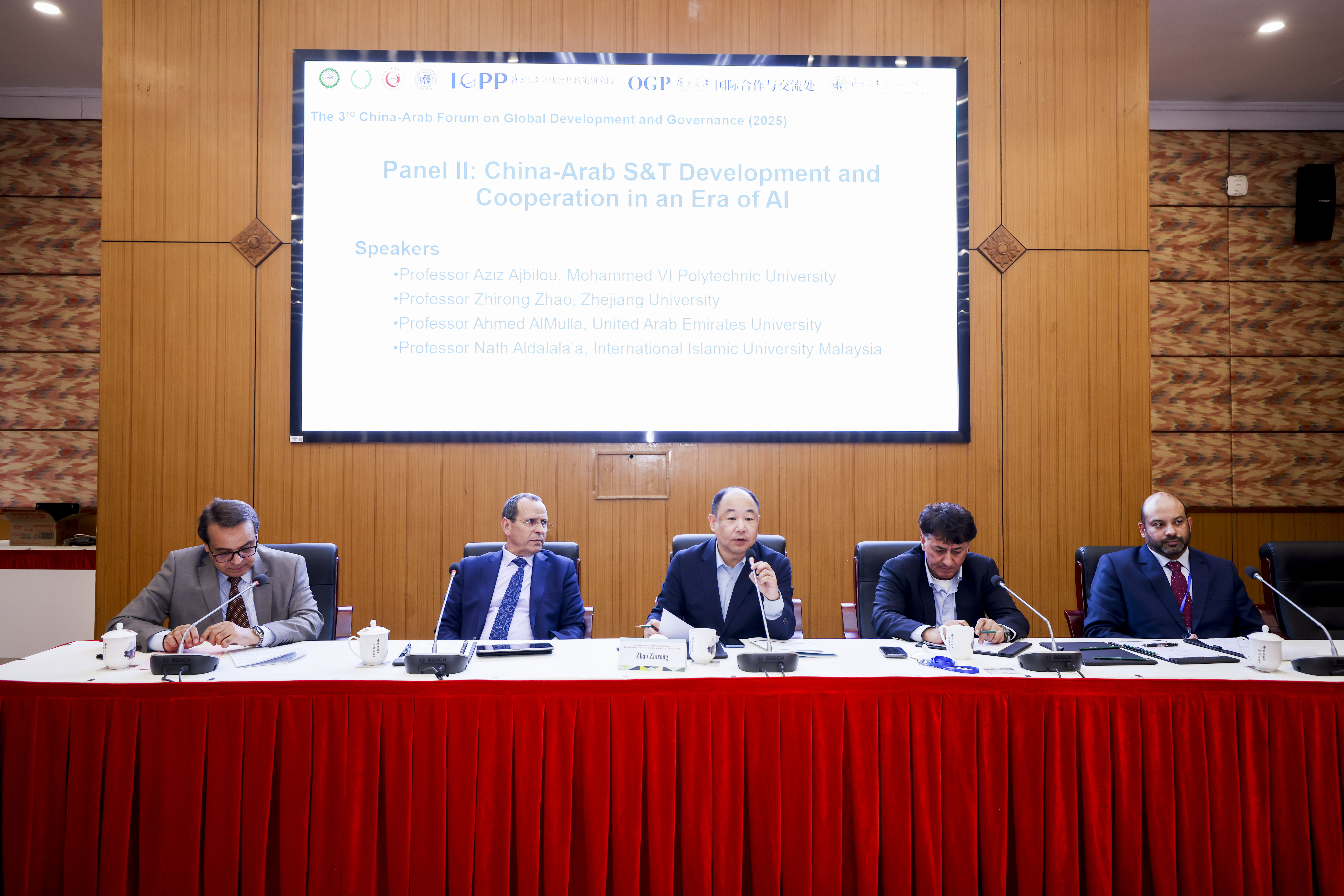
Professor Salameh chaired the roundtable on “China–Arab S&T Development and Cooperation in the Era of AI,” with participation from Professor Aziz Ajbilou of Mohammed VI Polytechnic University, Professor Zhao of Zhejiang University, Professor Ahmed AlMulla of United Arab Emirates University, and Professor Nath Aldalala’a of International Islamic University Malaysia. The discussion explored global trends in emerging technologies, the dynamics of competition and cooperation in science and technology, and prospects for China–Arab collaboration in artificial intelligence.
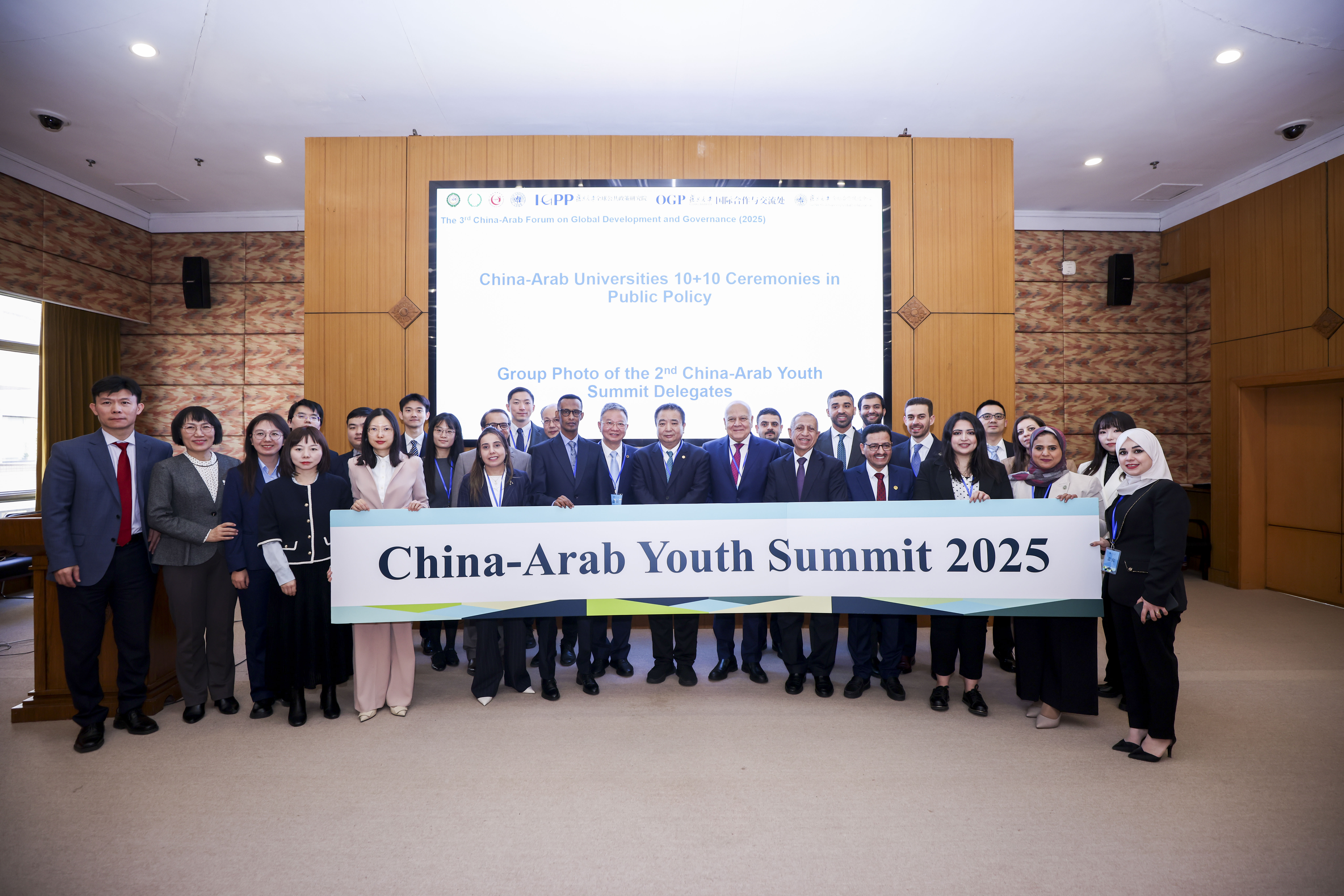
With the joint support of the LAS, the CAHE, and the AARU, the 2nd China–Arab Youth Summit was held alongside the forum. In his opening remarks, Professor Salama emphasized that the China–Arab comprehensive strategic partnership is reaching a higher level, and that youth are the main driving force and core bond in building a China–Arab community with a shared future. He encouraged young people from both sides to move from being “participants of the future” to “actors of the present,” strengthen humanistic foundations, contribute to shared development, and take proactive responsibility in advancing China–Arab cooperation.
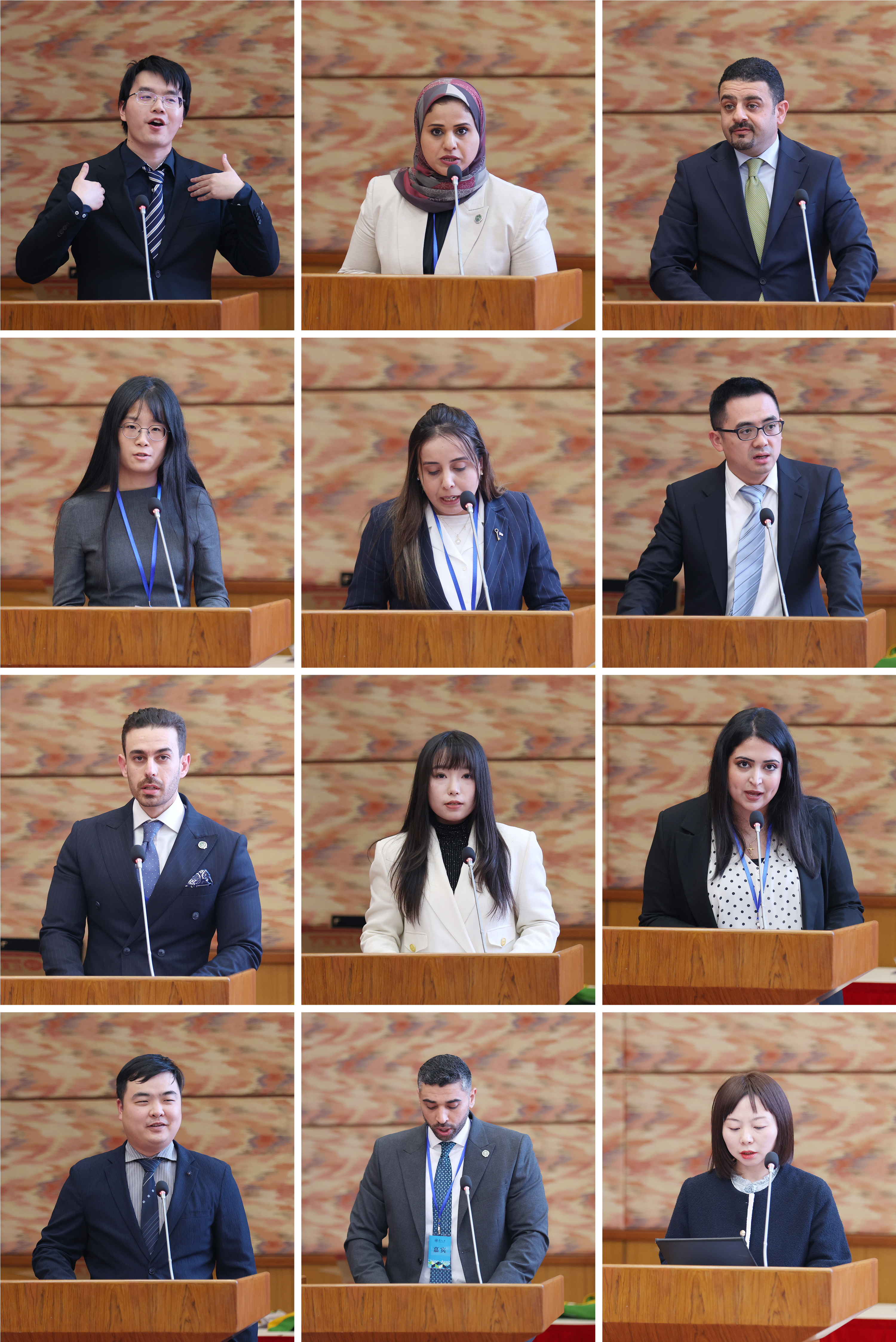
The summit featured 20 Chinese and Arab youth representatives from diverse fields, who presented their contributions through video presentations. The representatives reviewed the consensus reached through multiple rounds of pre-summit discussions and shared outcomes across four themes: “Global Governance,” “China–Arab Relations,” “Digital Silk Road,” and “Youth Development.”
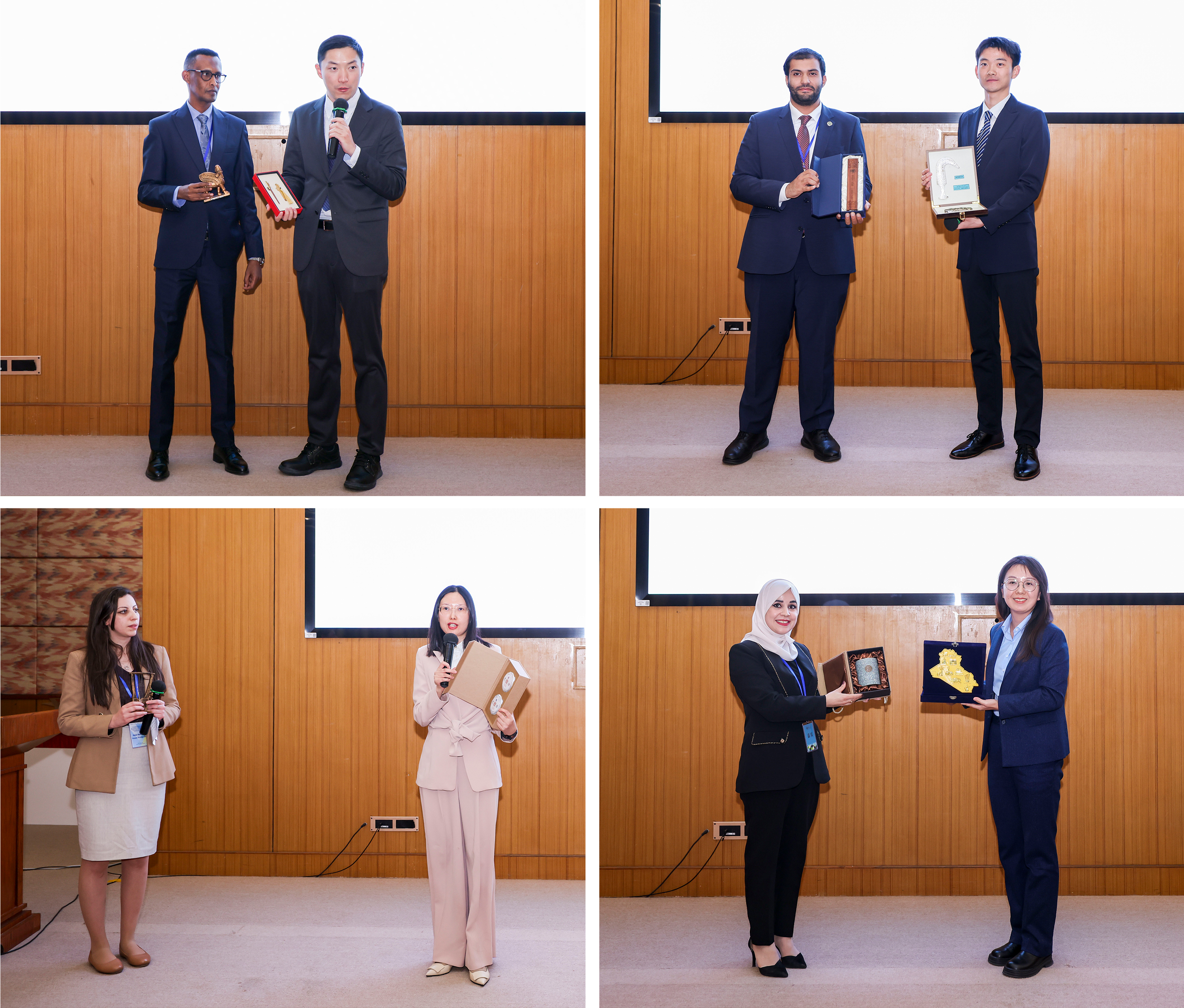
This was followed by cultural gift exchanges between the groups. Arab representatives presented gifts reflecting ancient Arab civilizations, including an Iraqi Lamassu sculpture, a Yemeni jambiya dagger and architectural models, the Silver Lyre of Ur, and a gold-inscribed plaque map of Iraq. Chinese representatives reciprocated with gifts showcasing Chinese cultural heritage, such as solid wood fountain pens, brass plaques, Yunnan Bonan tea cakes, and Longquan celadon pen holders. The summit concluded with the joint reading of the “Joint Declaration of the 2nd China–Arab Youth Summit,” which outlined four action directions: advancing global governance together, deepening China–Arab friendship, jointly building the Digital Silk Road, and empowering youth development.
Professor Salameh noted that the China–Arab Youth Summit is embedded within the broader framework of China–Arab cooperation, using youth exchange as a key link to provide a micro-level entry point for pragmatic collaboration. He emphasized that the summit serves as a critical pillar in advancing the strategic partnership and building a community with a shared future. In his closing remarks, Dean Jing stated that Fudan IGPP will continue to implement the consensus on China–Arab cooperation, create bridges for youth development, and help translate youth ideas into tangible outcomes, contributing Fudan’s expertise and youthful energy to the construction of a China–Arab community with a shared future.