News


From October 28 to 31, 2025, an academic conference on the theme “Multilateralism in the Post-Global World. Nations, Politics and International Relations” was held at Villa Vigoni on the shores of Lake Como, Italy. The conference was co-hosted by the German–Italian Center for European Dialogue (Villa Vigoni), the Treccani Encyclopedia Research Institute (Treccani), and the Institute for Global Public Policy (IGPP) at Fudan University, with active participation from Fudan University, Bocconi University, the University of Bologna, the University of Salento, Flensburg University, Hamburg University, and other institutions. The event provided a cross-regional and interdisciplinary platform for dialogue between European and Chinese scholars and students, continuing the academic exchange initiated at the first trilateral meeting held at Fudan University in May 2025.
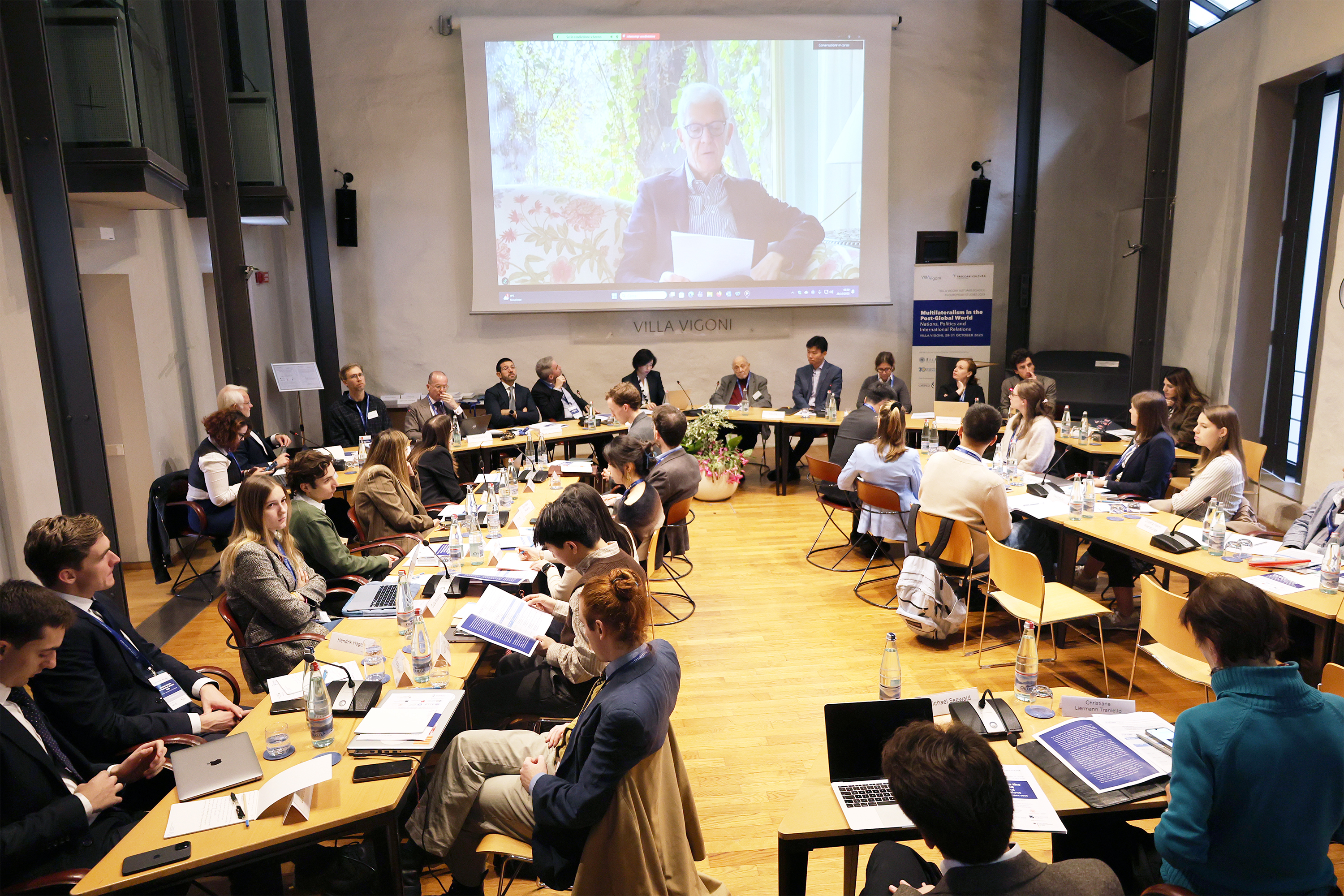
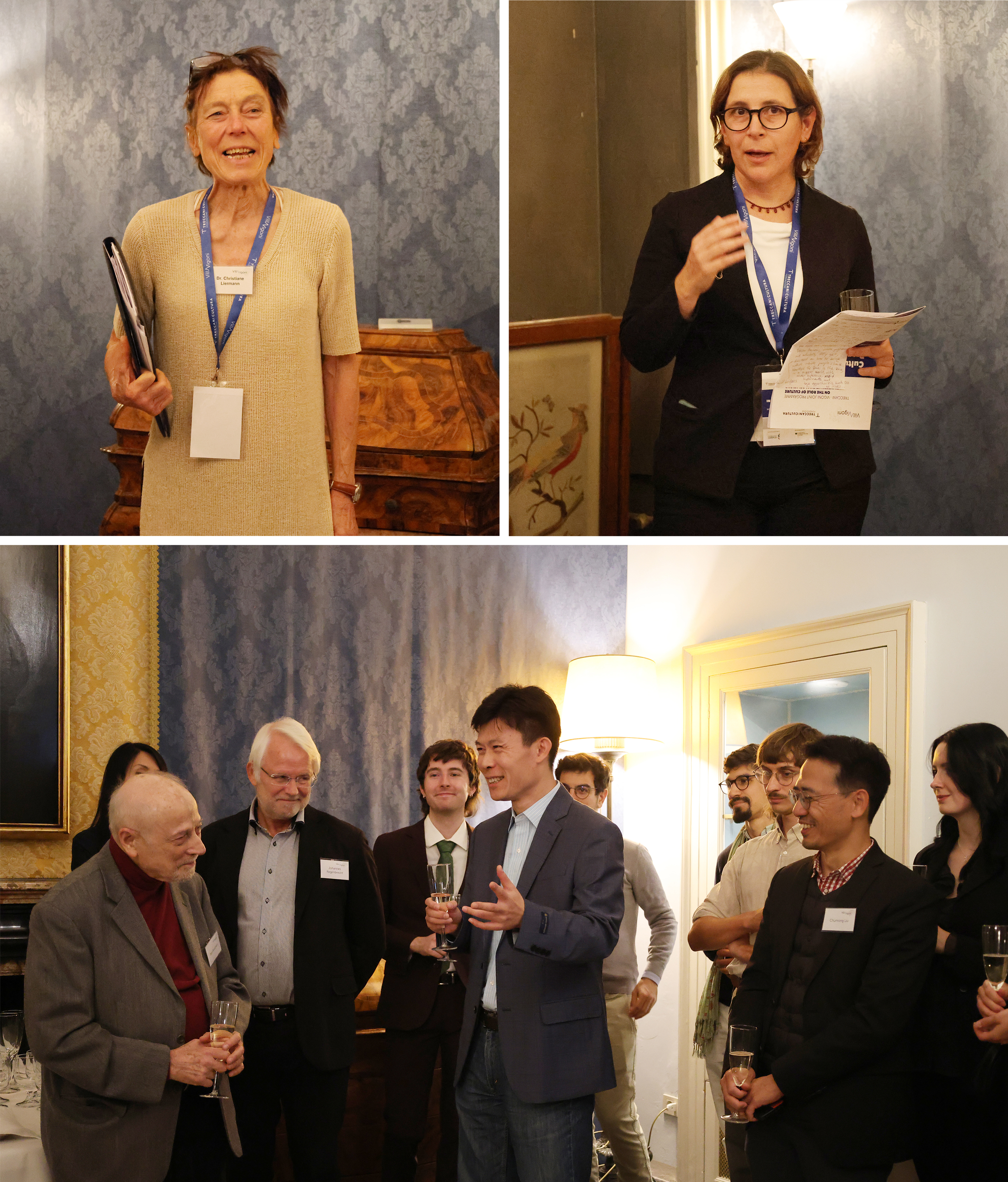
On the evening of October 28, the conference officially opened at Villa Vigoni. Secretary-General Christiane Traniello of Villa Vigoni, Director Marta Leonori of Administrative Affairs at Treccani, and Dean Yijia Jing of IGPP delivered welcome remarks. Secretary-General Traniello highlighted Villa Vigoni’s role as a key platform for European dialogue, Director Leonori emphasized Treccani’s contributions to academic support and knowledge dissemination, and Dean Jing underscored the importance of cross-cultural dialogue for global governance innovation from the perspective of Chinese higher education institutions. Their remarks collectively set the event’s guiding theme of “diverse dialogue and joint exploration.”
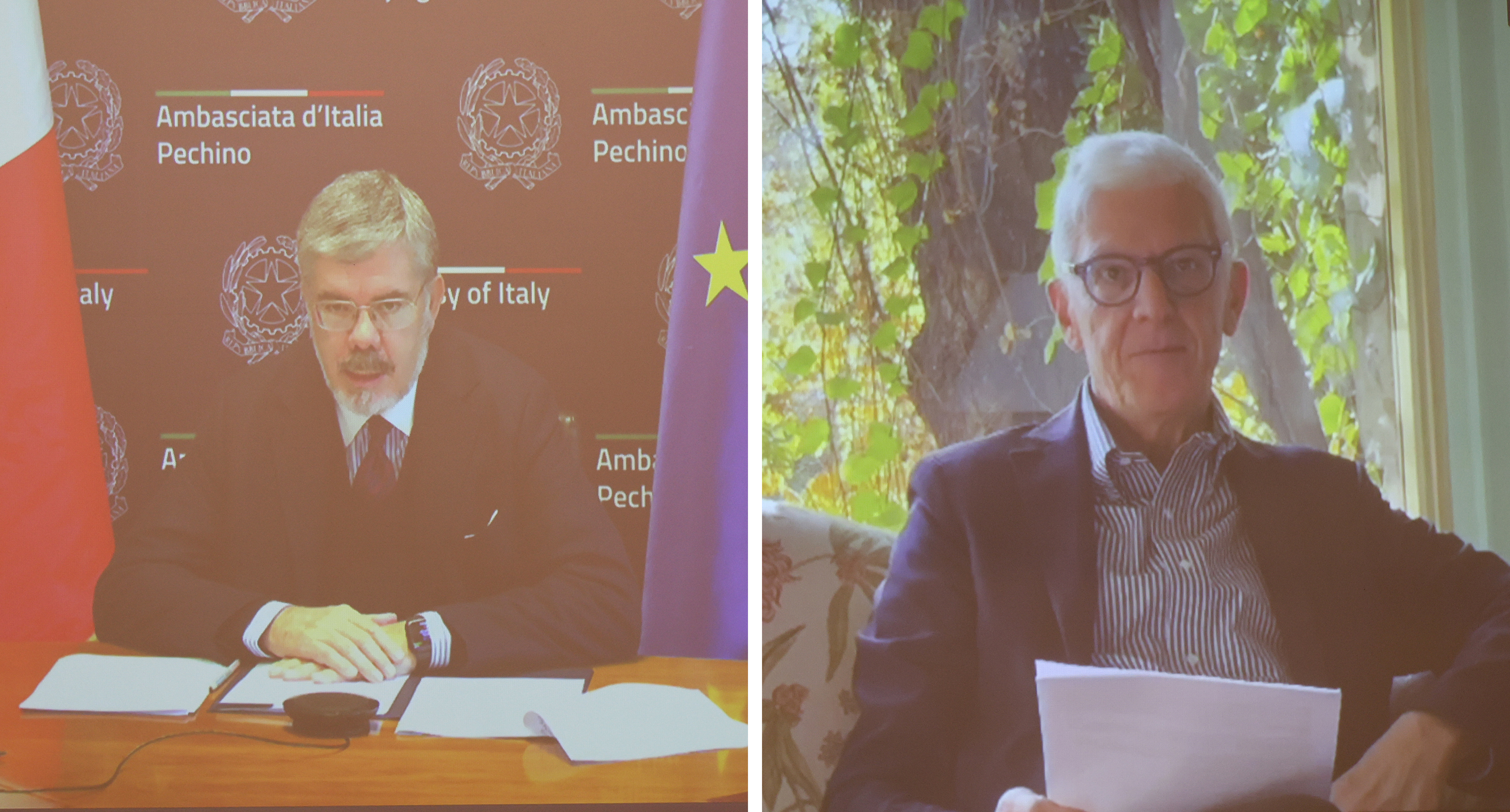
On the morning of October 29, Massimo Ambrosetti, Italian Ambassador to China, and Massimo Bray, Secretary-General of Treccani, delivered opening speeches. Ambassador Ambrosetti discussed the current state of China–Europe relations and the evolving international order, emphasizing the need for pragmatic engagement on global issues. He highlighted the importance of acknowledging historical and civilizational legacies while establishing effective communication mechanisms on core strategic matters to enhance global stability. Secretary-General Bray shared insights on Treccani’s international collaborations and cultural exchanges, stressing that mutual benefit, understanding, and open cooperation are essential principles for knowledge sharing and academic innovation.
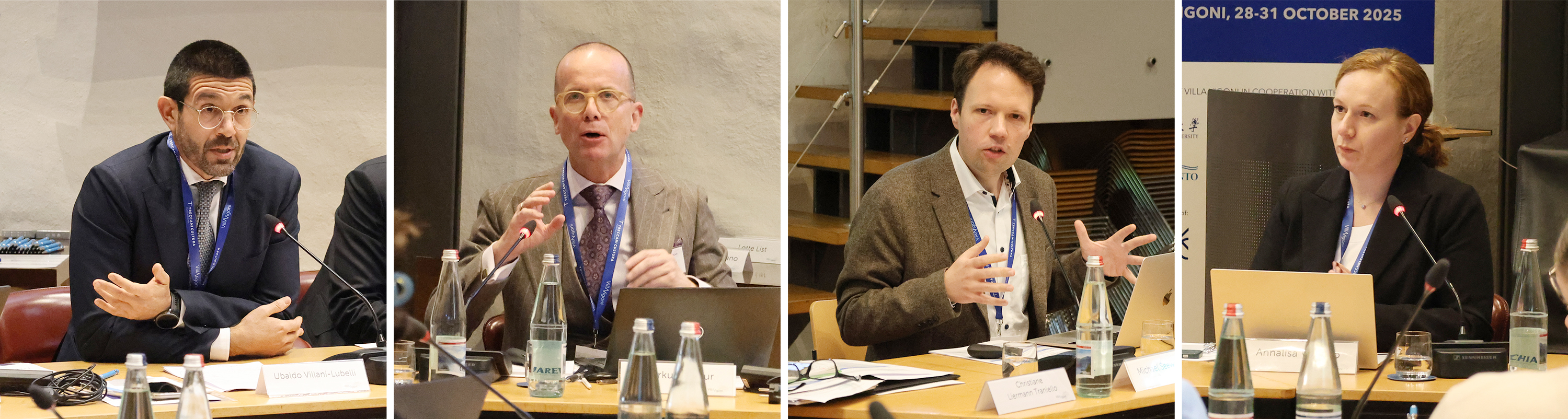
The conference featured four panels. The first panel focused on “Nations in the Post-Global World.” Professor Ubaldo Villani-Lubelli from the University of Salento examined the European Union’s strategic autonomy in a post-globalization context. Professor Markus Kotzur from Hamburg University re-evaluated traditional sovereignty theories in contemporary international settings. Professor Michael Seewald from the University of Münster analyzed the evolving role of religion in Western European societies and its influence on governance. Professor Annalisa Volpato from the University of Padua explored EU digital sovereignty and the geopolitical challenges associated with international technology standards.
The second panel focused on “Politics in a Post-Global World.” Dr. Entela Cukani from the University of Salento discussed the impact of populism and sovereignty movements on multilateral cooperation in Europe. Dean Yijia Jing presented on “Trumpism and China’s Responses in Global Governance,” analyzing global political and economic shifts alongside China’s strategic responses. Professor Ulrich Glassmann from Flensburg University examined the socio-economic roots of populist movements, while Dr. Rosalba Famà from Bocconi University explored challenges in EU security cooperation and defense integration.
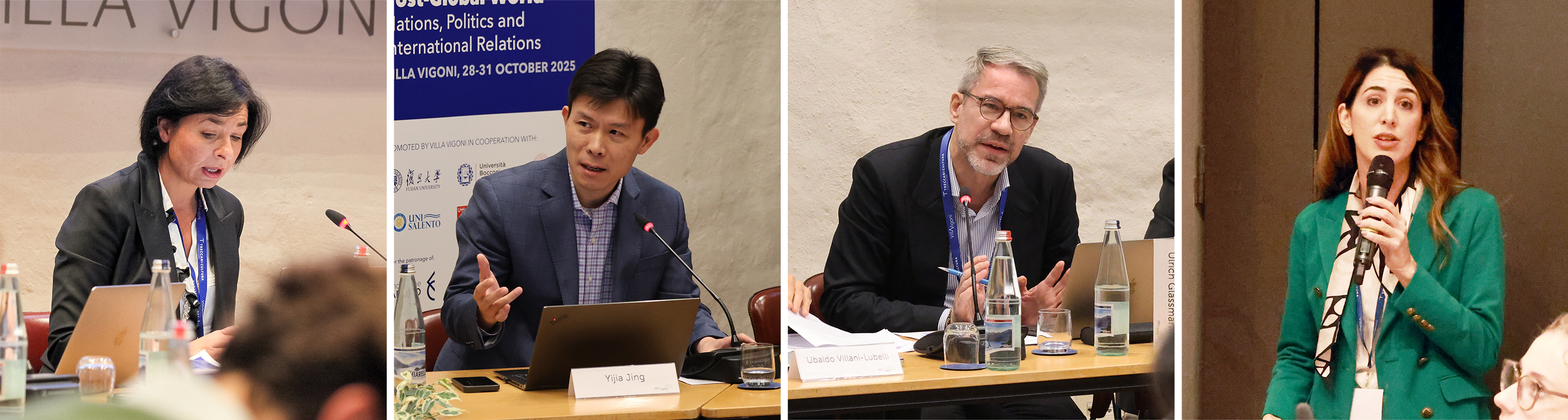
The third panel focused on “International Relations in a Post-Global World.” Professor Andrea Colli from Bocconi University provided historical insights into hegemonic and multipolar dynamics, as well as the dilemmas of multilateralism. Dr. Lotte List from the University of Bologna critiqued Eurocentric narratives in global governance studies, while Dr. Matteo Scotto from Villa Vigoni analyzed U.S.–EU relations under Trumpism and their implications for European governance.

The fourth panel focused on “How to Shape a New Multilateralism: EU and China Perspectives.” Professor Chunrong Liu from Fudan University proposed the concept of “Minilateralism” to guide multilateral practice in a post-globalization era. Professor Dennis Schmidt from Durham University reflected on multilateralism, liberalism, and the reconstruction of the global order. Professor Gennaro Imbriano from the University of Bologna analyzed the roots and governance logic of global conflicts through a world-systems theory perspective, while Professor Attilio Pisanò from the University of Salento critiqued current multilateral mechanisms in climate governance and called for more pragmatic cooperation.
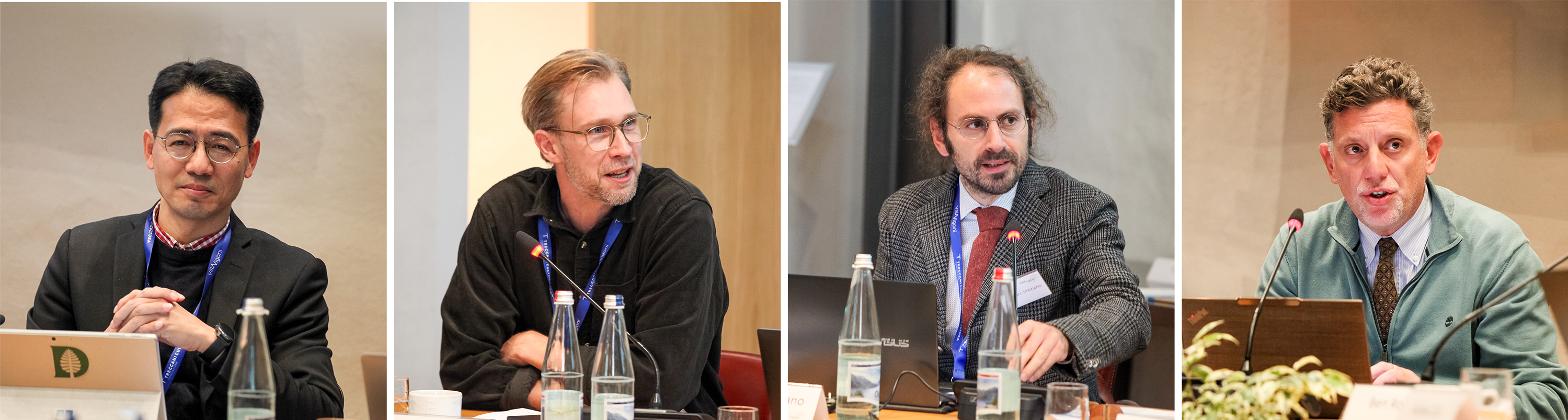
The conference also included a student research panel, giving young scholars from multiple countries a platform to present their work. The discussions showcased the next generation’s awareness of and engagement in global governance issues.
The event served not only as a high-level academic forum on multilateralism but also as a bridge connecting Chinese and European scholars. Through in-depth thematic design, interdisciplinary exchange, and an open, inclusive environment, the conference provided diverse perspectives on multilateralism in a post-globalization era, strengthened mutual understanding among scholars, and laid an academic foundation for future China–Europe collaboration in global governance, climate action, and digital sovereignty, contributing to a more just, stable, and sustainable global order.