News


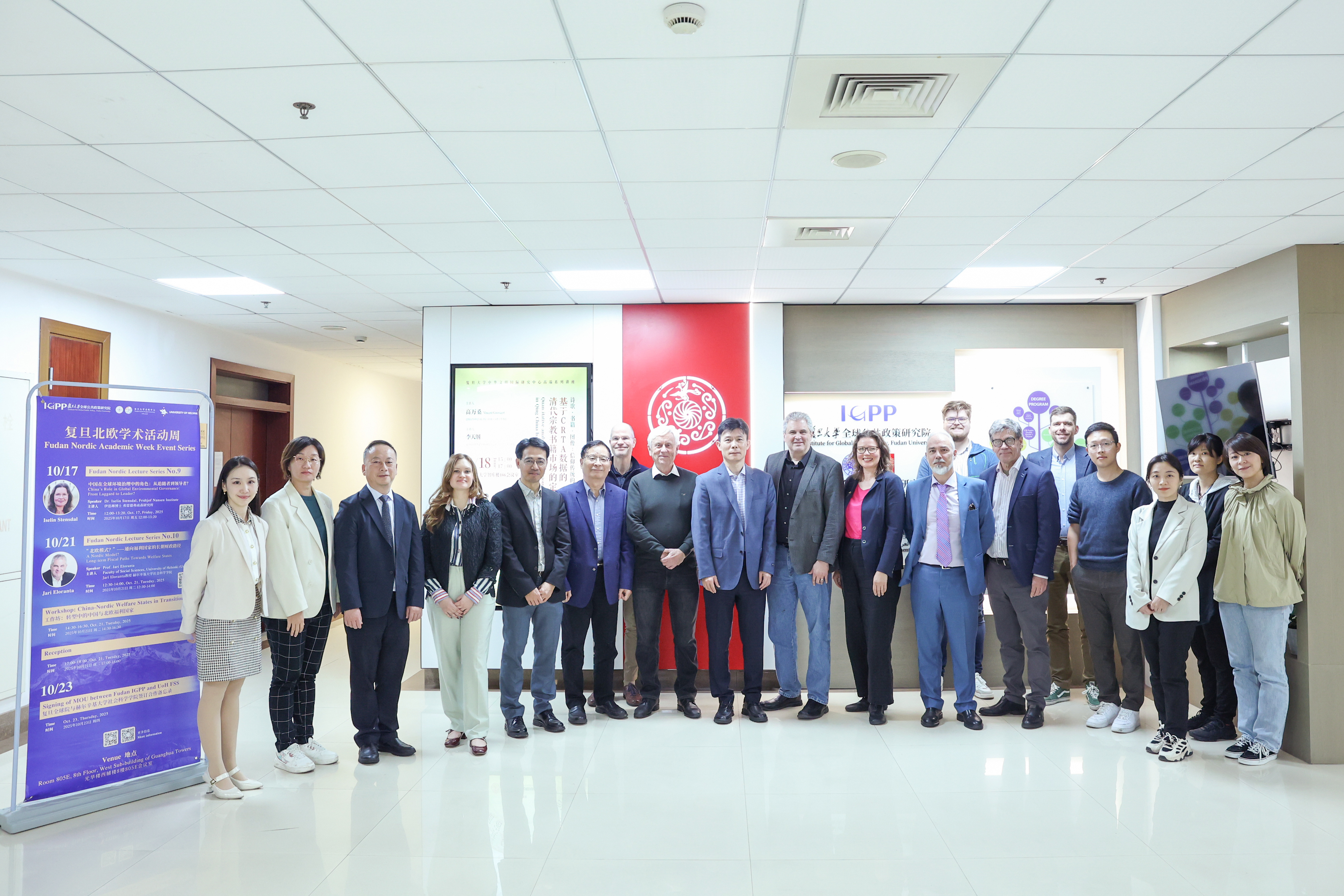
On October 21, 2025, the Institute for Global Public Policy (IGPP) at Fudan University, in collaboration with the Faculty of Social Sciences at the University of Helsinki and the Nordic Centre at Fudan University, organized the workshop “China-Nordic Welfare States in Transition.” The event was co-hosted by the LSE–Fudan Research Centre for Global Public Policy and Global Public Policy and Governance, featuring keynote speeches and two thematic forums that explored the challenges and reform directions of welfare states amid global uncertainties and digital transformation.
Dean Yijia Jing of IGPP welcomed participants, highlighting how urbanization, population aging, digitalization and AI, and shifting international dynamics are reshaping welfare governance in both China and the Nordic region. The workshop also marked the 30th anniversary of the Nordic Centre and the 15th anniversary of the publication of The Nordic Welfare State, providing a platform to reflect on the historical and contemporary significance of China–Nordic welfare dialogue.
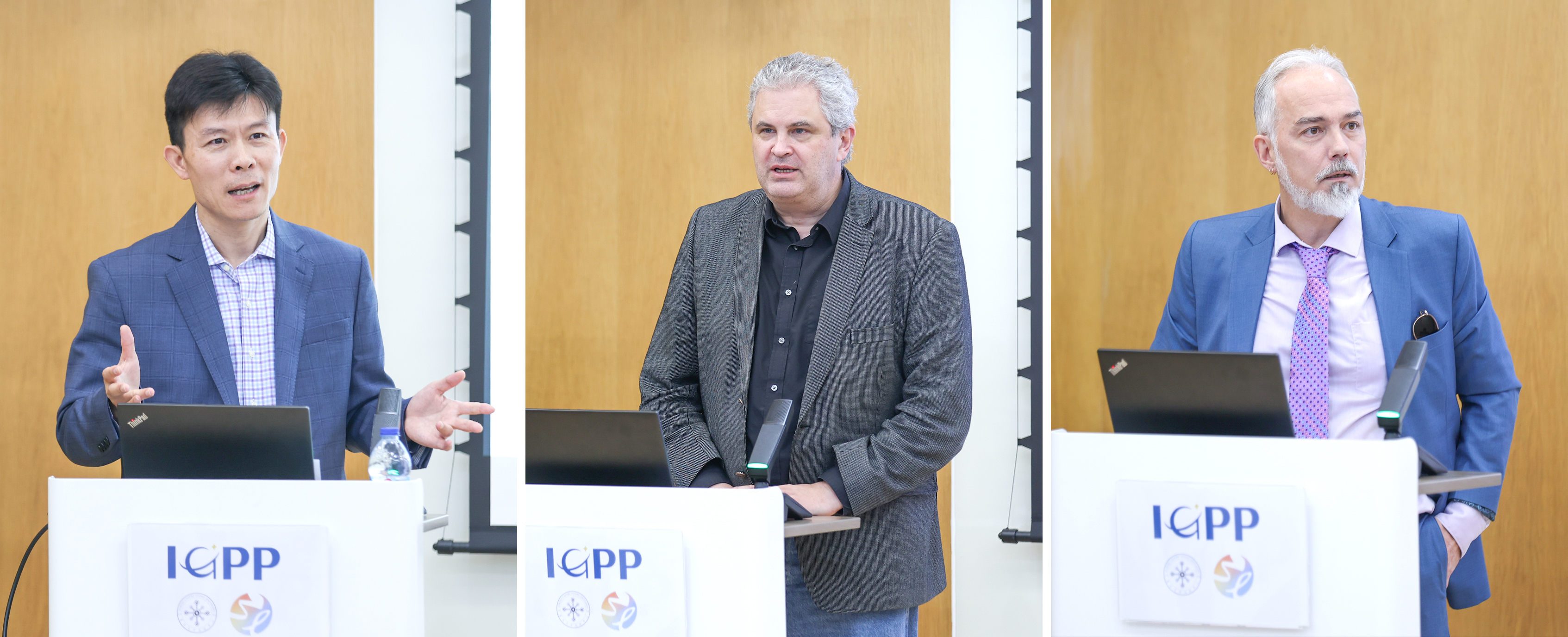
The keynote speech was delivered by Professor Stein Kuhnle from the University of Bergen, who reflected on the historical characteristics of the Nordic welfare model, its tradition of universalism, and enduring challenges such as demographic shifts, globalization, and fiscal sustainability, drawing on insights from his 2010 co-edited volume The Nordic Welfare State.

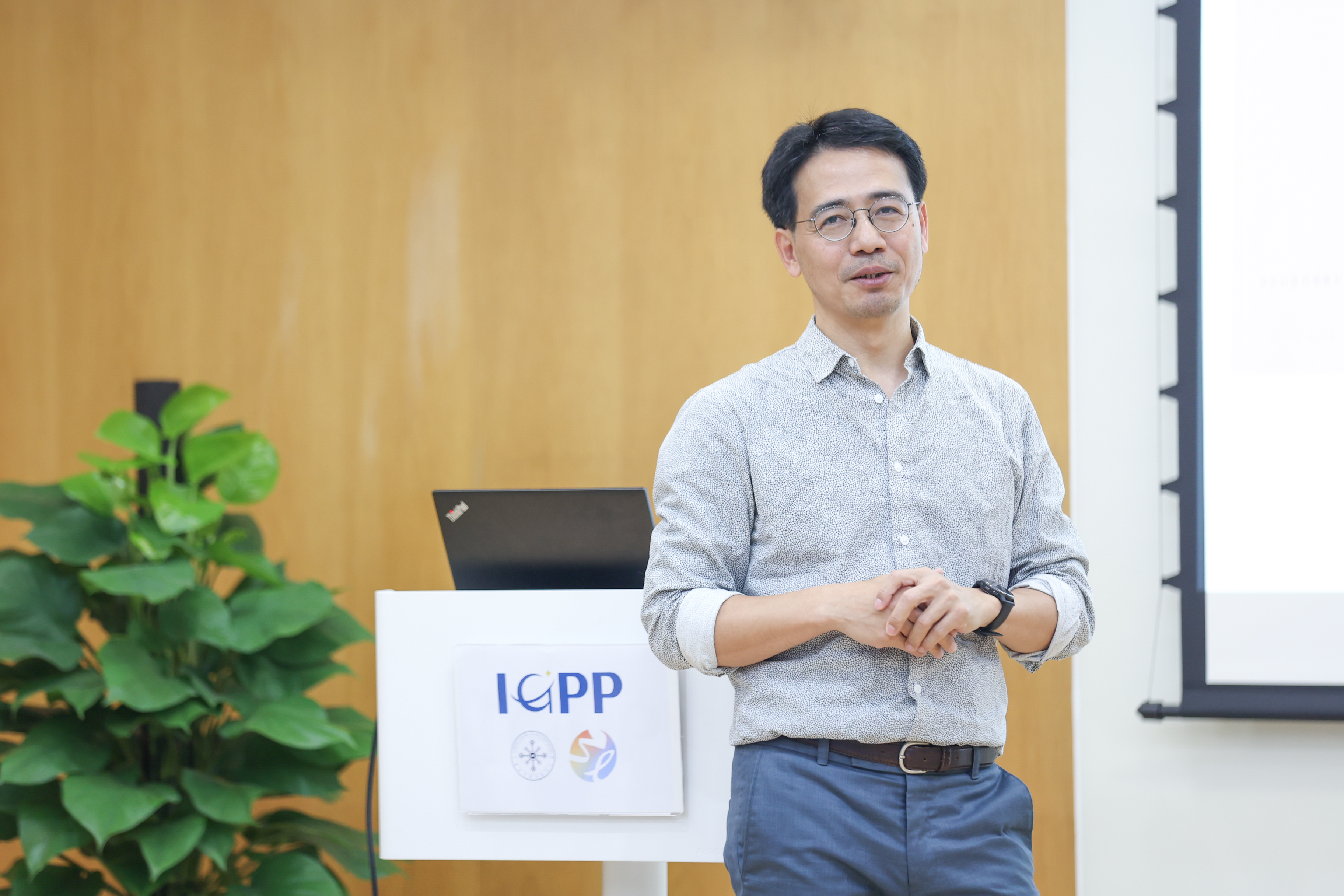
The first forum, chaired by Professor Chunrong Liu of Fudan University, focused on healthcare, child welfare, and eldercare.
Senior Researcher Iselin Stensdal from the Fridtjof Nansen Institute analyzed the impact of New Public Management on Norway’s health sector.

Professor Timo Toikko of the University of Eastern Finland highlighted a chain effect from immigrant population growth to increased instances of forced child separations, emphasizing the importance of trust, language, and timely intervention.

Postdoctoral Fellow Lijianan Zhang of IGPP traced the evolution of China’s child welfare system from collectivist universalism to a more selective approach.

Chair Geir Sigurðsson presented on “aging philosophy,” while Professor Feng Tian of Fudan University discussed Shanghai’s “9073” eldercare model and the implementation of 15-minute community living circles.


The second forum, chaired by Professor Timo Toikko, focused on systemic and digital welfare challenges.
Professor Søren Harnow Klausen of the University of Southern Denmark addressed the mental health crisis as a multi-domain public policy issue connected to digital platforms, intergenerational justice, labor markets, and housing.

Visiting Scholar Annina Lattu of the Nordic Centre explored open science as a form of transnational welfare infrastructure.

Vice Dean Jari Eloranta analyzed the historical evolution of state capacity and fiscal-military foundations in Sweden and Finland.

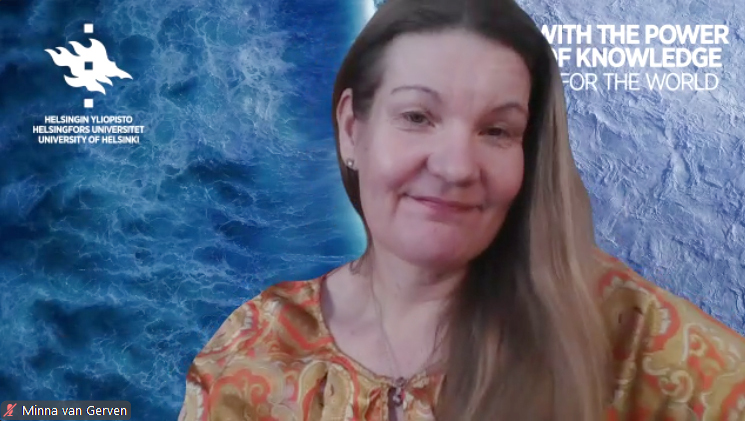
Professor Chunrong Liu examined digital welfare governance in China, while Professor Minna van Gerven of the University of Helsinki discussed the concept of “integrated activation” in the digital era.
Participants agreed that the resilience of Nordic welfare states stems from universalist traditions, broad political consensus, and high social trust, while recognizing that new challenges, such as aging populations, require continuous institutional adaptation and cross-national learning. The workshop laid the foundation for joint research and curriculum development between IGPP and Nordic partners in areas including digital welfare, child welfare, and eldercare.