News


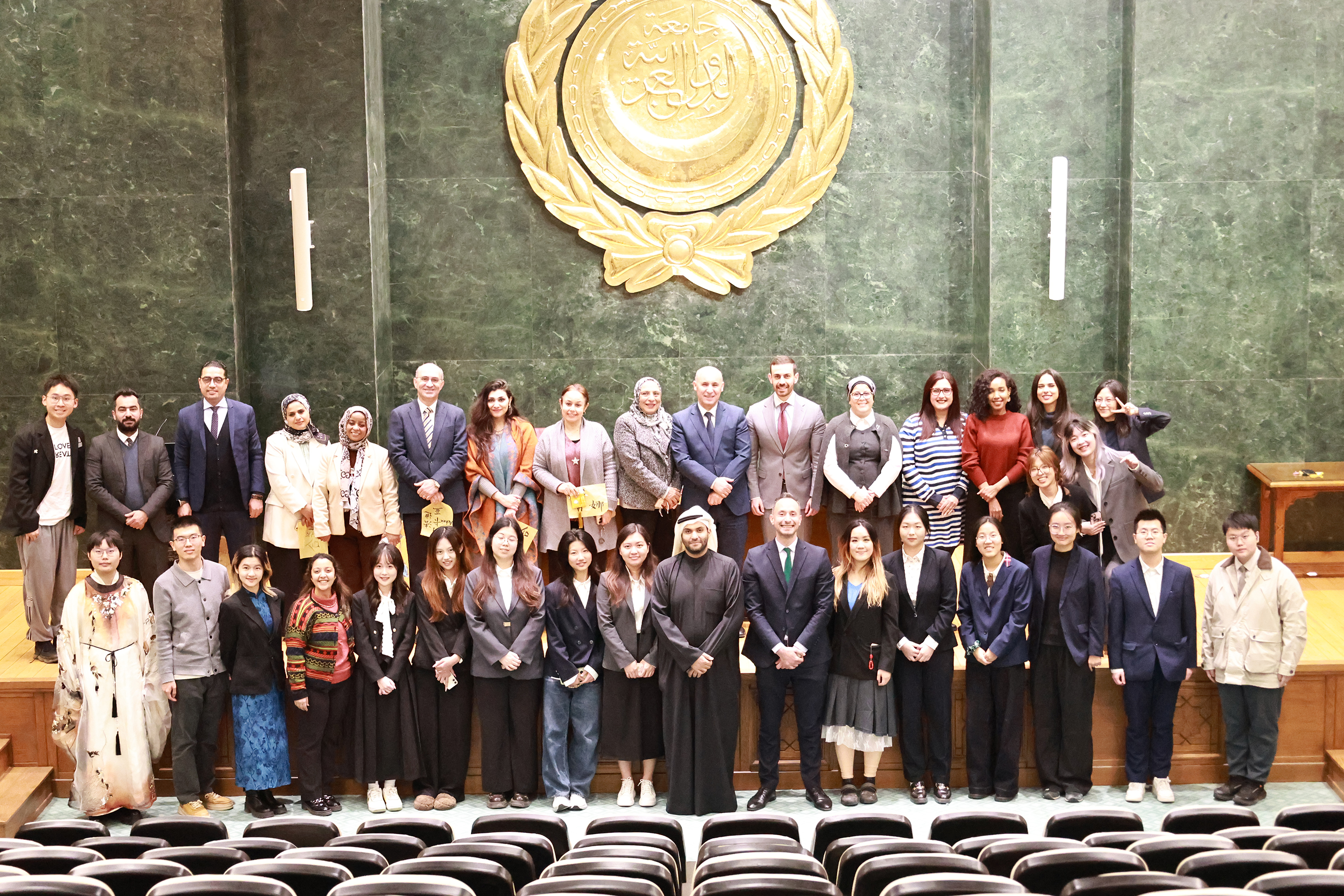
On January 14, 2026, a traditional Chinese cultural experience event—centered on perception, participation, and co-creation—was held at the headquarters of the League of Arab States (LAS) in Cairo, Egypt. Jointly organized by the Institute for Global Public Policy (IGPP) at Fudan University and the Training Department of the LAS Secretariat, the event served as a key cultural component of the 2nd Fudan–Arab League Excellence Internship Program.
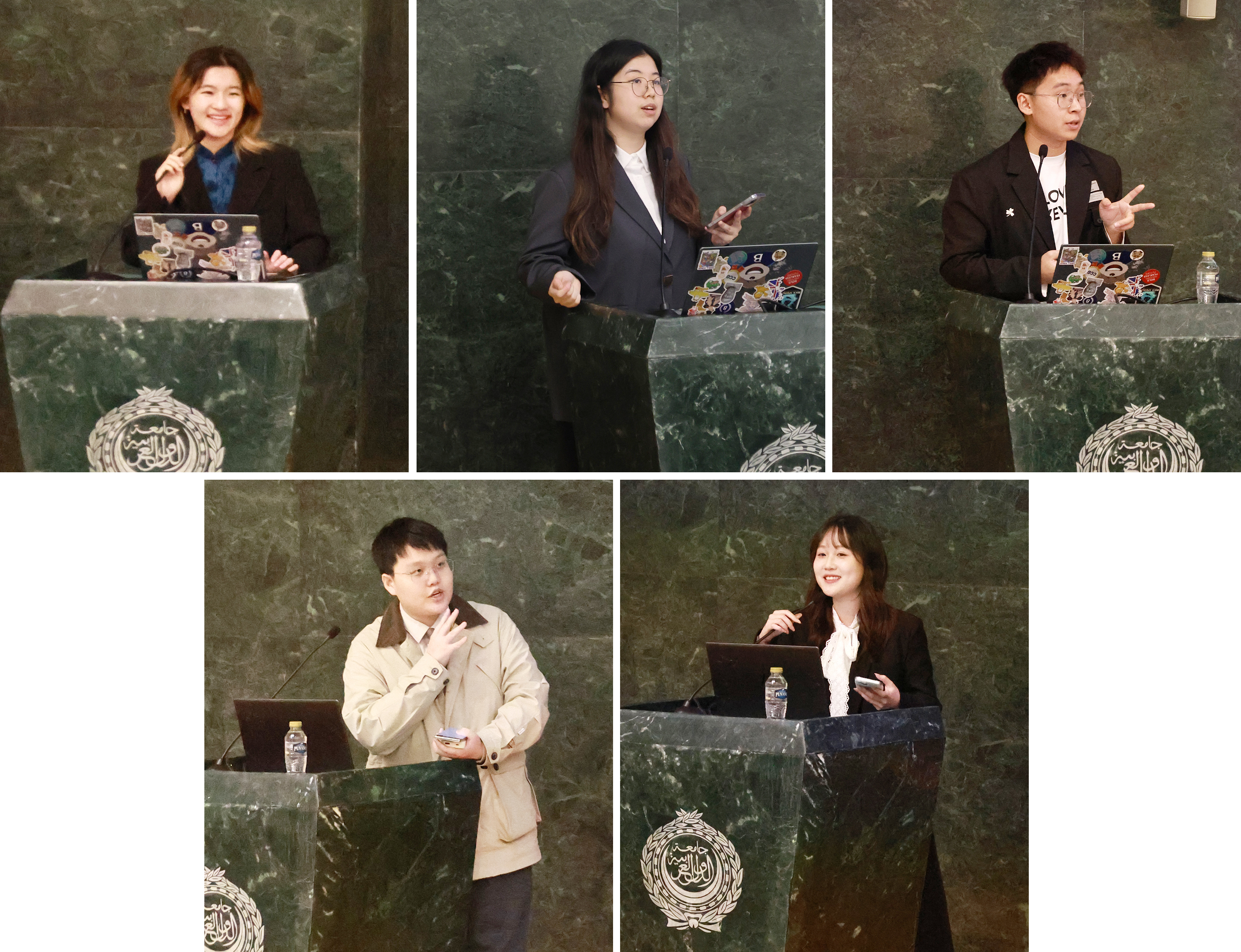
Prior to the interactive session, the internship delegation introduced three thematic dimensions of Chinese culture: traditional Chinese medicine, calligraphy, and tea culture. The traditional Chinese medicine group, including Haoge Hu, Yuyue Zhang, and Yihui Tong, explained the properties of commonly used herbal materials and demonstrated the preparation of herbal sachets, along with basic acupressure techniques. The calligraphy group, including Bowe Gu, outlined the structural principles and brushwork techniques underlying Chinese characters. The tea culture group, including Youyou Qian, presented the classification of Chinese teas, brewing methods, and the cultural philosophy embedded in tea appreciation.
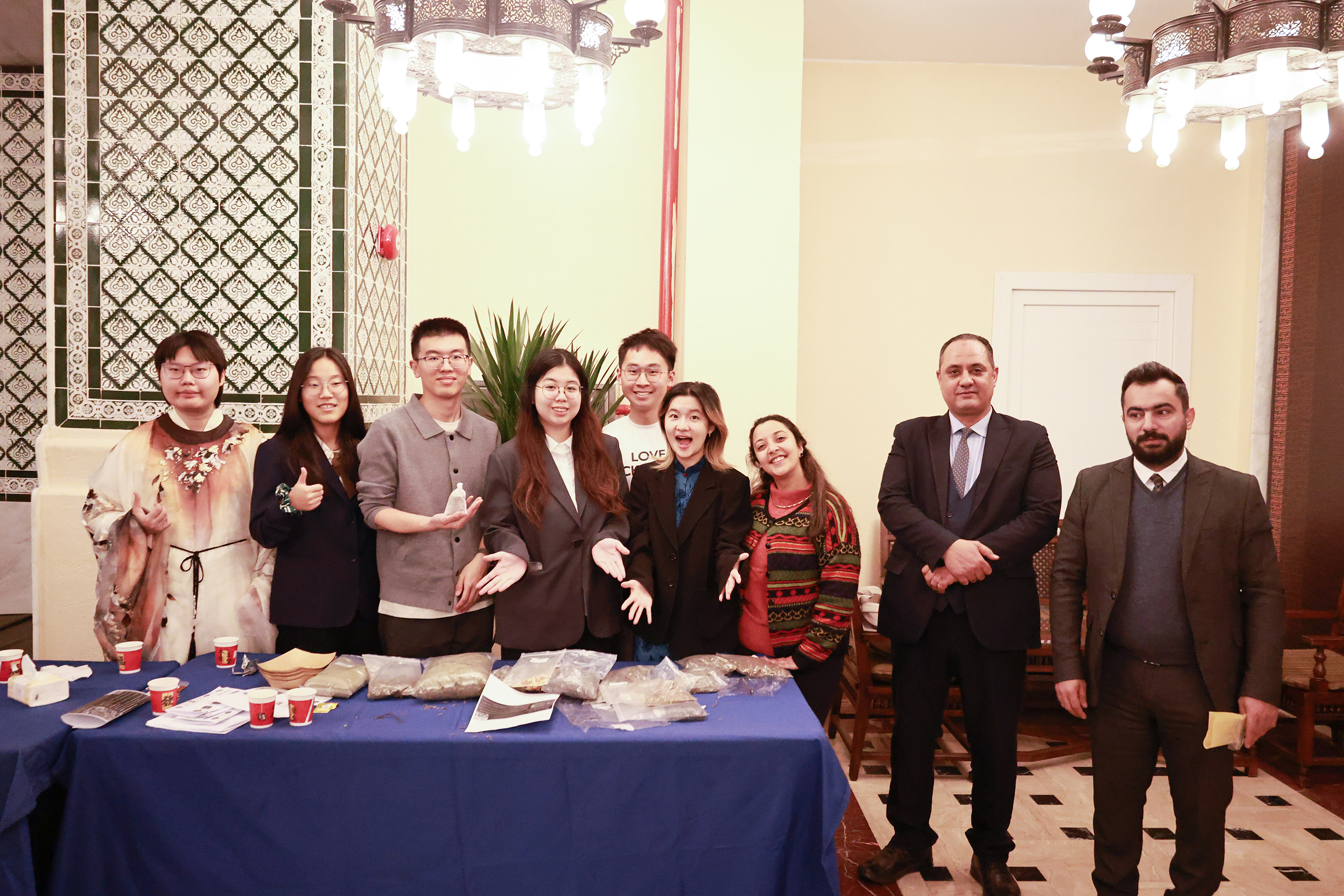
The event then transitioned into an immersive, hands-on experience. In the traditional Chinese medicine section, dried tangerine peel, cinnamon bark, mugwort, and other herbs were arranged on tables for participants to select and blend according to specific health-related purposes. LAS officials showed great enthusiasm, carefully examining the herbs, inquiring about their properties and uses, and even sharing knowledge of comparable plants found locally in Egypt. Many participants prepared multiple sachets for colleagues and family members, creating a lively and engaging atmosphere.
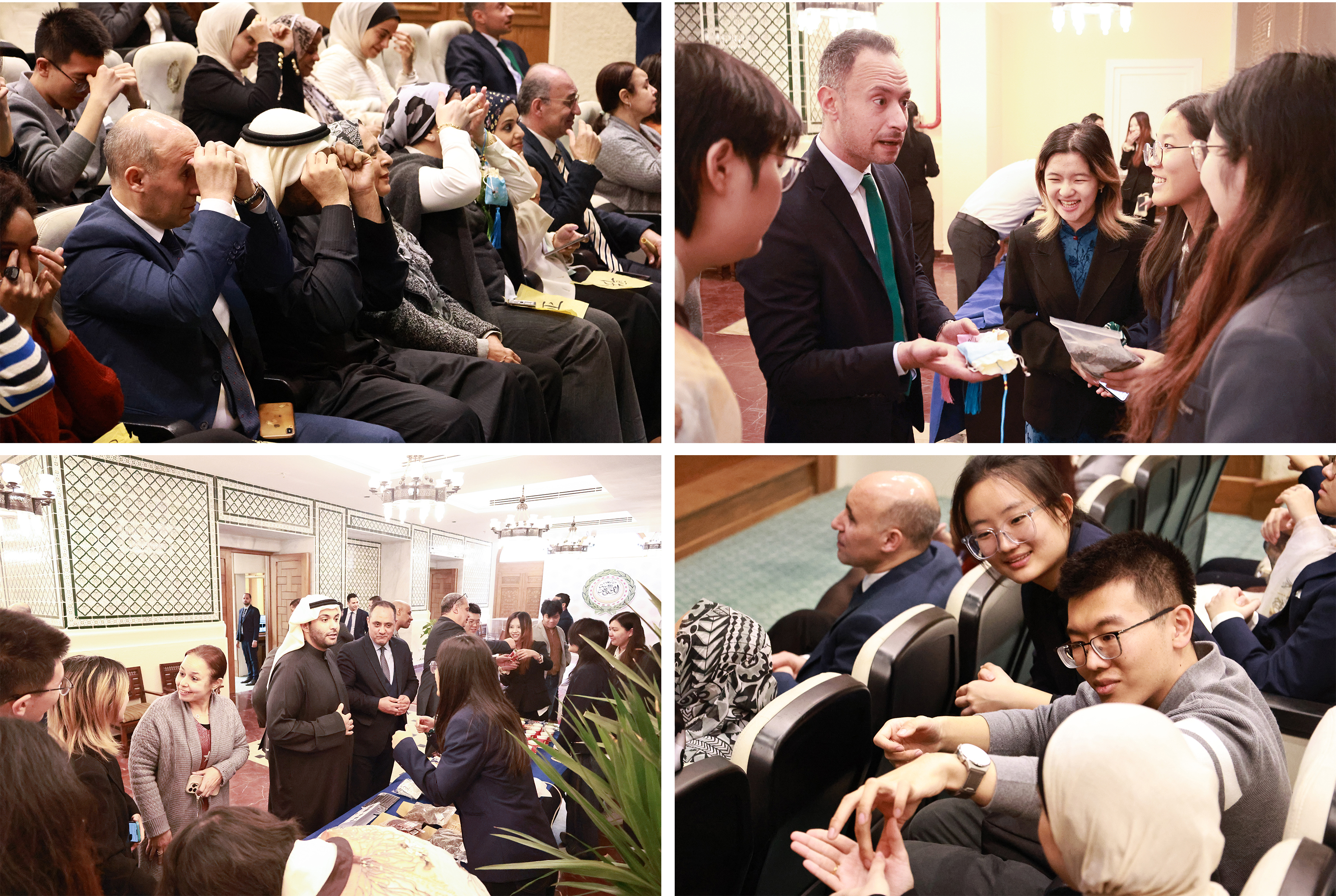
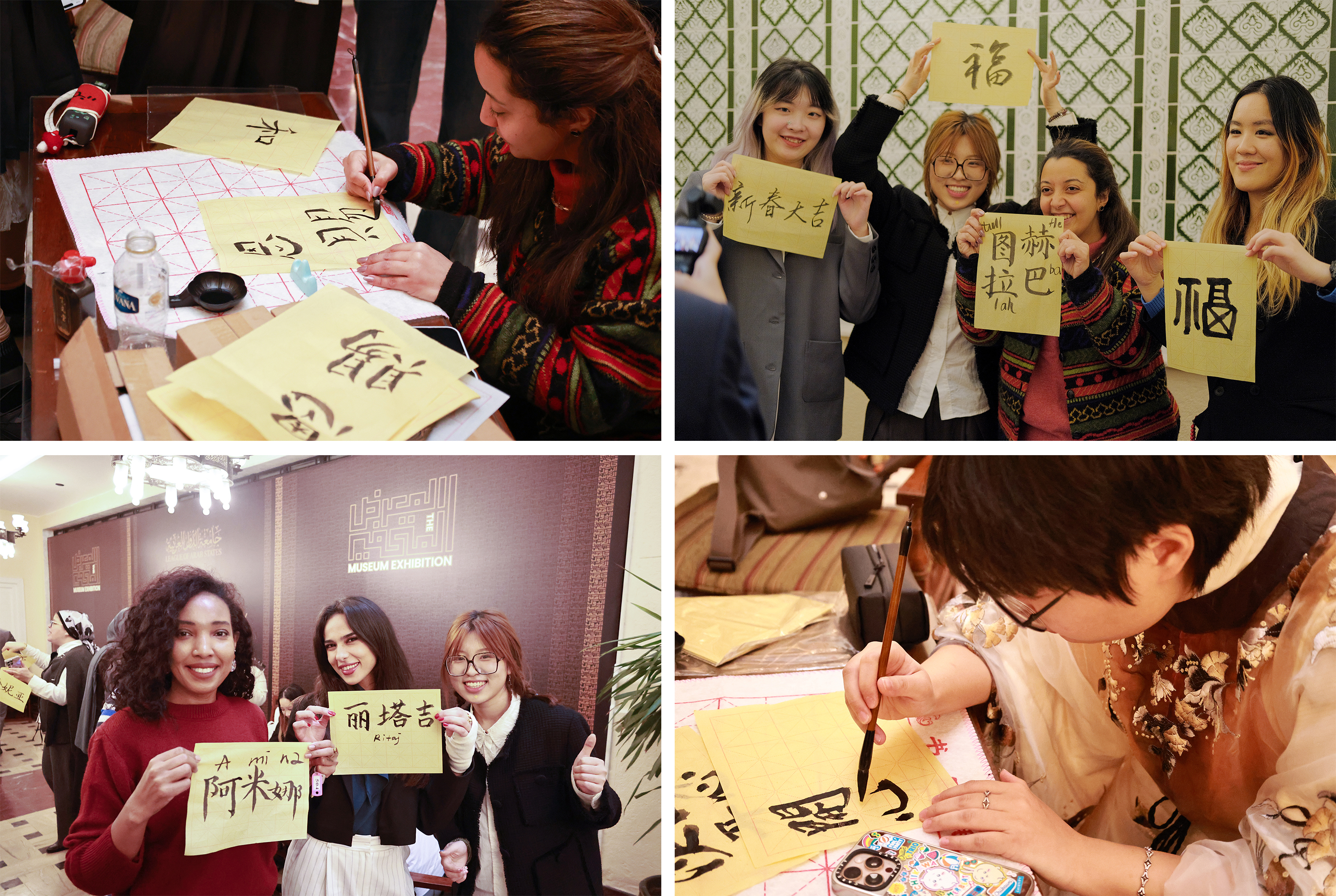
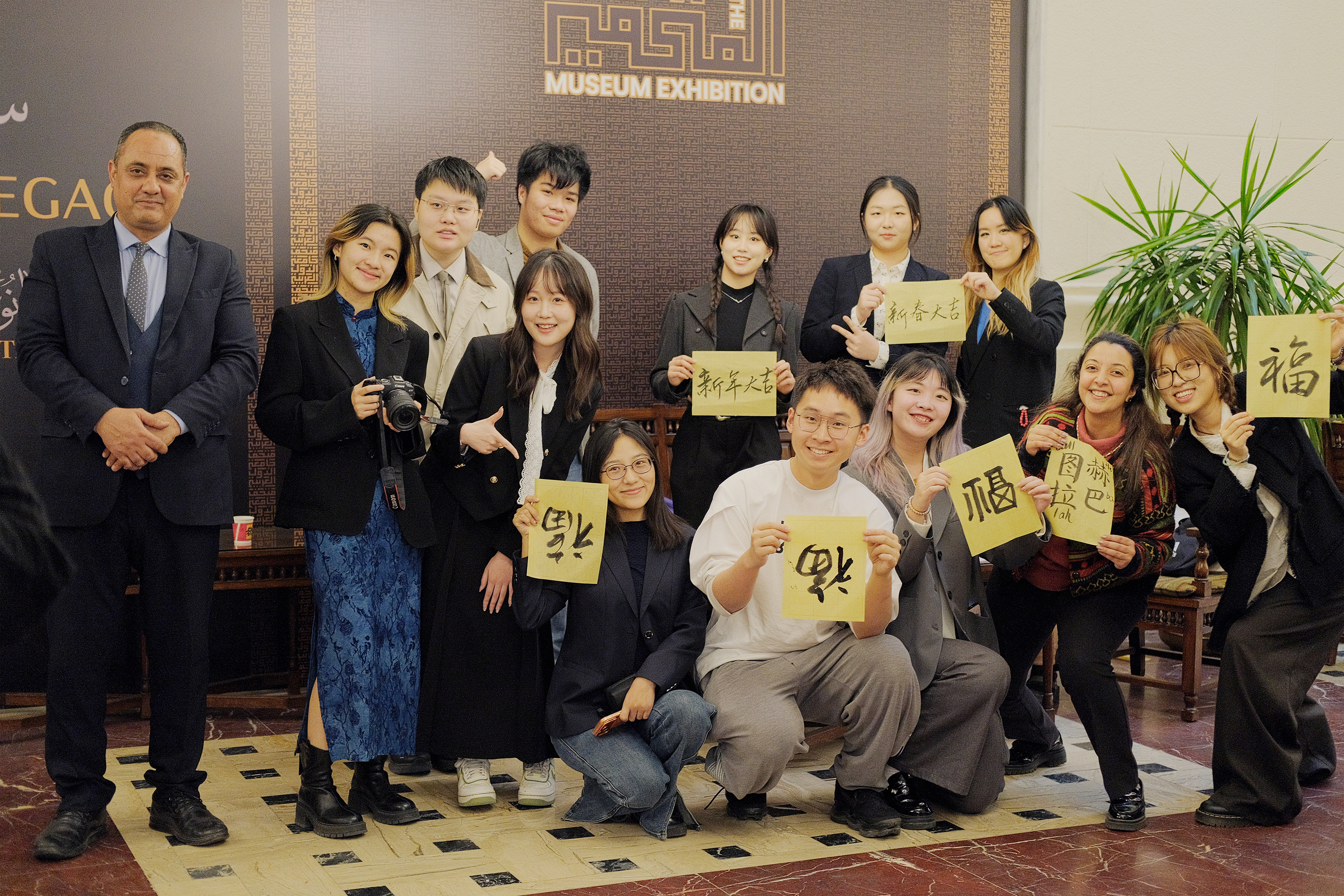
The calligraphy section was equally dynamic. Internship members demonstrated brush techniques while writing the Chinese transliterations of officials’ Arabic names. Several officials examined their name scrolls with interest and proudly shared them with colleagues, noting the special significance of seeing their names rendered in Chinese characters. Encouraged by the vibrant setting, some officials picked up brushes to try writing themselves, allowing conversation and cultural exchange to unfold naturally through ink and paper. Students also improvised calligraphy works depicting bamboo and galloping horses—symbols of resilience and progress—many of which were later displayed in offices as commemorative pieces.
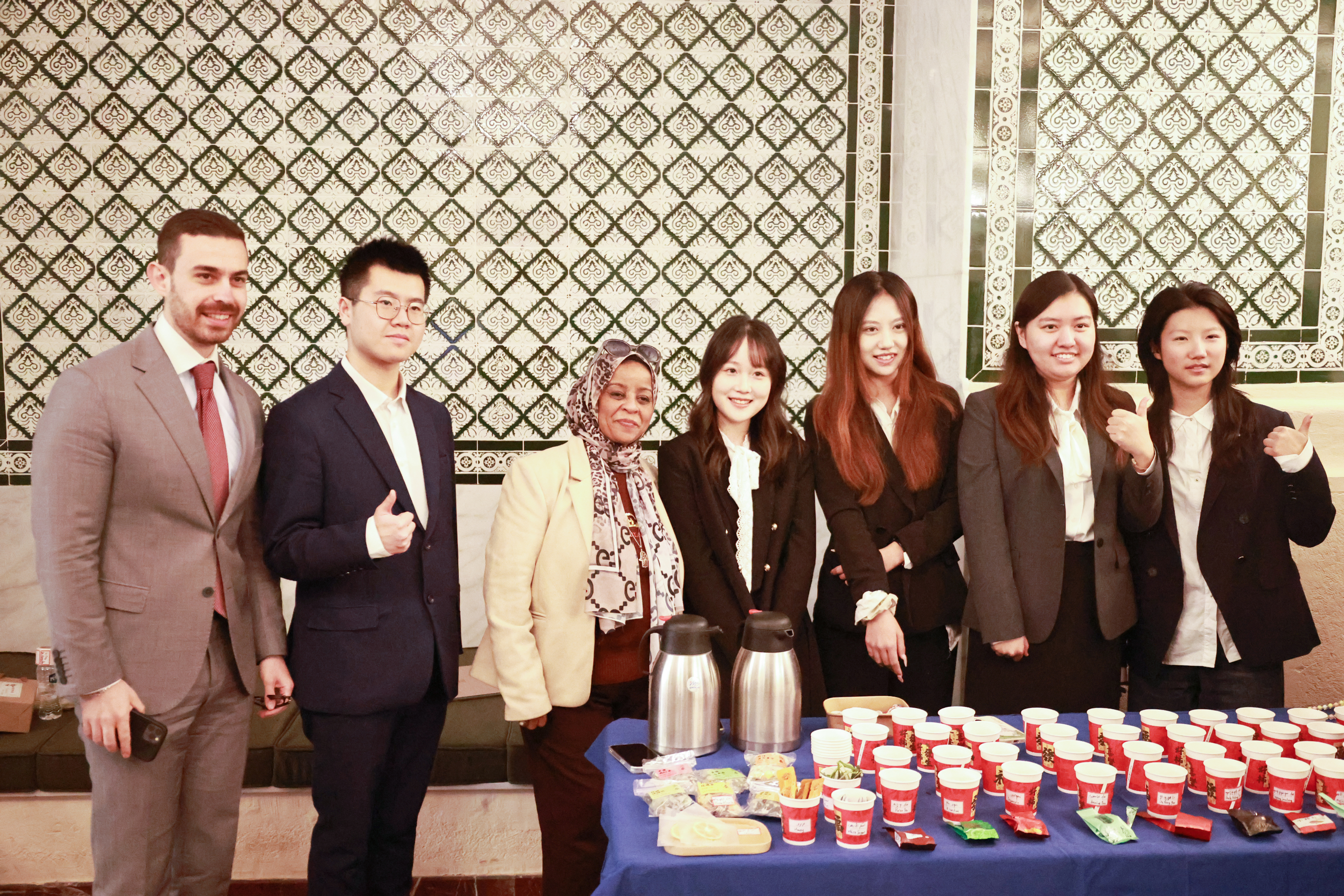
In the tea culture area, participants learned about major varieties such as Longjing and Pu’er, along with brewing techniques and health-related concepts. Beyond traditional teas, students prepared creative blends tailored to local tastes, including osmanthus pear tea and strawberry black tea. As officials sampled the teas and discussed their aromas and flavors, conversations expanded to the broader philosophy often associated with Chinese tea culture—harmony, tranquility, and authenticity.

As a central cultural practice module of the internship program, the event combined student-led presentations with experiential participation, demonstrating the contemporary relevance of traditional Chinese medicine, calligraphy, and tea culture as mediums of civilizational dialogue. Through direct engagement, LAS officials and Chinese youth deepened mutual understanding and built a tangible platform for people-to-people exchange. From identifying herbs to writing names, from sharing tea to exchanging reflections, these meaningful moments of interaction embodied the living spirit of mutual learning between civilizations. Looking ahead, Fudan University and the LAS Secretariat will continue to promote cultural exchange and institutional cooperation between Chinese and Arab youth, injecting sustained vitality and human warmth into the long-term development of China–Arab relations.