Events


On October 17, 2025, the Fudan Institute for Global Public Policy (IGPP) organized the 9th lecture of the Fudan Nordic Lecture Series Dr. Iselin Stensdal from Fridtjof Nansen Institute delivered a lecture on the theme of China’s role in global environmental governance, from laggard to leader? Professor Yijia Jing, Dean of IGPP, chaired the lecture, with Associate Professor Haoqi Qian from IGPP and Dr. Yanyan Huang from Department of Environmental Science and Engineering serving as the discussant.
Dr. Stensdal is a senior researcher at the Fridtjof Nansen Institute. Her work explores how environmental governance intersects international relations and strategic interests, in areas like critical minerals and emissions trading. She has contributed to numerous international research projects and published widely. She holds a PhD from the University of Oslo, where her research focused on climate policy in Shanghai and central-local government relations in China.
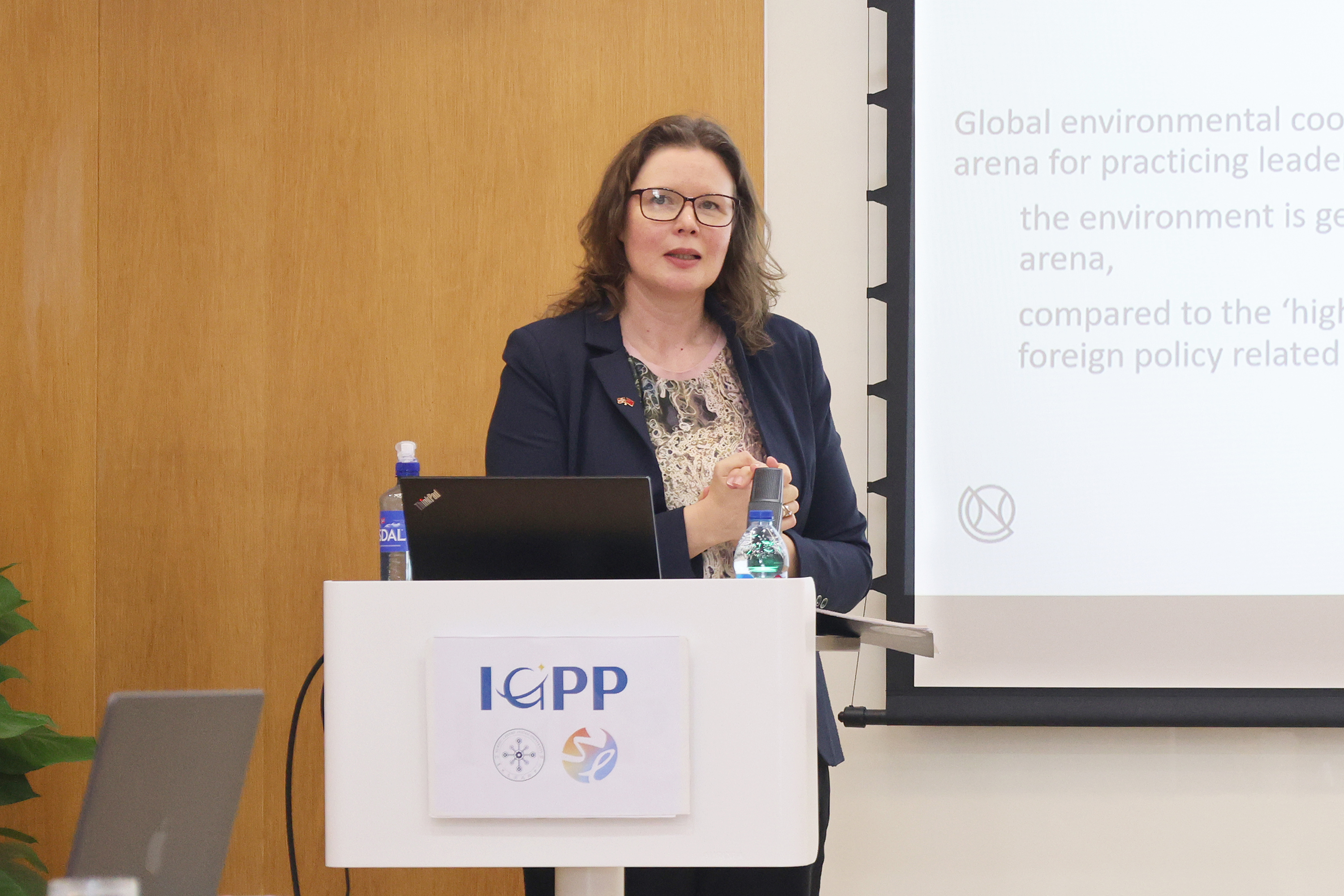
Dr. Stensdal opened her lecture by examining China’s evolving role in global climate governance, exploring how the country balances domestic development priorities with rising international expectations. She introduced a theoretical framework for assessing a state’s role in environmental cooperation. Within this framework, a country may be characterized as a leader or a follower. However, drawing on empirical case studies, she identified a third, intermediate category—the bystander—positioned between leadership and followership. To illustrate the framework, Dr. Stensdal cited a case study on biological diversity conducted by her colleague. The research suggested that although China has launched a number of initiatives demonstrating proactive international engagement, its actual behavior in multilateral settings often places it closer to the role of a bystander—neither fully leading nor simply following but navigating strategically between the two.
Turning to climate change, Dr. Stensdal emphasized China’s pivotal contribution to the adoption of the Paris Agreement in 2015. She noted that China has demonstrated clear domestic leadership in renewable energy expansion and the development of electric vehicle industries. At the same time, amid increasingly complex geopolitical dynamics, China’s influence in global environmental governance has become more visible through cooperation with countries of the Global South and participation in multilateral initiatives. She also observed that while China has made significant progress in emissions reduction and green transition, tensions between development imperatives and climate responsibilities remain a central challenge.
During the discussion session, Associate Professor Qian argued that whether a country can be considered a leader depends, first, on its substantive importance within a given issue area and, second, on the demonstrable impact of its practical achievements. Dr. Huang approached the topic from an interdisciplinary perspective, emphasizing that environmental governance is inherently complex and multidimensional, requiring integrated analytical frameworks that draw from political science, economics, and environmental studies.
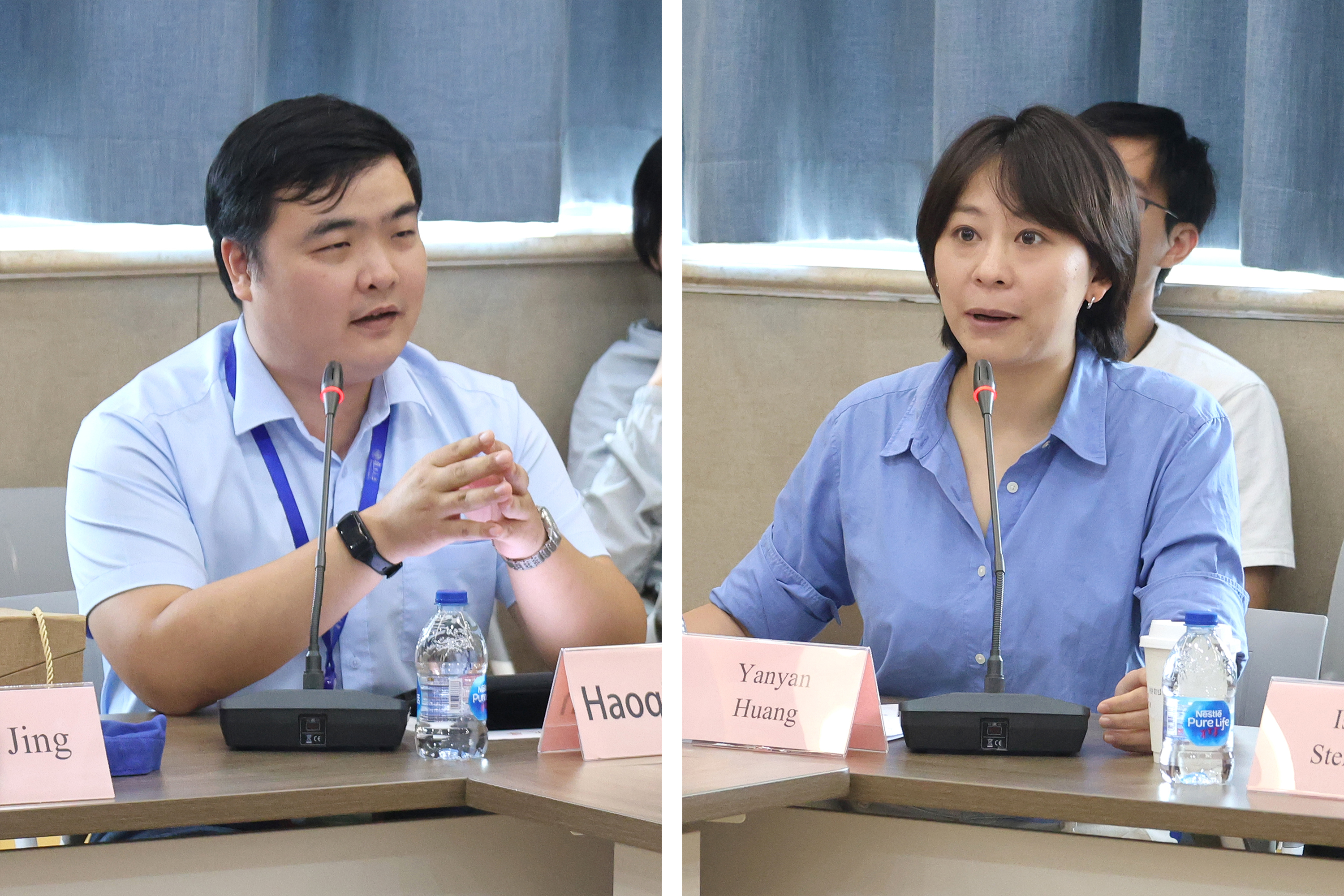
In the Q&A session, faculty members and students engaged Dr. Stensdal in discussion on topics including the interplay between cooperation and competition in climate politics, cross-cultural interpretations of concepts such as “win-win cooperation,” and the challenge of balancing development needs with emissions reduction responsibilities in emerging economies.
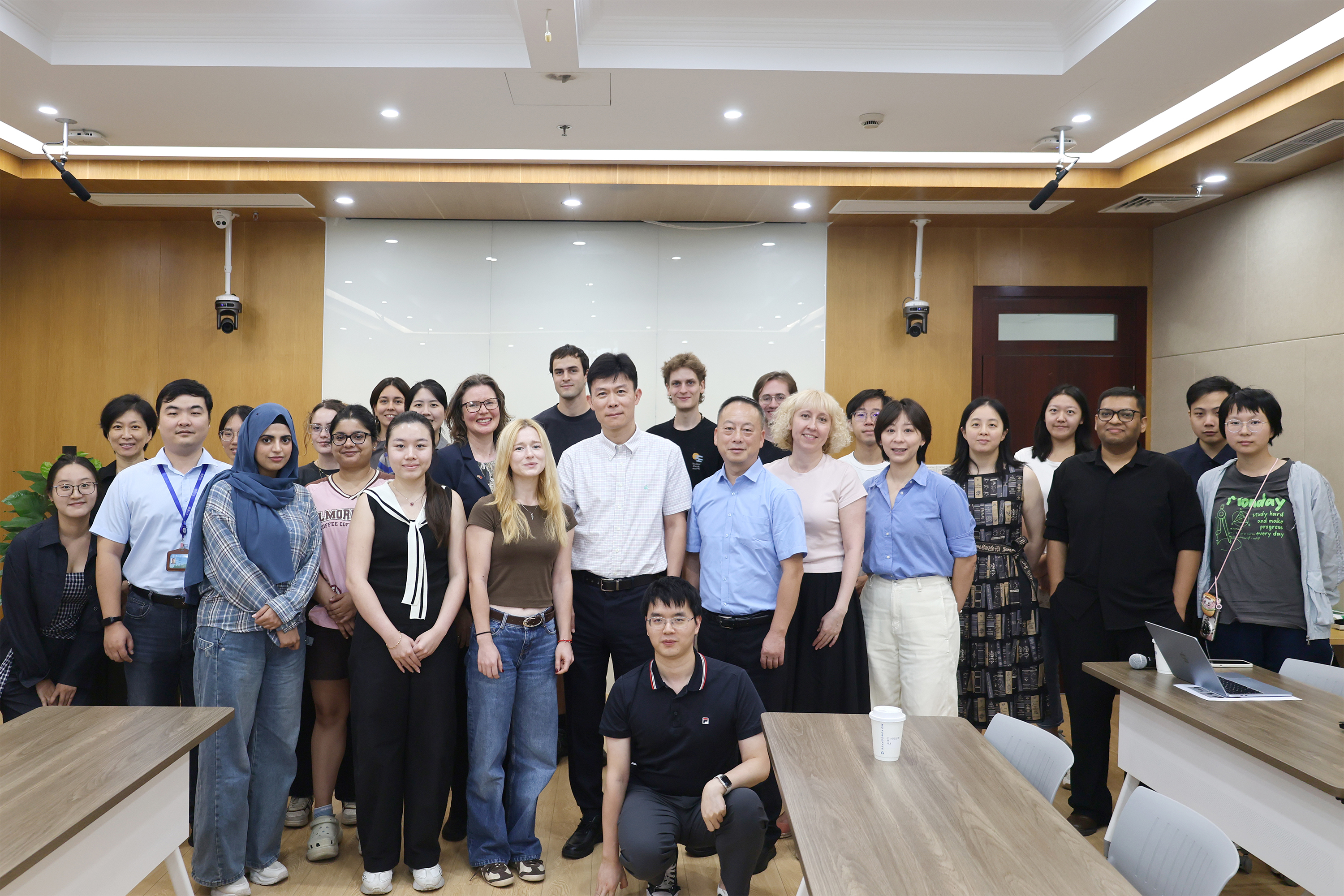
After the lecture, Professor Jing presented a commemorative gift to Dr. Stensdal. The event concluded with a group photo of the faculty and students.