Events


On October 21, 2025, the Fudan Institute for Global Public Policy (IGPP) organized the 10th lecture of the Fudan Nordic Lecture Series. Professor Jari Eloranta from University of Helsinki delivered a lecture on the theme of A Nordic Model? Long-term Fiscal Paths Towards Welfare States. Professor Yijia Jing, Dean of IGPP, chaired the lecture, with Professor Søren Klausen from University of Southern Denmark serving as the discussant.
Professor Eloranta is a Professor of Economic History at the University of Helsinki. He obtained his Ph.D. in 2002 from the European University Institute. He has published broadly on the topics of economic history of the Nordic countries, Nordic historical societal development patterns, economics and economic history of conflicts, and the history of Nordic innovations. His most recent book (May 2025) is the Routledge Economic History of War. He is currently also a Vice-Dean at the Faculty of Social Sciences.
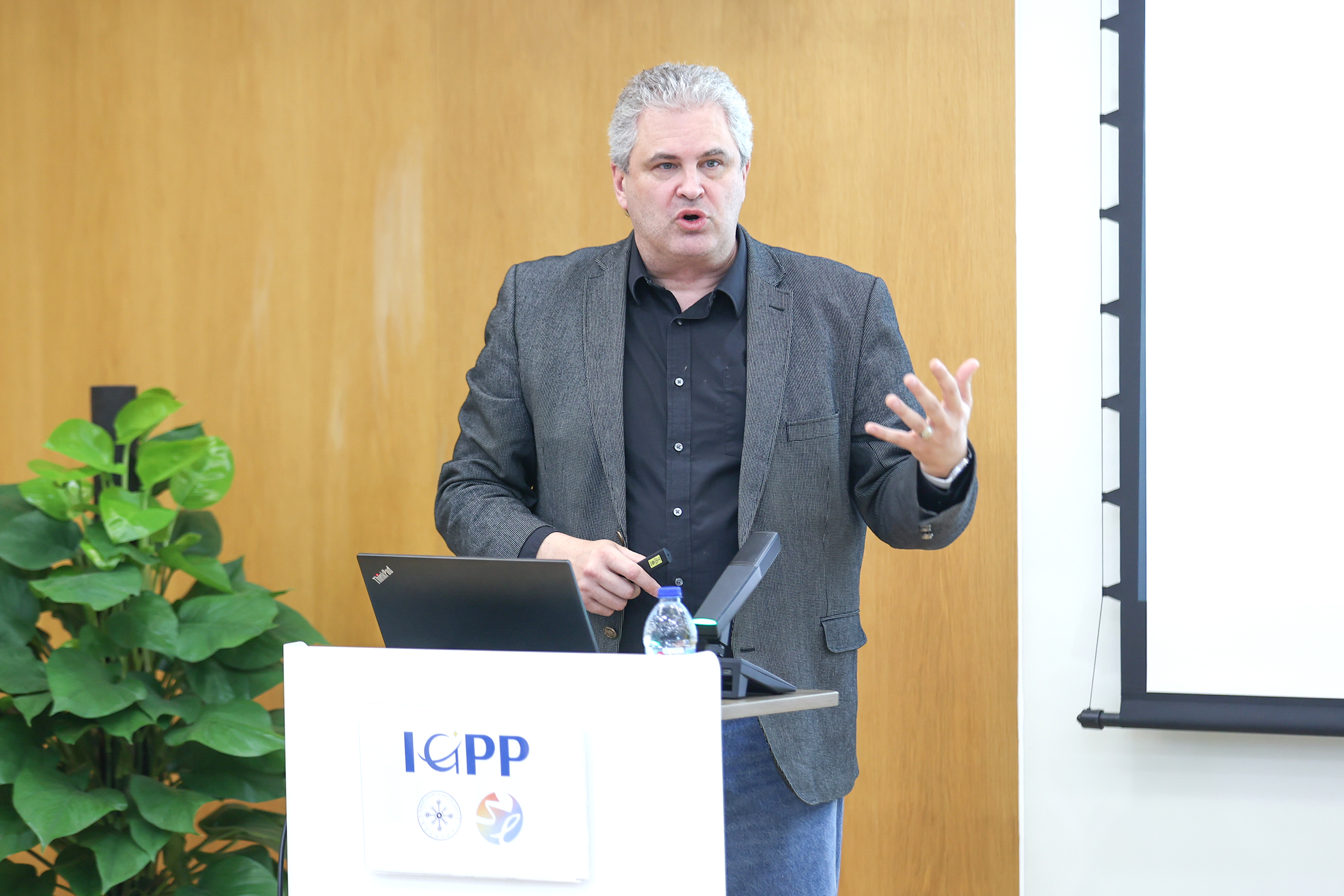
Professor Eloranta outlined one of his central research interests: the dynamic transformation of Nordic countries from “war states” to “welfare states.” He explained that early European states were largely organized as war states—political entities structured to maintain a monopoly on violence and project power externally. Introducing the concept of state capacity, he emphasized the importance of analyzing long-term historical structures and institutional trajectories in order to understand this transformation.
Professor Eloranta argued that there is not a single, uniform Nordic model, but rather multiple Nordic models shaped by distinct national paths. While acknowledging shared characteristics among the Nordic countries, he described these commonalities as a form of institutional capital that laid the foundation for the eventual transition to welfare states. He demonstrated that substantial differences exist among Nordic countries in fiscal trajectories, social spending patterns, and the evolution of inequality—particularly since the 1970s, when divergence became more pronounced. He concluded that the shift from war states to welfare states generally occurred in contexts characterized by rapid economic growth, democratization, and periods of global conflict.
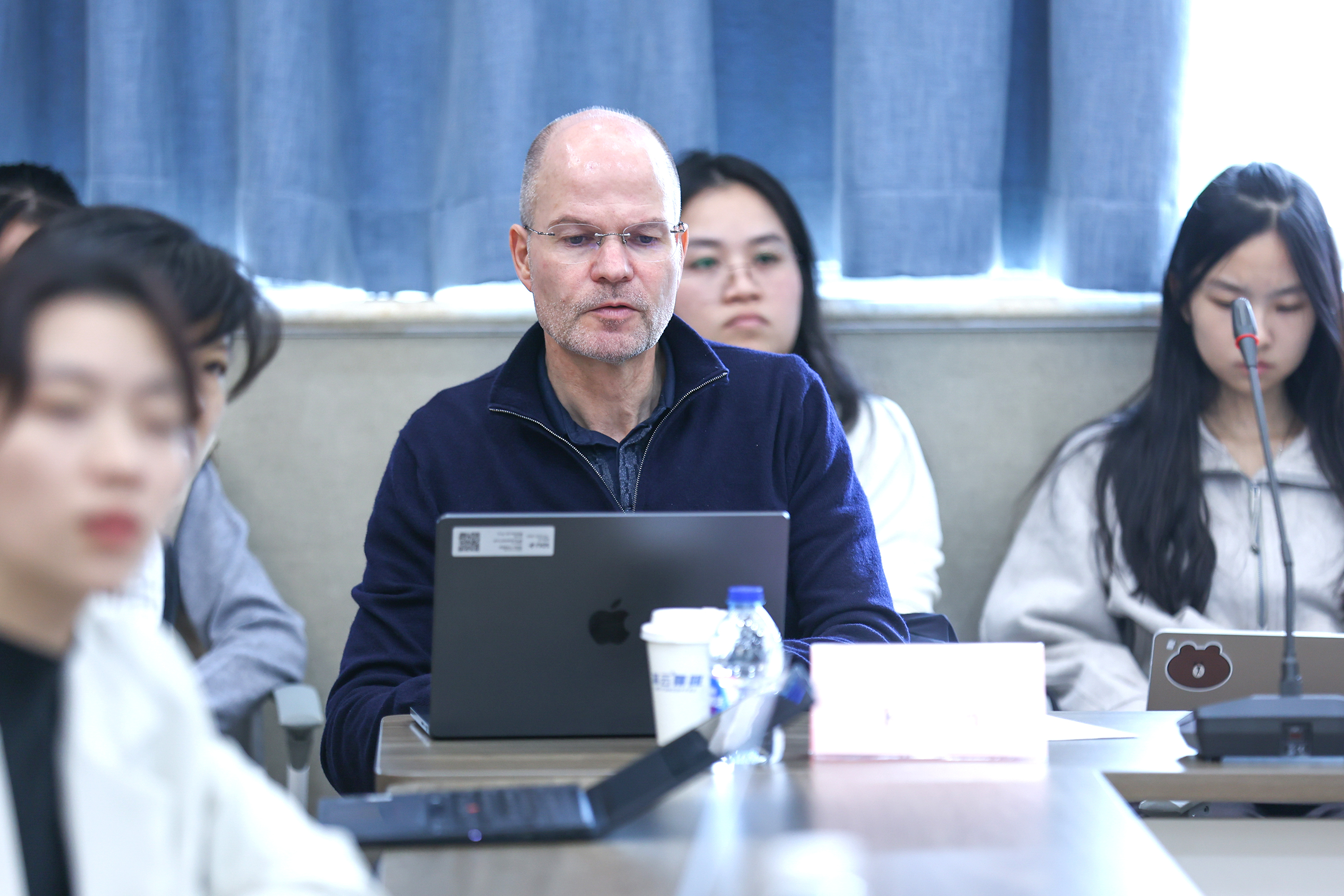
During the commentary session, Professor Klausen expressed appreciation for the lecture’s broad historical perspective and raised philosophical questions regarding how the welfare state should be defined. Professor Stein Kuhnle affirmed Professor Eloranta’s argument that both participation in war and neutrality could, under certain historical conditions, contribute to the development of welfare institutions.
In the Q&A session, faculty and students asked whether Nordic welfare states are in decline and whether increased defense spending following the accession of Sweden and Finland to NATO might pose risks to the sustainability of the welfare model. In response, Professor Eloranta stated that he does not see Nordic welfare states as collapsing, but rather as evolving. He emphasized that broad societal consensus in support of welfare institutions—combined with strong institutional resilience and high levels of social trust—enables these countries to adapt to new political and economic challenges.
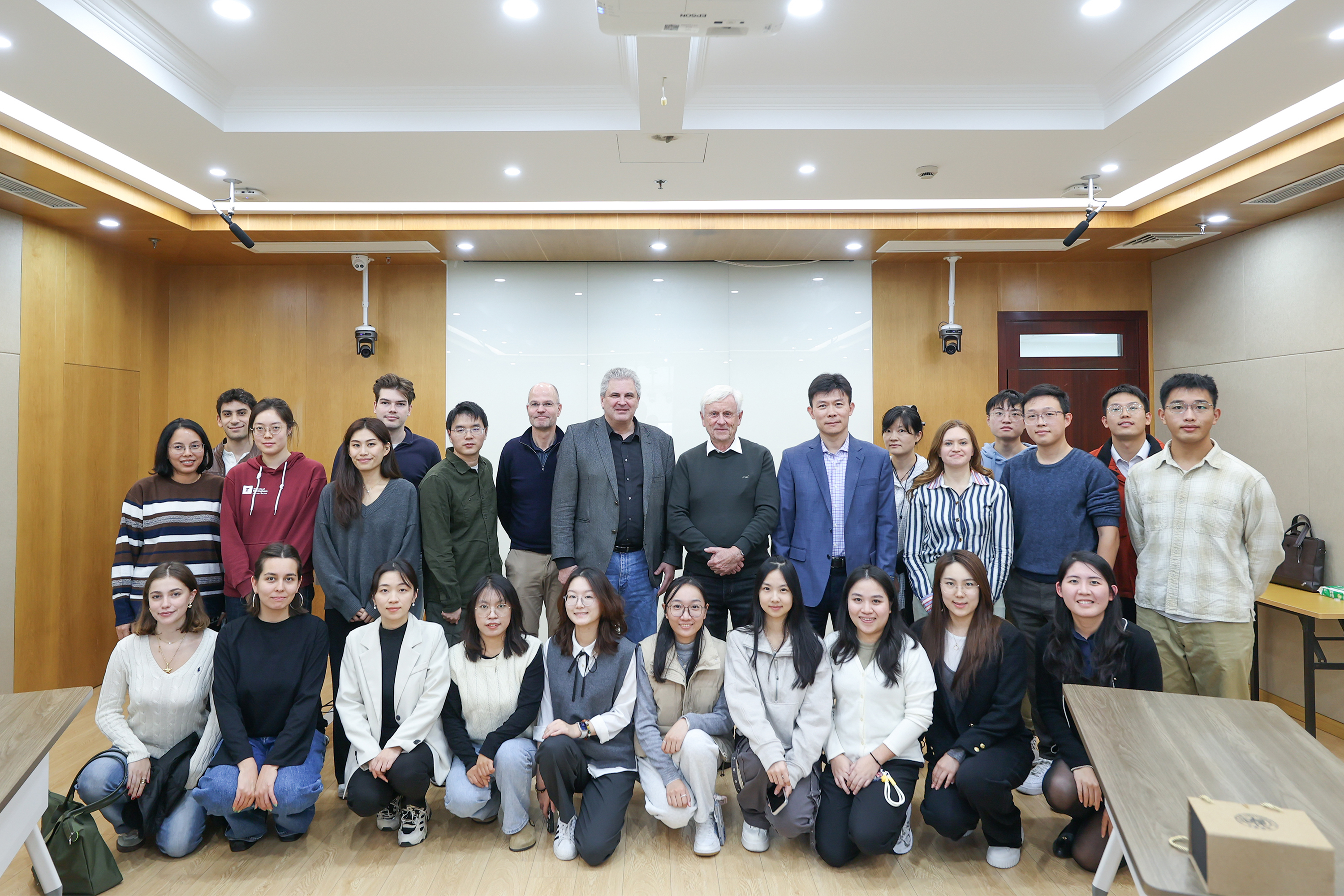
After the lecture, Professor Jing presented a commemorative gift to Professor Eloranta. The event concluded with a group photo of the faculty and students.