Events


On October 15, 2025, the Fudan Institute for Global Public Policy (IGPP) organized the 83rd lecture of the Fudan-LSE Lecture Series. Professor Seamus Grimes from the University of Galway in Ireland delivered a lecture on the theme of High technology in China: dependency, interdependency and self-reliance. The session was chaired by Dean Yijia Jing of IGPP. Associate Professor Yin Li from School of International Relations and Public Affairs served as the discussant.
Professor Grimes is Professor Emeritus of Economic Geography at the University of Galway in Ireland. He has been a visiting research professor at East China Normal University for 15 years, making regular visits during that time to interview foreign technology companies in China.
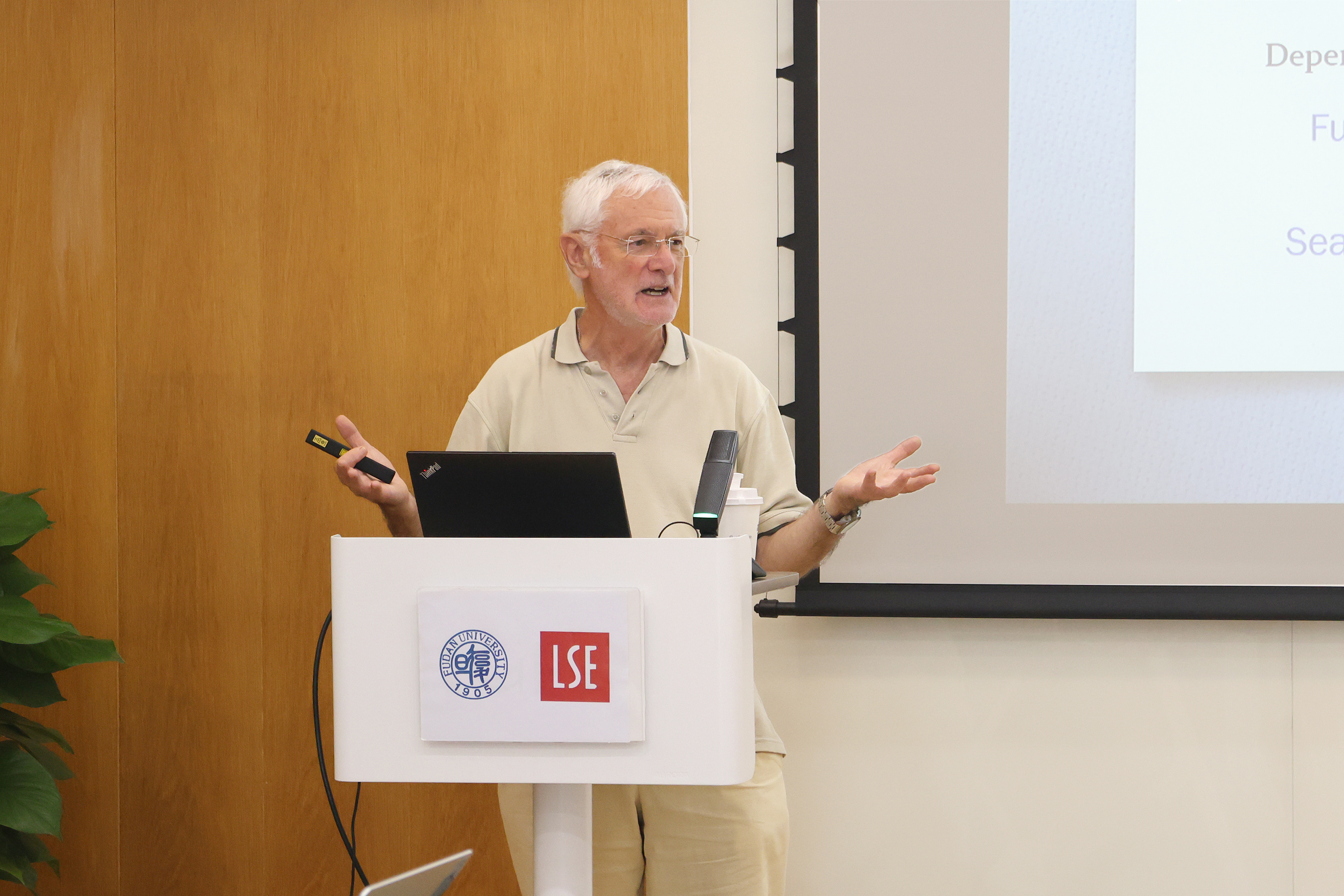
In his lecture, Professor Grimes traced the evolution of China’s high-technology sector from an early stage characterized by heavy reliance on foreign technology, to deeper integration into global technology value chains marked by interdependence, and more recently to a policy-driven emphasis on technological self-reliance. He explained that global value chains were progressively constructed by multinational corporations through outsourcing and offshore production, allocating functions across regions according to comparative advantages to form highly optimized and efficient production networks.
Professor Grimes then analyzed U.S. sanctions on Chinese technology firms and their implications for China’s push toward technological self-reliance. As Sino–U.S. strategic competition intensifies, global value chains are undergoing significant restructuring. He noted that following sanctions, Huawei accelerated efforts to localize its supply chain and has largely achieved domestic sourcing in key areas. As a major player in AI chips, Nvidia has also seen its operations in the Chinese market affected by export controls. These developments highlight the growing tension between efficiency and security in the global technology industry. Professor Grimes emphasized that traditional economic theory and trade statistics offer limited insight into how value is distributed. He stressed the importance of distinguishing between the location of corporate headquarters and the actual sites of production and operation to more accurately understand profit flows and cross-national value allocation.
During the discussion session, Associate Professor Li remarked that Professor Grimes’ firm-level perspective provided a fresh analytical lens for examining global value chains. He observed that despite political disruptions and strategic competition, global production networks continue to exhibit considerable resilience and complexity.
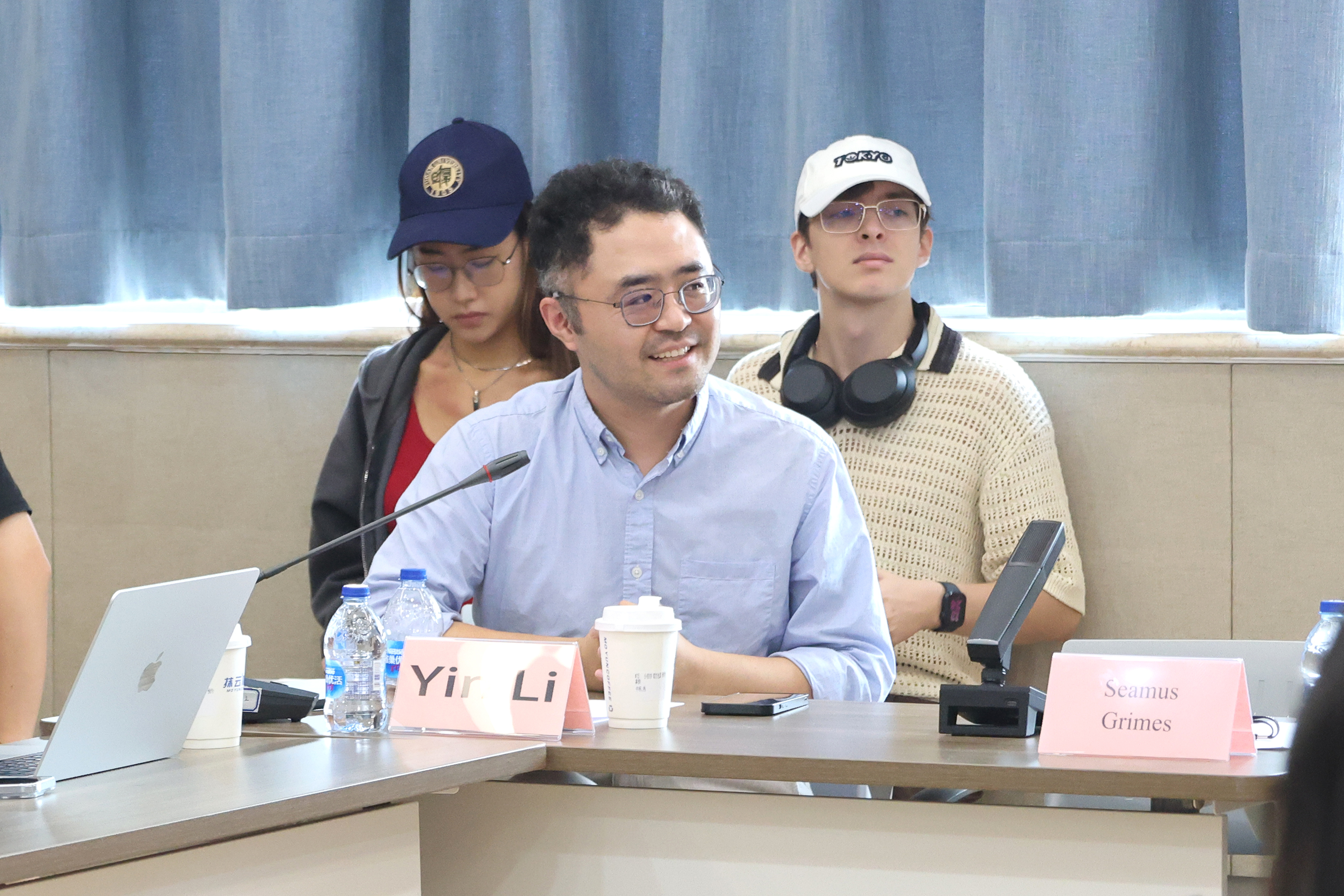
In the Q&A session, faculty members and students engaged in discussions on policy options available to developing countries amid shifts in global value chains, as well as the broader economic impact of Sino–U.S. technological competition. In response, Professor Grimes suggested that traditional development pathways centered on market openness and foreign direct investment are no longer straightforward. Instead, countries must reassess their positions within global value chains and strategically reposition themselves according to their comparative strengths.
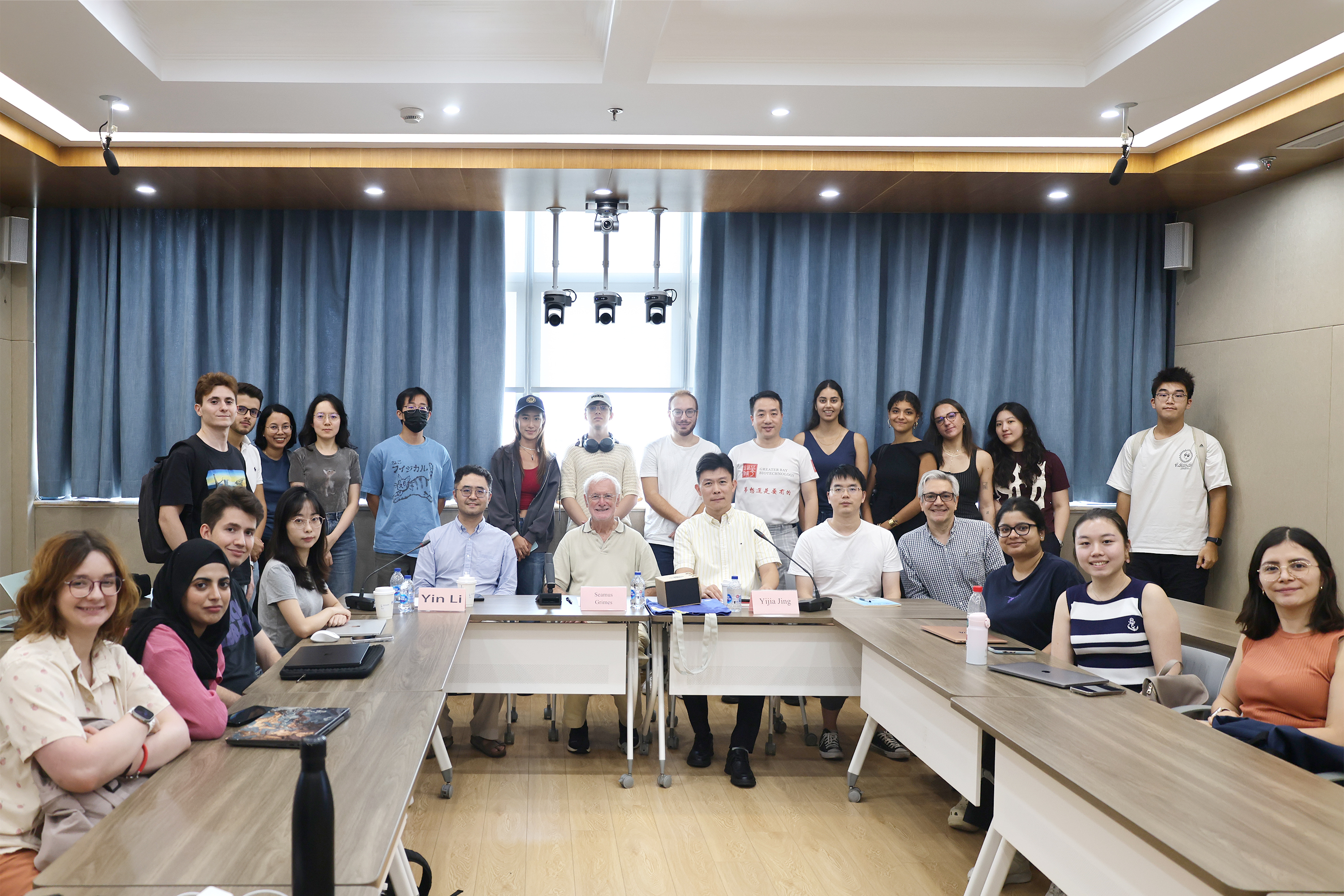
After the lecture, Professor Jing presented a commemorative gift to Professor Grimes. The event concluded with a group photo of the faculty and students.