News


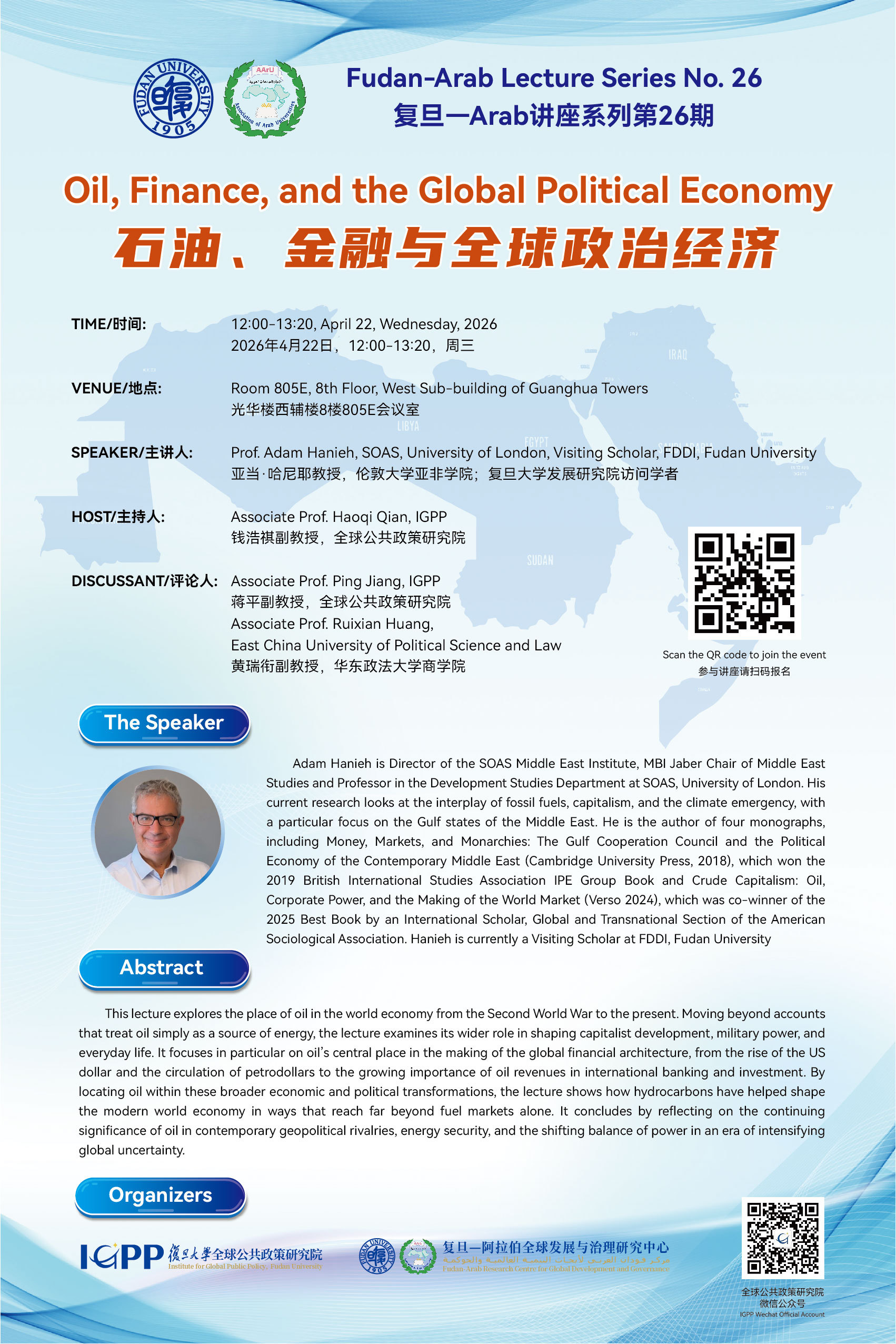
Fudan-Arab Lecture Series No.26
Title
Oil, Finance, and the Global Political Economy
Speaker
Prof. Adam Hanieh, SOAS, University of London, Visiting Scholar, FDDI, Fudan University
Host
Associate Prof. Haoqi Qian, IGPP
Discussant
Associate Prof. Ping Jiang, IGPP
Associate Prof. Ruixian Huang, East China University of Political Science and Law
Time
12:00-13:20, April 22, Wednesday, 2026
Venue
Room 805E, 8th Floor, West Sub-building of Guanghua Towers
https://v.wjx.cn/vm/Qsn1EtF.aspx#

The Speaker:
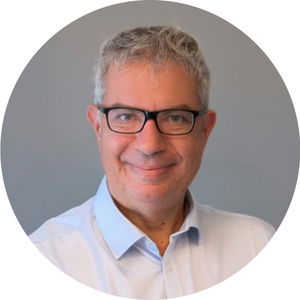
Prof. Adam Hanieh
Adam Hanieh is Director of the SOAS Middle East Institute, MBI Jaber Chair of Middle East Studies and Professor in the Development Studies Department at SOAS, University of London. His current research looks at the interplay of fossil fuels, capitalism, and the climate emergency, with a particular focus on the Gulf states of the Middle East. He is the author of four monographs, including Money, Markets, and Monarchies: The Gulf Cooperation Council and the Political Economy of the Contemporary Middle East (Cambridge University Press, 2018), which won the 2019 British International Studies Association IPE Group Book and Crude Capitalism: Oil, Corporate Power, and the Making of the World Market (Verso 2024), which was co-winner of the 2025 Best Book by an International Scholar, Global and Transnational Section of the American Sociological Association. Hanieh is currently a Visiting Scholar at FDDI, Fudan University
This lecture explores the place of oil in the world economy from the Second World War to the present. Moving beyond accounts that treat oil simply as a source of energy, the lecture examines its wider role in shaping capitalist development, military power, and everyday life. It focuses in particular on oil’s central place in the making of the global financial architecture, from the rise of the US dollar and the circulation of petrodollars to the growing importance of oil revenues in international banking and investment. By locating oil within these broader economic and political transformations, the lecture shows how hydrocarbons have helped shape the modern world economy in ways that reach far beyond fuel markets alone. It concludes by reflecting on the continuing significance of oil in contemporary geopolitical rivalries, energy security, and the shifting balance of power in an era of intensifying global uncertainty.