Events


On April 20, 2026, the Fudan Institute for Global Public Policy (IGPP) hosted the 12th lecture of the Fudan–Nordic Lecture Series. Professor Anders Ryom Villadsen from Aarhus University delivered a lecture on the theme of Public Sector Top Managers and Performance of Public Organizations. The session was chaired by Associate Professor Ziteng Fan of IGPP, with Assistant Professor Wenyan Tu serving as discussant.
Professor Villadsen has long worked on leadership, organizational change, and performance in public organizations, with a particular focus on comparative administrative practices across countries. He has published in leading public administration journals such as Public Administration Review, Journal of Public Administration Research and Theory, and Public Management Review. Since 2013, he has actively engaged in China–Denmark academic collaboration. He previously served as Associate Editor of JPART and currently sits on the editorial boards of both JPART and PAR.
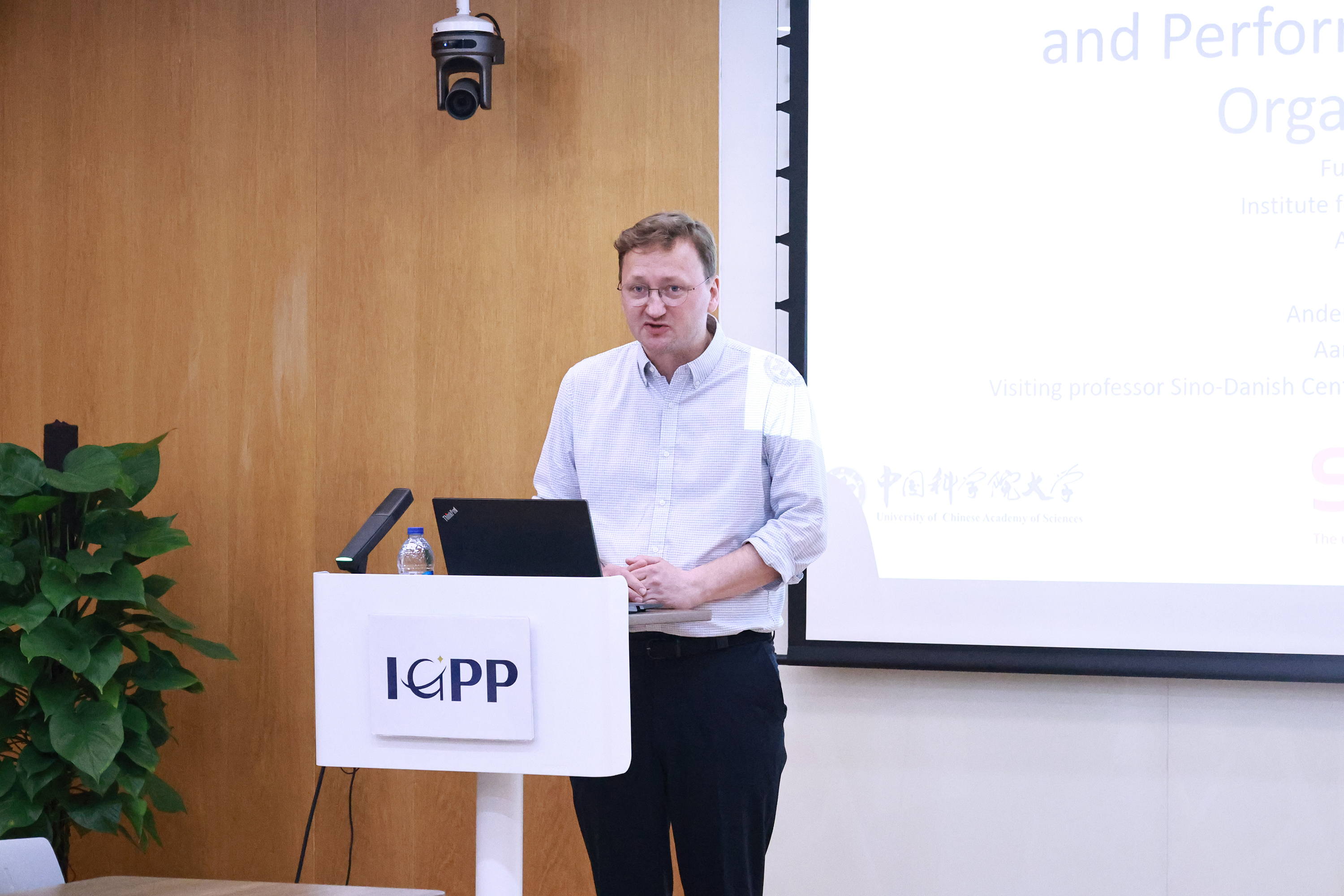
Professor Villadsen began by posing a central question: why is it important to study top managers in the public sector? Drawing on Upper Echelons Theory, he argued that organizations are, to a significant extent, reflections of their top executives. However, compared with business administration, public administration research has paid insufficient attention to top managerial actors. He emphasized that senior public managers occupy key positions in the decision-making chain. Their traits and behaviors shape organizational performance, policy outputs, citizen perceptions, and even their own career trajectories through strategic decision-making and implementation.
Building on this framework, Villadsen examined the composition of top management teams and their mechanisms of influence on performance, highlighting differences between Denmark and China. He described diversity as a “double-edged sword.” From a knowledge-based perspective, gender and background diversity can reduce groupthink and enhance innovation and problem-solving capacity. However, from a social identity perspective, diversity may also increase communication costs and internal conflict. Empirical findings from Denmark suggest that gender diversity has a significant positive effect on financial performance in collectively governed organizations. In Chinese city-level studies, the proportion of female vice mayors is positively associated with the adoption of women-sensitive policies and this effect is moderated by the presence of a “critical minority” and support from higher-level authorities. Villadsen further addressed the question of when top managers matter most. He argued that leadership turnover creates “windows of opportunity” for policy change. In China, newly appointed mayors or party secretaries often respond to top-down incentives by increasing environmental transparency and other governance reforms. He also noted that managerial autonomy is a key determinant of employee turnover at the organizational level.
During the discussion session, Assistant Professor Tu noted that Professor Villadsen’s work offers important implications for cultivating globally oriented public sector leadership scholars. She emphasized that in China, top managers possess substantial decision-making authority, making internal dynamics within top management teams a promising research direction. Mr. Wei Ma from the Nordic Center also reflected on managerial practice, highlighting the importance of team fit and the alignment between leadership style and organizational characteristics.
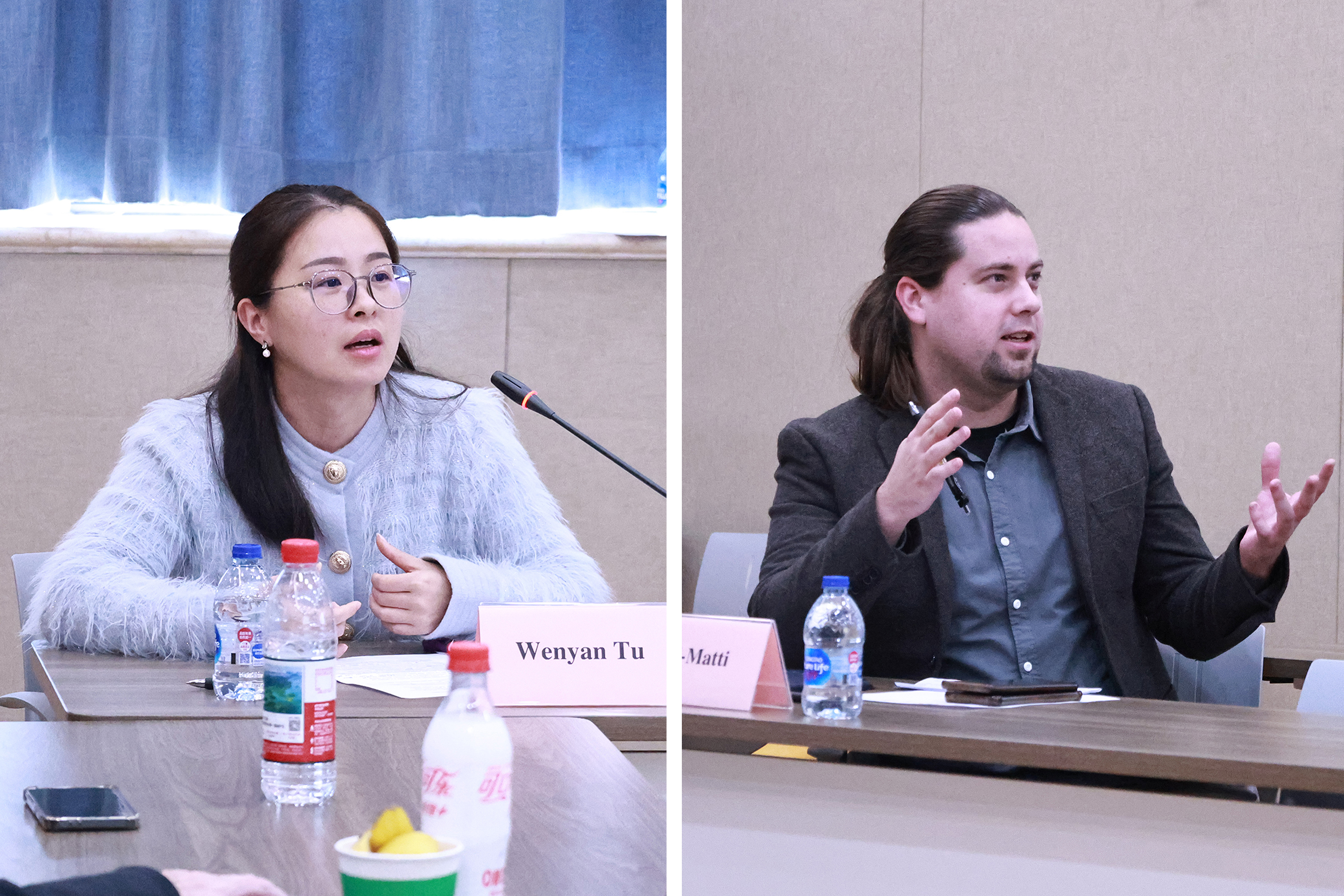
In the Q&A session, participants raised questions about maintaining motivation after reaching career ceilings and whether public service motivation declines with higher administrative rank. Professor Villadsen responded by outlining two competing explanations. On the one hand, promotion brings higher income and social status, which represent extrinsic motivation. On the other hand, senior positions provide greater decision-making power to influence societal outcomes, which can significantly strengthen intrinsic motivation related to public service.
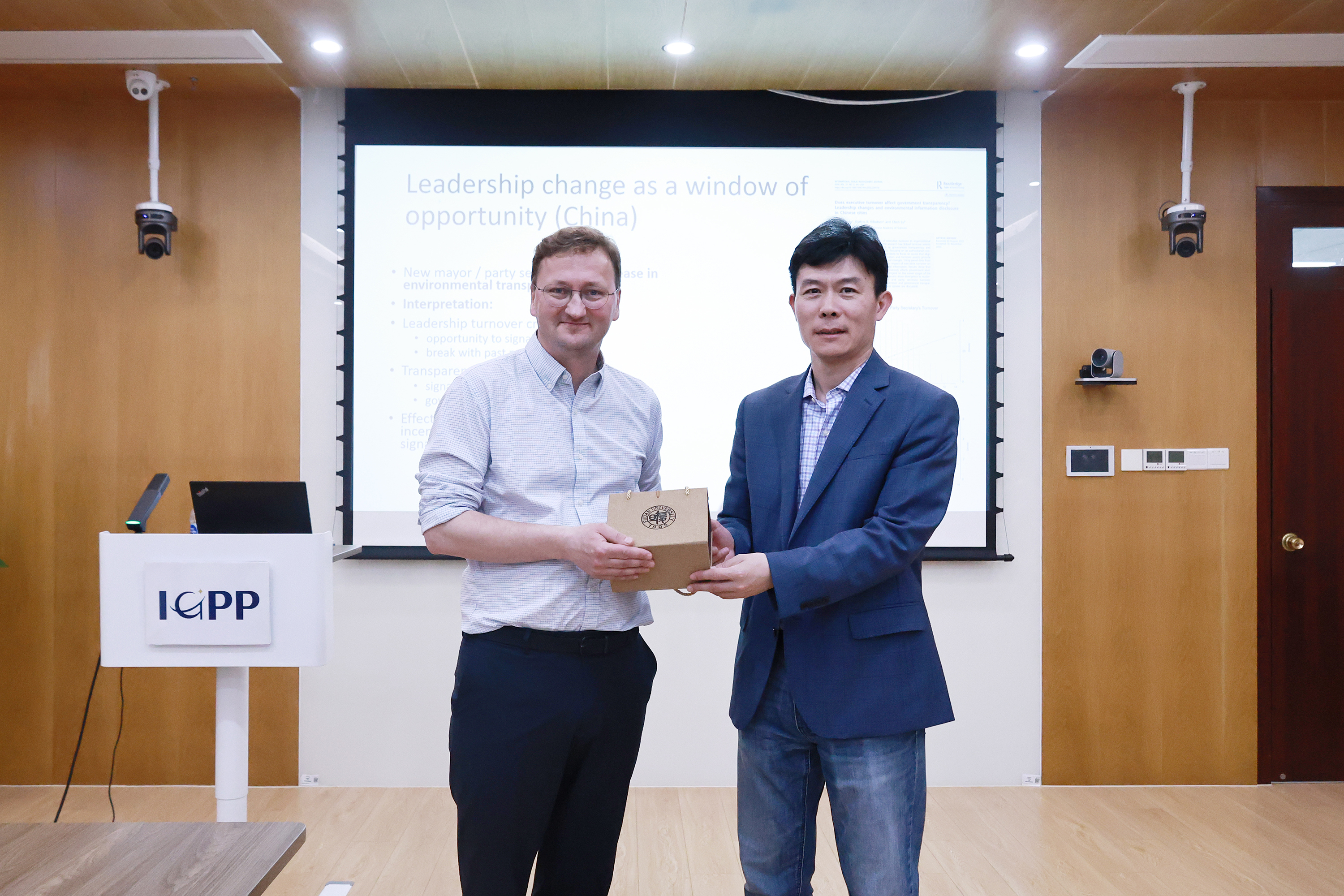
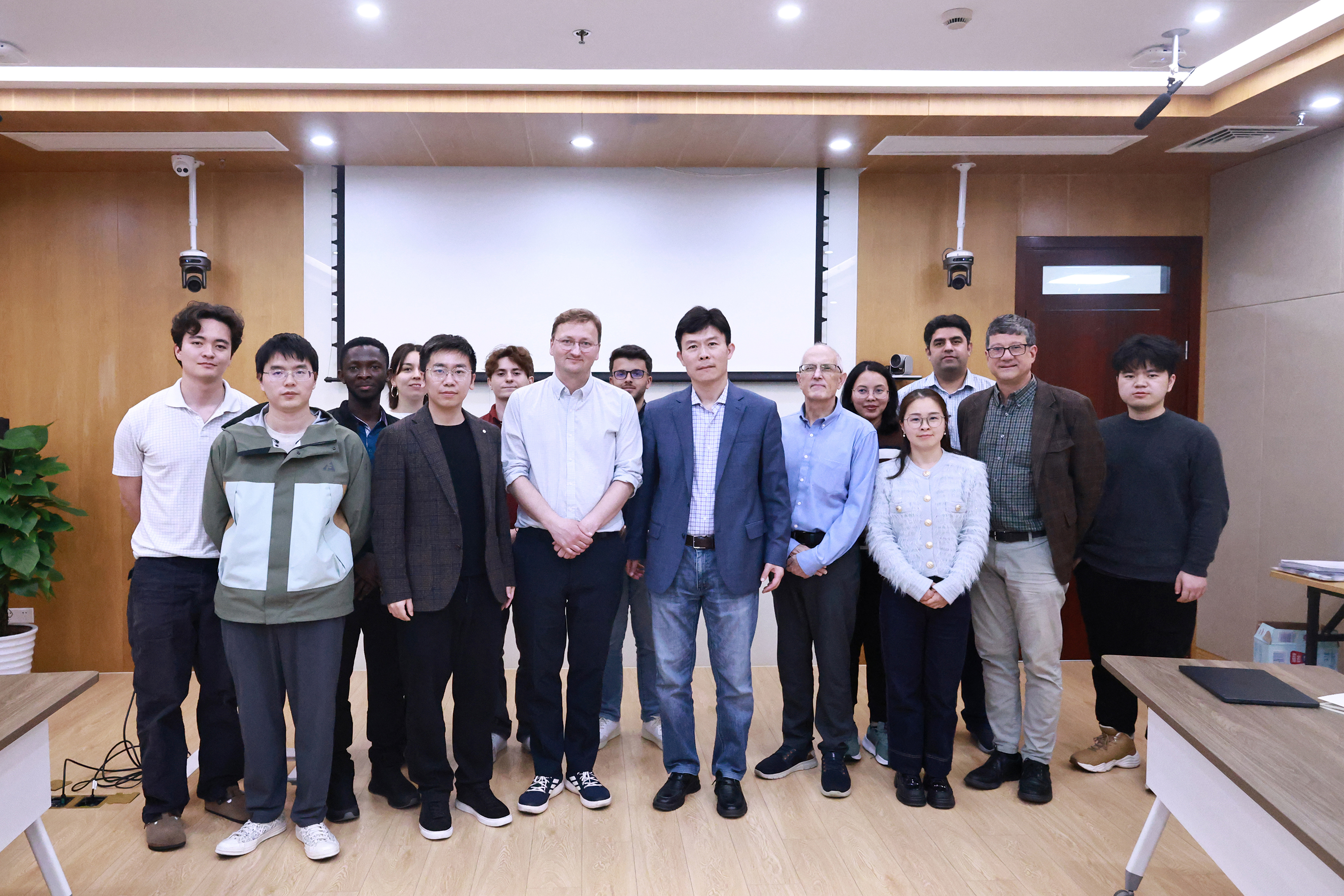
After the lecture, Dean Yijia Jing of IGPP presented a commemorative gift to Professor Snellman. The event concluded with a group photo of the faculty and students.