CANSPPA


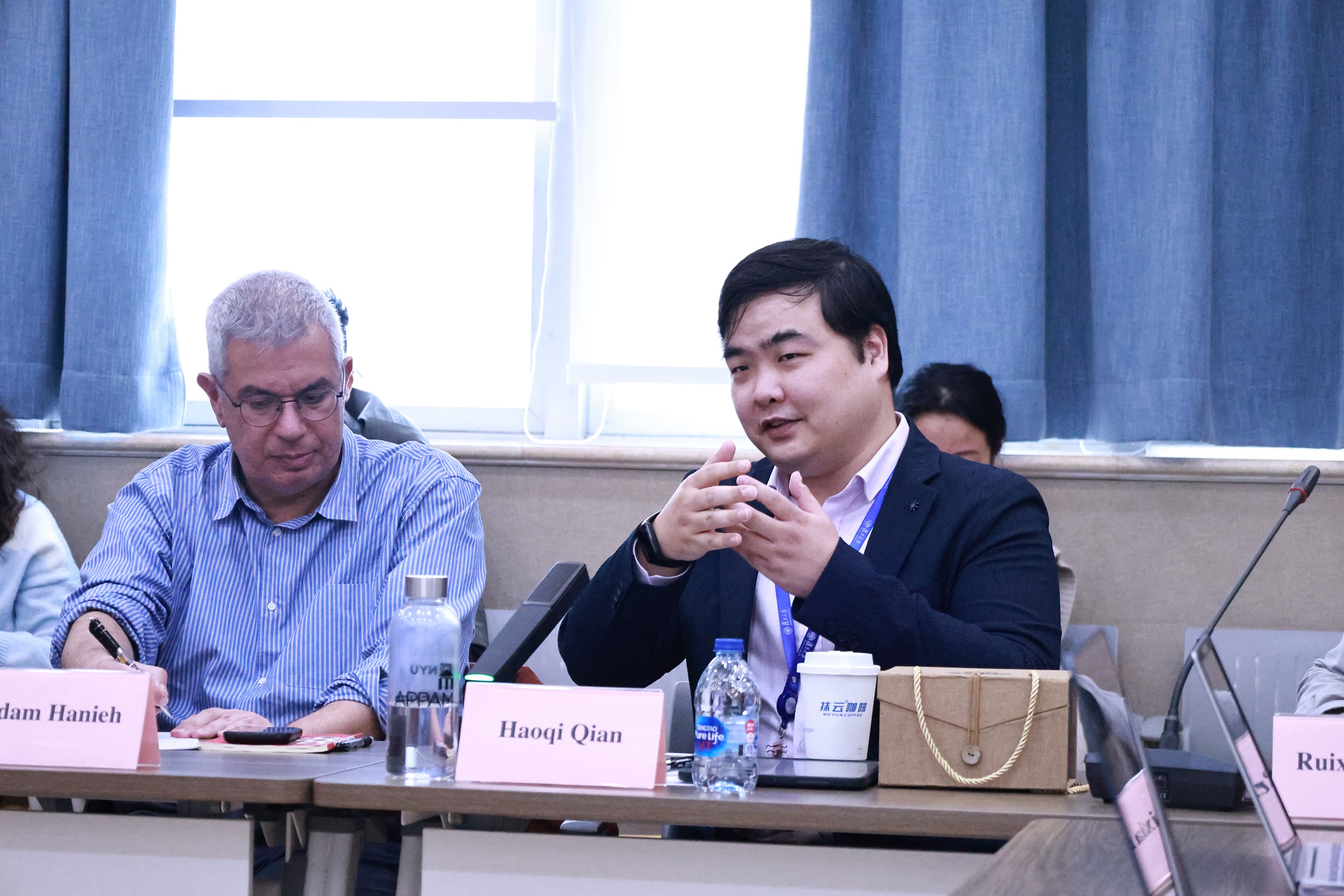
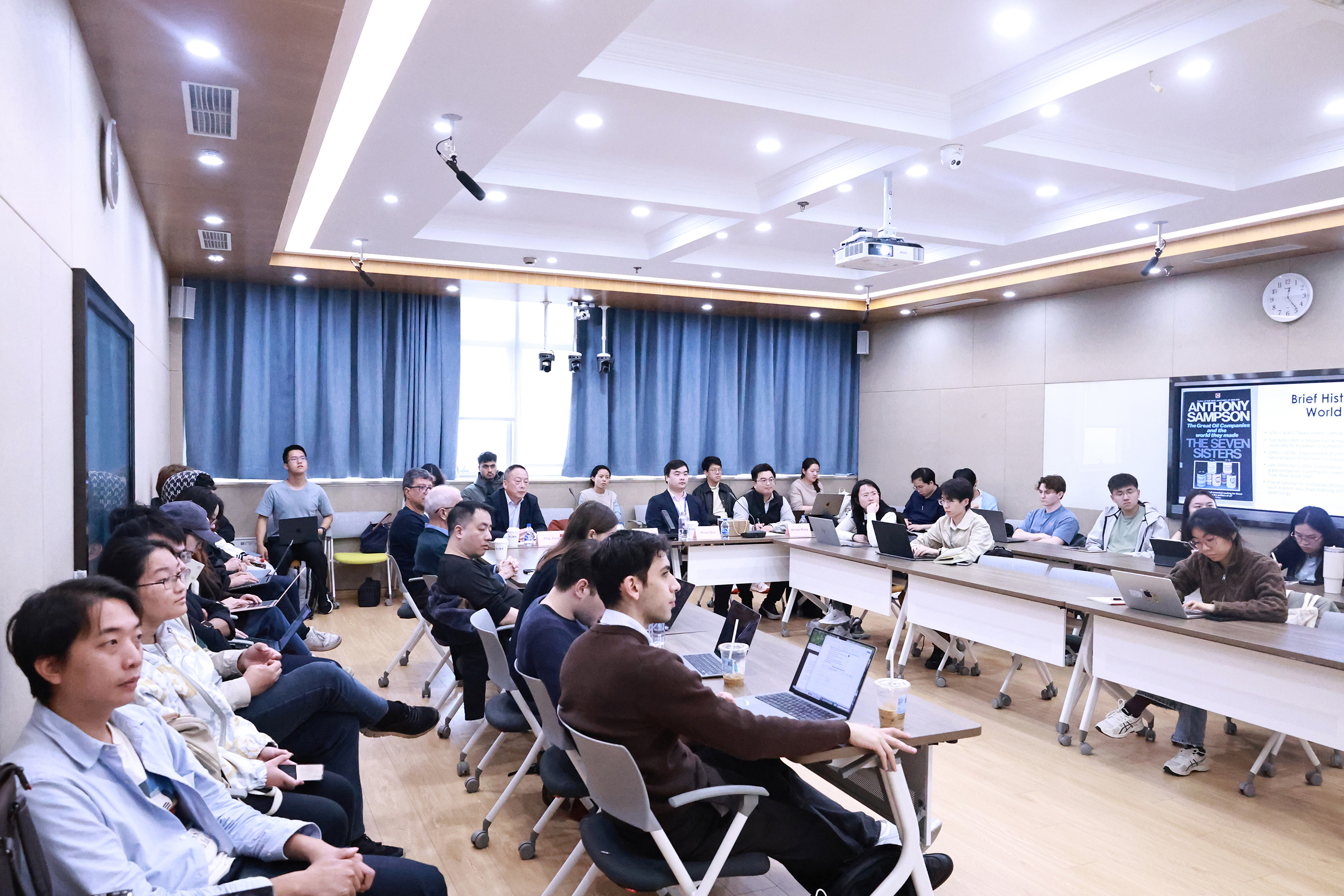
On April 22, 2026, the Fudan Institute for Global Public Policy (IGPP) organized the 26th lecture of the Fudan-Arab Lecture Series. Professor Adam Hanieh from the University of London delivered a lecture on the theme of Oil, Finance, and the Global Political Economy. The session was chaired by Associate Professor Haoqi Qian from IGPP, with Associate Professor Ping Jiang from IGPP and Associate Professor Ruixian Huang from East China University of Political Science and Law serving as discussants.
Professor Hanieh is a leading scholar in Middle East political economy, with research spanning fossil fuels, global capitalism, financial systems, and climate governance. Against the backdrop of the ongoing global energy transition and intensifying geopolitical tensions, his insights offered significant academic value and practical relevance.
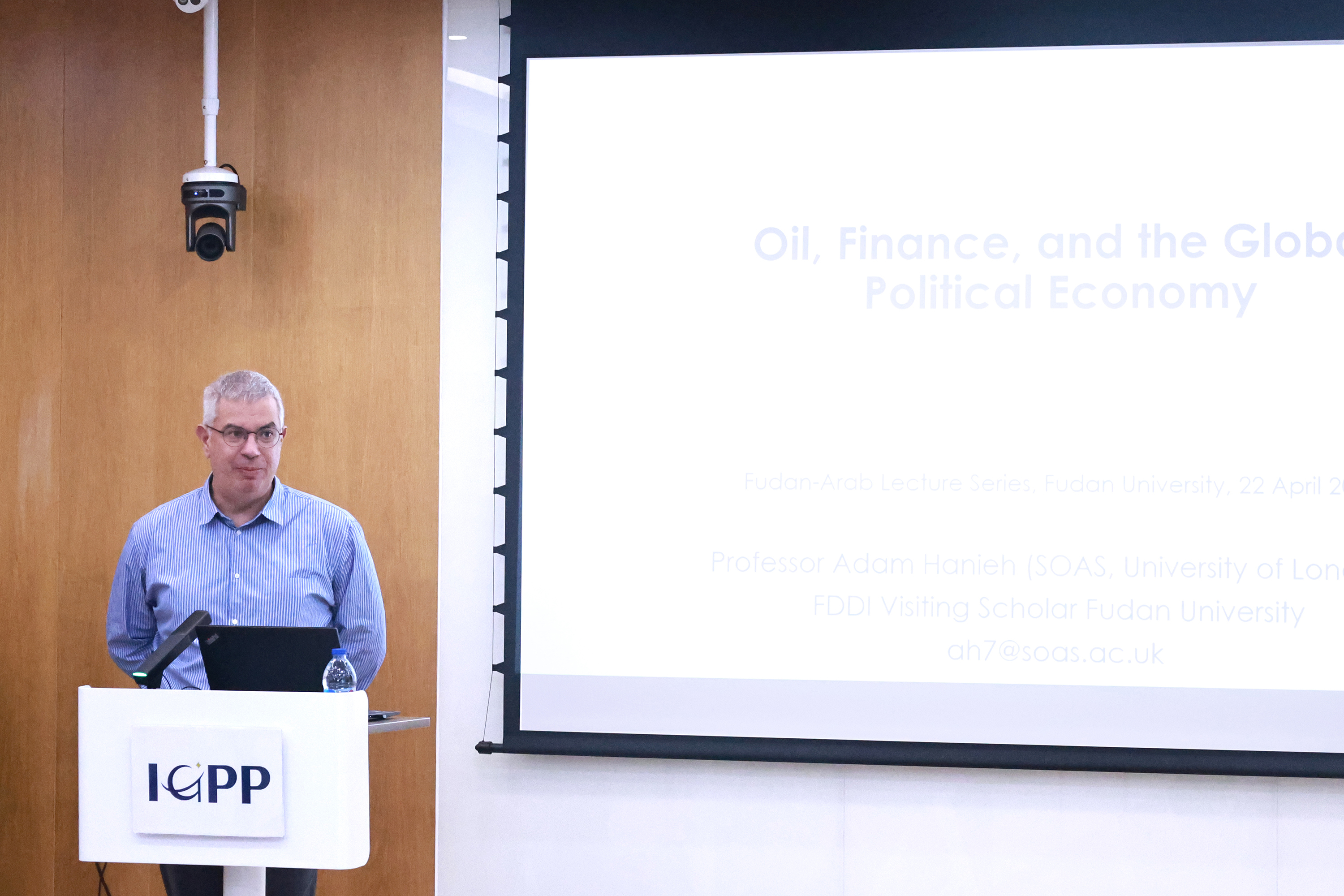
Professor Hanieh opened the lecture by challenging common assumptions about energy transition. Drawing on long-term global energy data, he argued that energy systems under capitalism evolve through accumulation rather than substitution. Although oil overtook coal as the dominant fuel in the mid-20th century, coal consumption has not declined and has in fact reached record levels in recent years. He linked this pattern to the concept of the “Great Acceleration,” emphasizing that the exponential expansion of fossil fuel use since World War II has fundamentally reshaped the global economy while producing irreversible impacts on the biosphere. He also stressed the material embeddedness of oil in everyday life, noting that modern society is deeply dependent on petrochemical systems that extend far beyond transportation fuels.
The lecture then turned to the transformation of oil into a cornerstone of global finance. Professor Hanieh traced the evolution from Western oil company dominance to state-led nationalization and highlighted the pivotal role of the 1974 petrodollar agreement. He argued that Saudi Arabia’s decision to price oil exclusively in U.S. dollars helped consolidate dollar hegemony after the collapse of the Bretton Woods system. He explained how petrodollar recycling, through U.S. Treasury purchases, deposits in Western banks, and large-scale arms imports, channeled oil revenues back into Western financial centers.
Professor Hanieh further described the shifting geography of global energy flows in the 21st century, characterizing it as the rise of an “eastward hydrocarbon axis.” China’s share of global oil trade has increased dramatically, reshaping flows toward Asia and intensifying interdependence between China, India, and Gulf states. However, he emphasized a key contradiction: while physical trade flows increasingly move eastward, Gulf sovereign wealth and private capital continue to be disproportionately invested in U.S. financial markets, producing a structural split between “eastward trade” and “westward finance.”
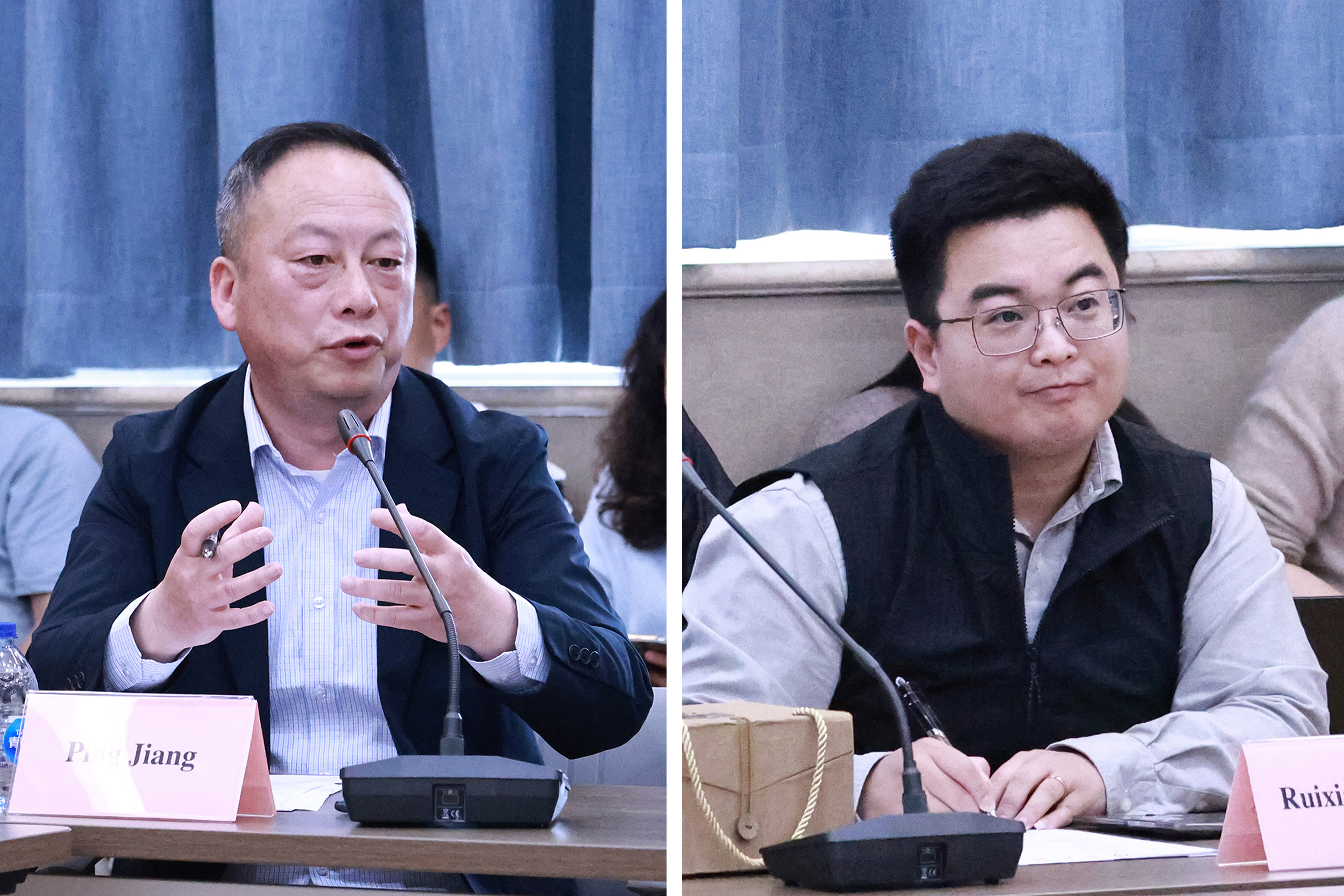
In the discussion, Associate Professor Jiang highlighted the often-overlooked role of oil in global food security through fertilizer production and noted that geopolitical tensions in regions such as the Red Sea may have cascading effects on global agricultural systems. Associate Professor Huang commended the lecture’s integration of material and financial dimensions and raised questions about how oil capital contributes simultaneously to regional expansion and global inequality.
During the Q&A session, questions addressed topics such as the potential challenge of “petro-yuan” arrangements to U.S. dollar dominance, the energy demands of AI data centers, and Gulf states’ renewable energy strategies.
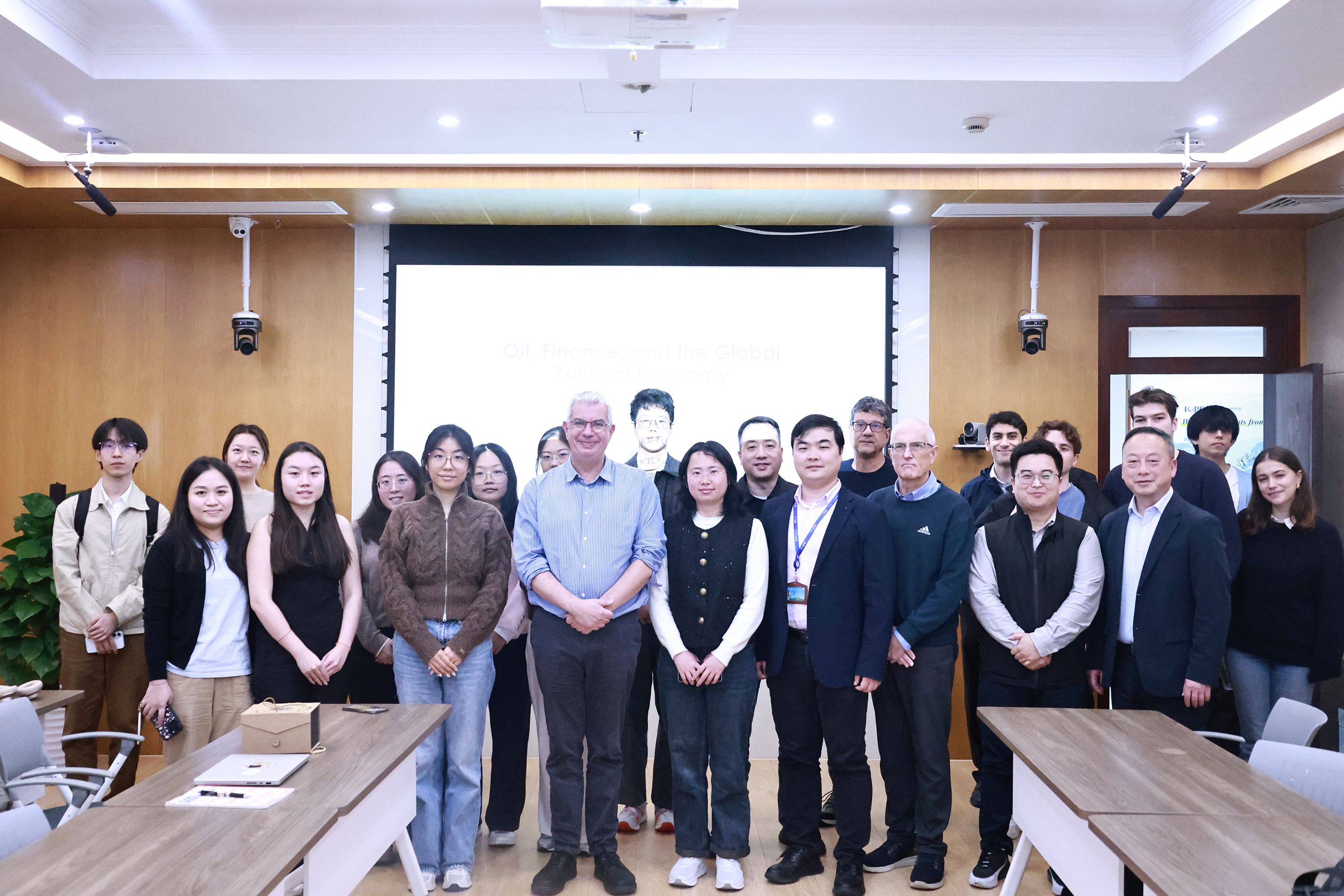
After the lecture, Associate Professor Qian presented commemorative gifts to Professor Hanieh. The event concluded with a group photo of the faculty and students.