Events


On May 13, 2026, the Fudan Institute for Global Public Policy (IGPP) organized the 87th lecture of the Fudan-LSE Lecture Series. Professor Robin Haunschild from the Max Planck Institute for Solid State Research delivered a lecture on the theme of Using Global Overlay Maps and OpenAlex for Responsible Research Assessment. The event was chaired by Associate Professor Meijun Liu from IGPP, with Associate Professor Yin Li from the School of International Relations and Public Affairs at Fudan University serving as the discussant.
Professor Haunschild is a chemist by education and a scientometrician by training. He joined the Central Information Service for the institutes of the chemical, physical, and technical section of the Max Planck Society (IVS-CPT) in 2014 which he is now leading. In 2024, he became Visiting Professor at Peking University. He has published more than 140 papers indexed in Clarivate’s Web of Science. He is an Associate Editor for the journals Scientometrics and Heliyon, an Academic Editor for PloS ONE, and he serves on the Editorial Boards of Journal of Informetrics, Journal of Data Information and Science, Information, and Metrics.
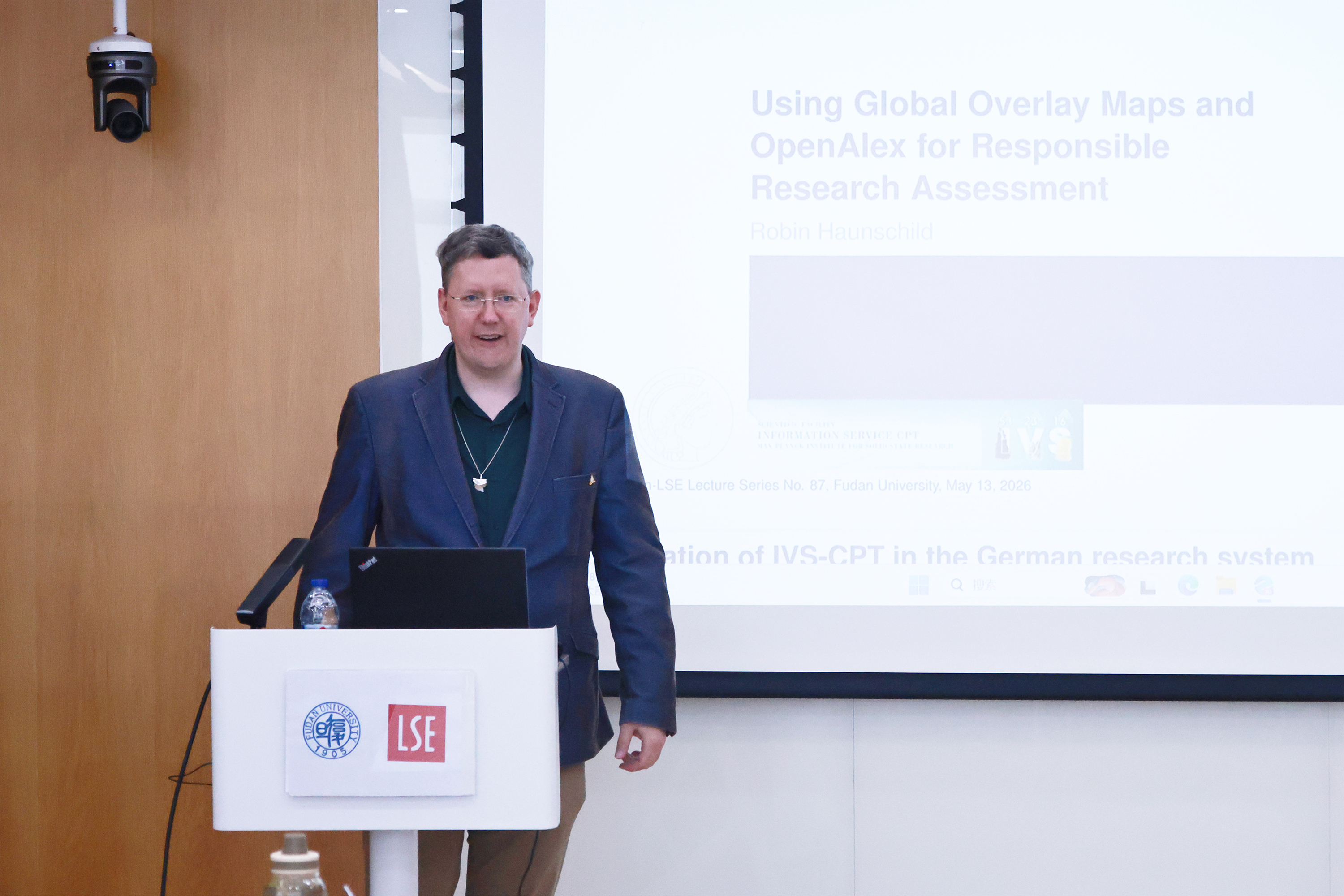
Professor Haunschild drew on his experience at the Max Planck Society to explain the close relationship between bibliometric services and evidence-based research governance. He noted that traditional bibliometric analysis has largely depended on proprietary databases, which are constrained by high costs and limited accessibility. To address these limitations, he introduced OpenAlex, a free and open scholarly knowledge database. By August 2023, OpenAlex had accumulated more than 240 million records. Its open data infrastructure and extensive coverage provide a robust foundation for constructing comprehensive global science maps while reducing fragmentation and potential biases in research evaluation.
Professor Haunschild then discussed the development and advanced applications of global science overlay maps. In collaboration with researcher Lutz Bornmann, he developed an innovative approach that uses the “concept” tags in OpenAlex as fundamental nodes and constructs six global science base maps through citation windows and citation relationships, overcoming several methodological limitations of traditional clustering approaches. Using VOSviewer software, these maps can visualize and compare disciplinary structures and research impact across Nobel Prize winners, academic journals, and different countries. The approach can also evaluate how research outputs contribute to the United Nations Sustainable Development Goals (SDGs). Such visual tools provide a more comprehensive understanding of institutional research missions and assist funding agencies and governments in assessing the broader societal value of public research investment.
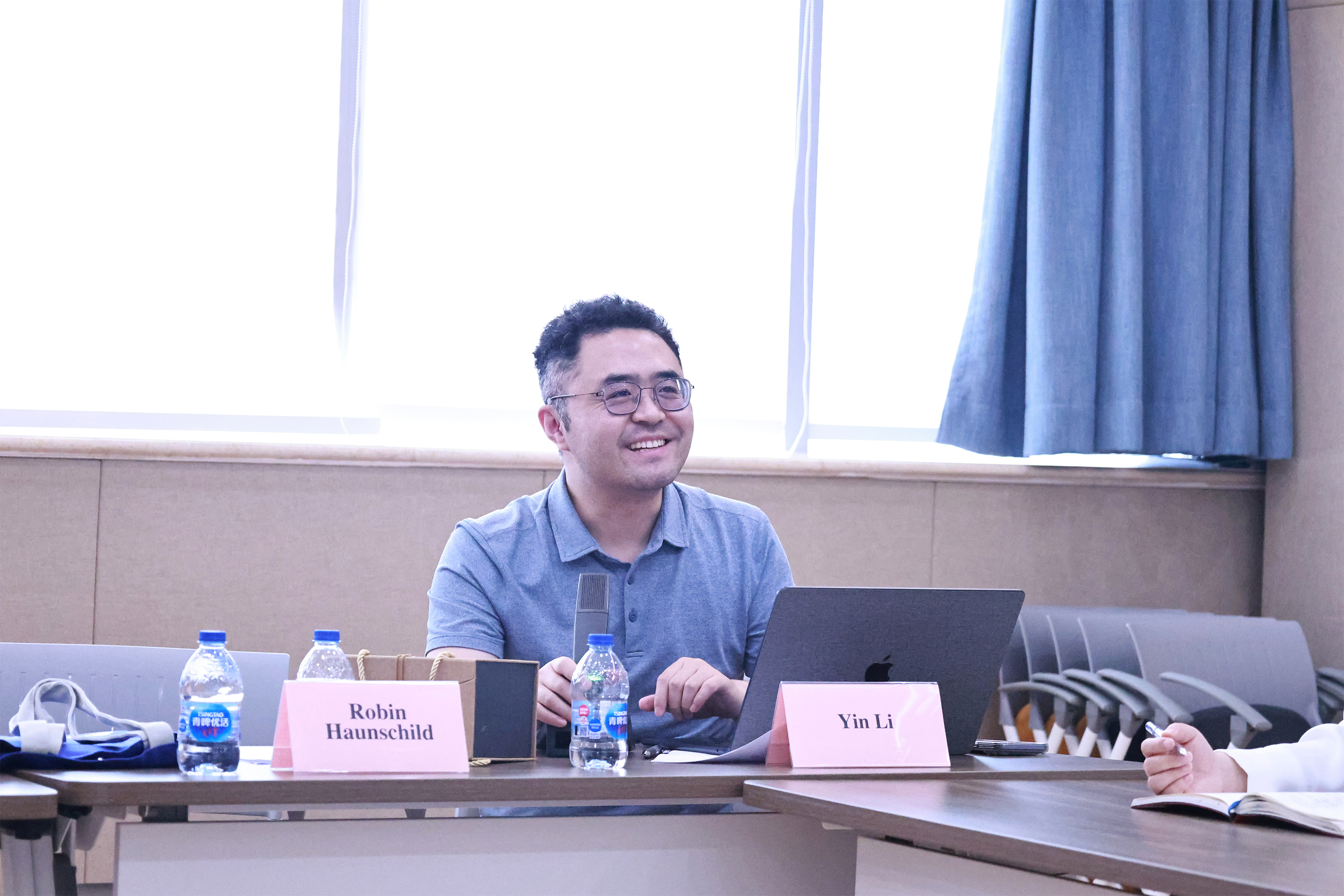
During the discussion session, Associate Professor Li highly highlighted the limitations of traditional research evaluation systems that focus narrowly on publication counts and citation metrics. He argued that such approaches may encourage distorted academic incentives and fail to capture research contributions toward addressing complex global challenges. In contrast, Professor Haunschild’s mapping approach transforms large-scale data into an intuitive “spatial narrative” and integrates the SDGs framework, offering policymakers a more responsible approach to balancing academic excellence with social impact. The audience also engaged in an in-depth discussion with Professor Haunschild on technical issues.
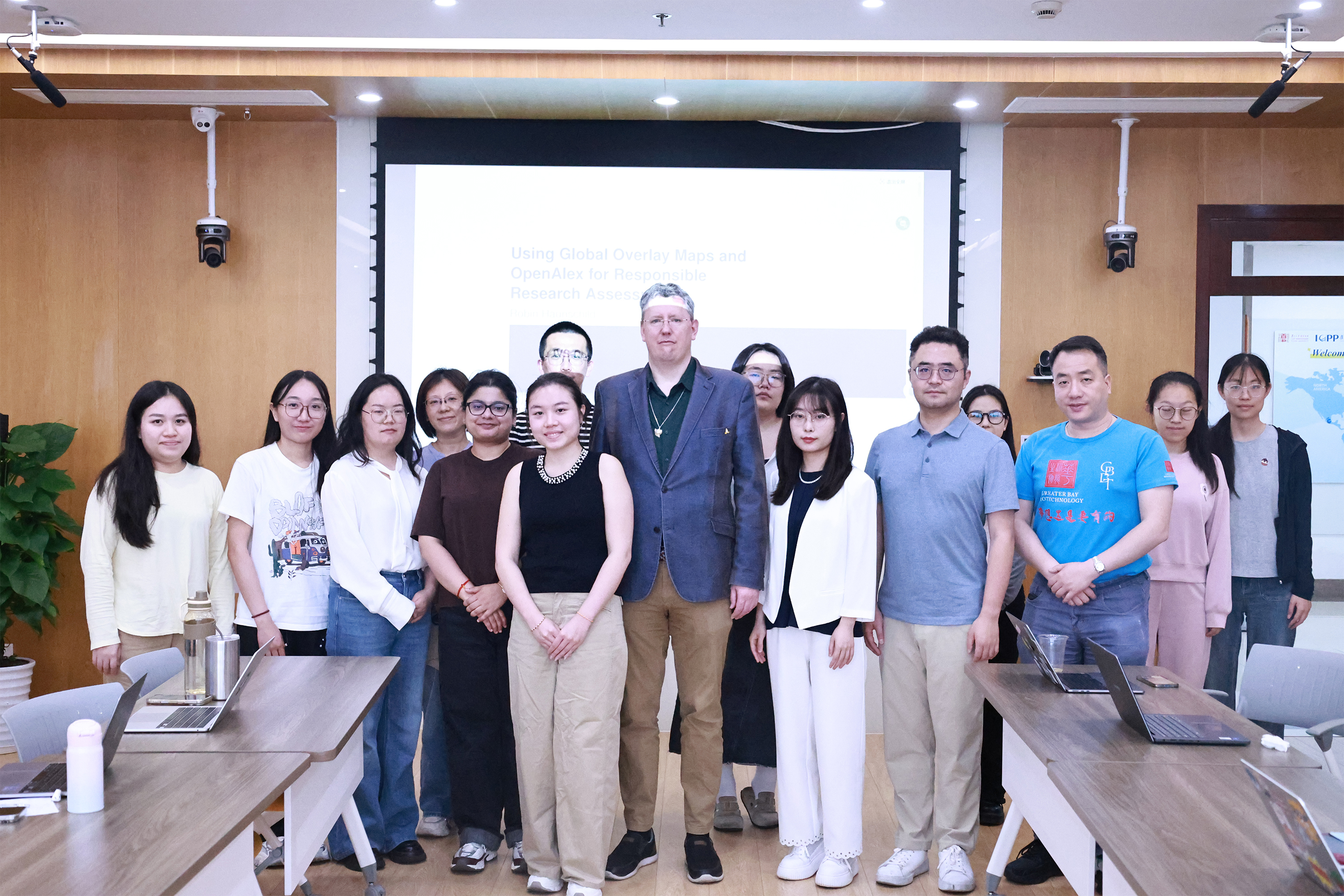
After the lecture, Associate Professor Liu presented commemorative gifts to Professor Haunschild. The event concluded with a group photo of the faculty and students.