Events


On May 20, 2026, the Fudan Institute for Global Public Policy (IGPP) organized the 90th lecture of the Fudan-LSE Lecture Series. Associate Professor Can Chen from Georgia State University delivered a lecture on the theme of State Budgetary Outcomes: Do CEO Governors Make a Difference? The event was chaired by Dean Yijia Jing Yijia of IGPP, with Associate Dean Haoqi Qian serving as discussants.
Associate Professor Chen is a tenured Associate Professor and Ph.D. advisor at the Andrew Young School of Policy Studies at Georgia State University. He also serves as Director of the joint Ph.D. Program in Public Policy between Georgia Institute of Technology and Georgia State University. He currently serves as President of the Chinese Policy Scholars Group (CPSG).
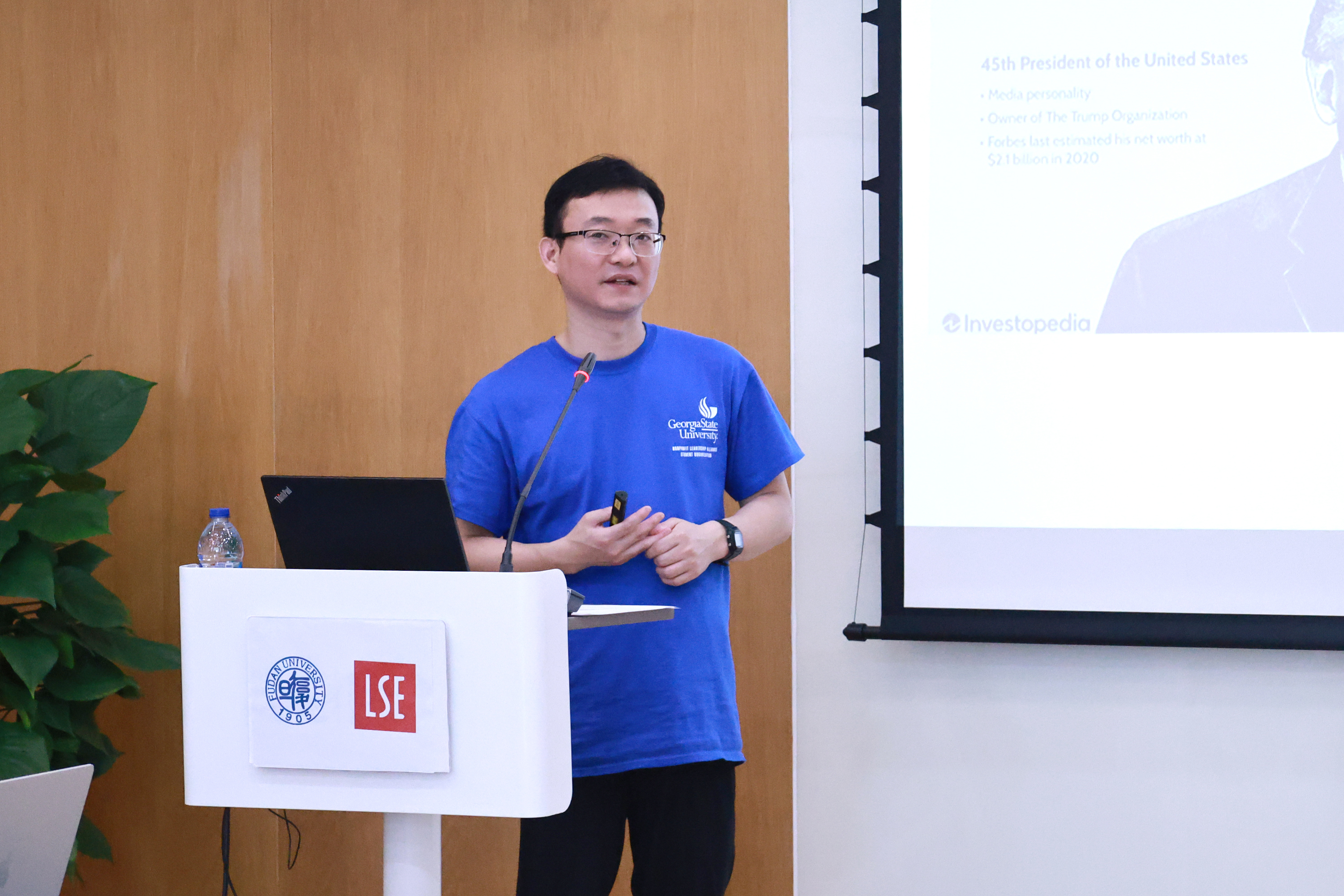
Associate Professor Chen began by introducing the motivation behind his research. He observed that an increasing number of individuals with private-sector CEO experience have been elected as U.S. state governors in recent years, raising an important question: can management experience acquired in the corporate sector improve fiscal governance in the public sector? His study specifically examines whether governors with CEO backgrounds influence state budget balance.
He then presented the theoretical foundations of the research, drawing on Upper Echelons Theory, Imprinting Theory, and Publicness Fit Theory. Based on these perspectives, he proposed two competing hypotheses. On the one hand, governors with CEO experience may possess stronger financial management skills, place greater emphasis on fiscal discipline, and be more willing to pursue efficiency-oriented reforms, thereby improving budget balance. On the other hand, they may face challenges adapting to the public sector, adopt leadership styles that are less compatible with democratic governance, or favor aggressive tax cuts and large-scale development projects, potentially undermining fiscal balance.
Associate Professor Chen also explained the study’s research design. To address the endogeneity problem arising from the non-random selection of governors, he employed a Regression Discontinuity Design (RDD). Using panel data on gubernatorial elections and state finances from 48 U.S. states between 1960 and 2010, the analysis compares CEO candidates who narrowly won elections with those who narrowly lost, thereby approximating random assignment and strengthening causal identification. He further showed that both the baseline analyses and multiple robustness tests consistently indicate that governors with CEO backgrounds significantly improve state budget balance. Their administrations reduce fiscal imbalances by narrowing the gap between revenues and expenditures while also decreasing both budget deficits and excessive surpluses. Theoretically, the research extends Upper Echelons Theory and Imprinting Theory to the study of public budgeting and fiscal governance, demonstrating how managerial experience acquired in the private sector can shape public-sector outcomes. Methodologically, the RDD addresses endogeneity concerns that have limited previous studies, providing more credible causal evidence.
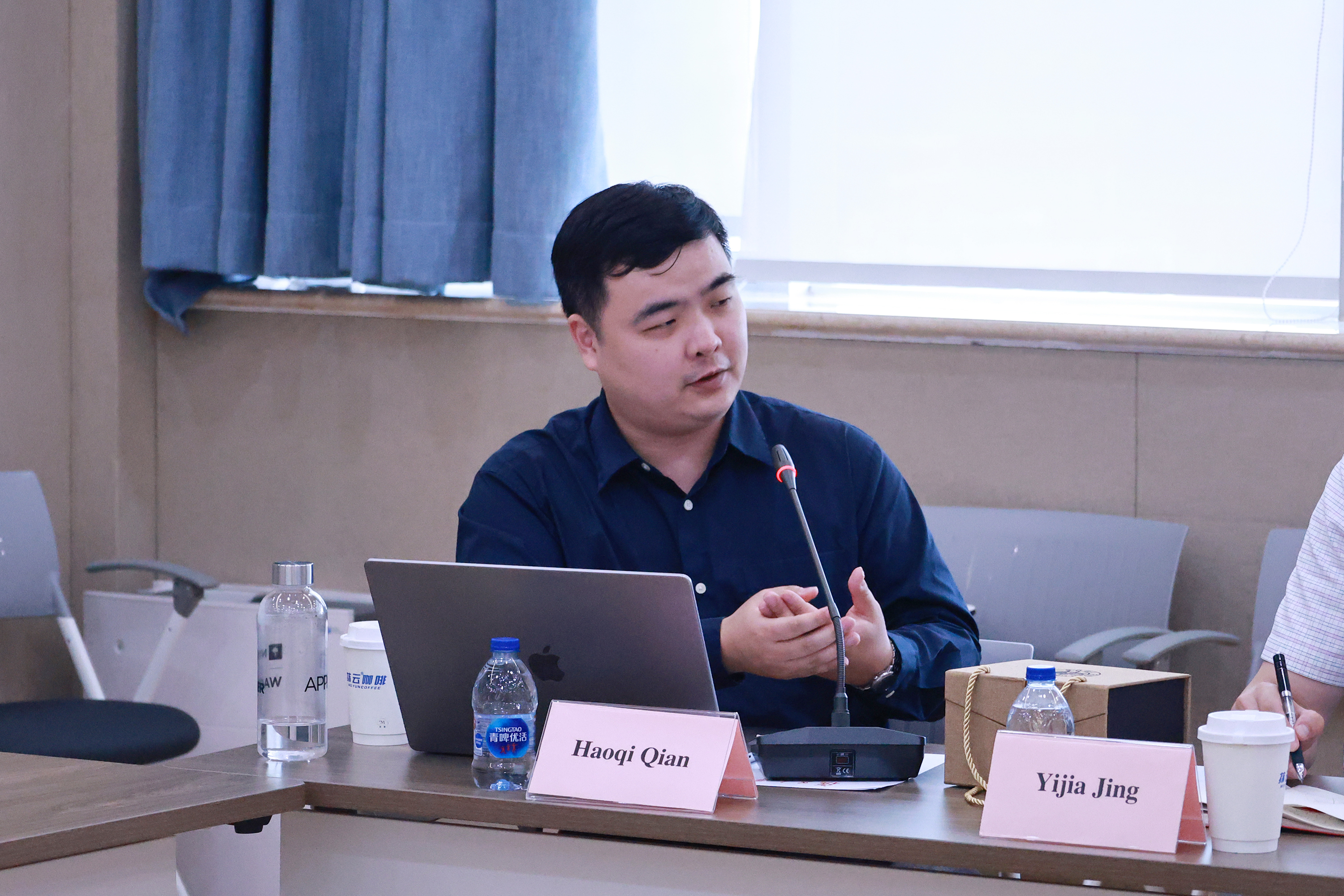
During the discussion session, Associate Dean Qian noted that incorporating leaders’ personal characteristics into the analysis of government behavior represents an important direction for future public management research. Building on this point, he explored the behavioral logic of CEO-style leaders, discussing the role of budget balance in public governance and its potential implications for public service provision. Drawing on relevant policy examples, he also considered how differences in leaders’ professional backgrounds may produce distinct policy outcomes. In response, Associate Professor Chen emphasized that the relationship between budget balance and public service provision varies across institutional contexts. The key is understanding how leaders’ backgrounds shape their policy preferences and the trade-offs they make among competing objectives. He stressed that these relationships should always be interpreted within the broader institutional and political constraints under which public officials operate. The subsequent Q&A session featured lively discussions on topics including how leadership characteristics can be incorporated into empirical research frameworks.
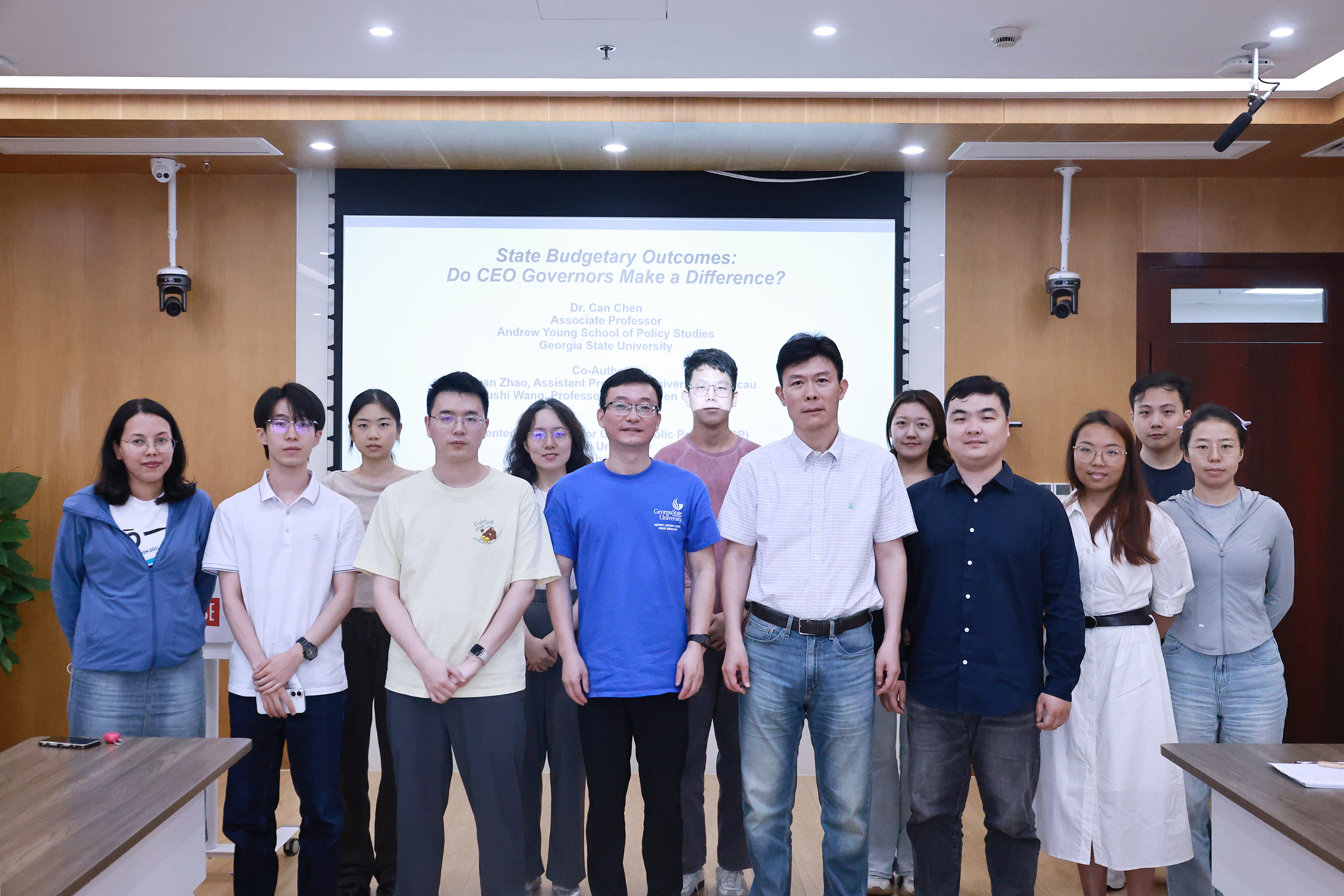
After the lecture, Dean Jing presented commemorative gifts to Associate Professor Chen. The event concluded with a group photo of the faculty and students.