Events


On May 22, 2026, the Fudan Institute for Global Public Policy (IGPP) organized the 91st lecture of the Fudan-LSE Lecture Series. Professor Vivien A. Schmidt from the American Academy of Arts and Sciences delivered a lecture on the theme of Political Challenges to the Global Order. The event was chaired by Dean Yijia Jing of IGPP.
Professor Schmidt is an elected member of the American Academy of Arts and Sciences, an honorary doctorate from the Free University of Brussels, Jean Monnet Professor of European Integration, Professor Emerita of International Relations in the Frederick S. Pardee School of Global Studies and Professor Emerita of Political Science as well as Founding Director of the Center for the Study of Europe at Boston University. Her research focuses on European political economy, institutions, democracy, and political theory. Her latest book is Europe’s Crisis of Legitimacy: Governing by Rules and Ruling by Numbers in the Eurozone (2020)—recipient of the Best Book Award of the American Political Science Association’s Ideas, Knowledge, Politics section and Honorable Mention for the Best Book Award of the European Union Studies Association.
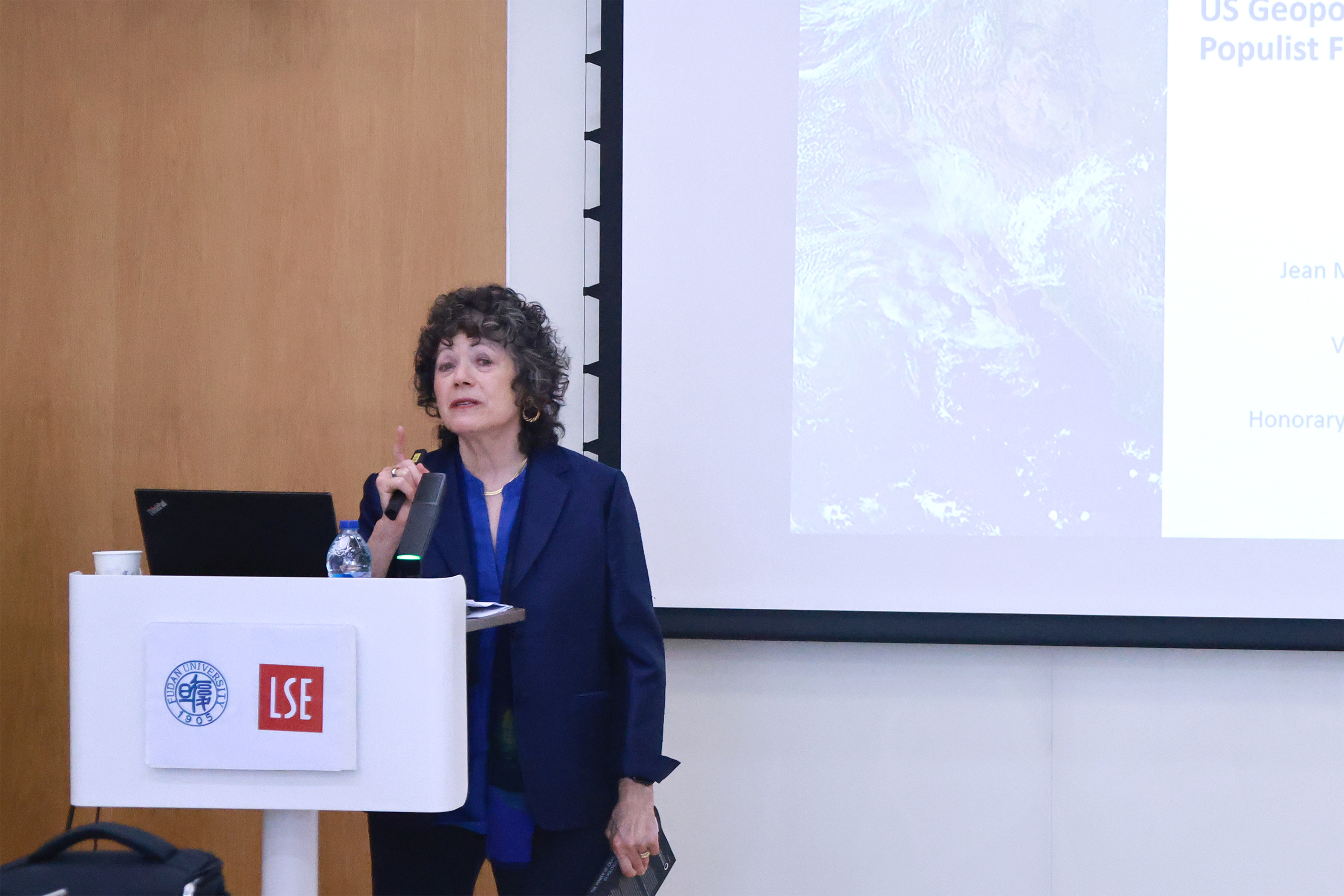
Professor Schmidt opened the lecture by applying her discursive institutionalism framework to examine the internal and external political challenges confronting contemporary global governance. She summarized the external challenges with three key concepts: geopolitical disruption, geoeconomic instability, and democratic erosion. She argued that the United States, which had served as the principal guarantor of global stability and a symbol of democratic leadership since the 1940s, has undergone a profound transformation in its political discourse and foreign policy orientation. She also noted that the United States’ withdrawal from numerous international organizations, including the WHO, has weakened global development assistance and reduced international capacity to respond effectively to public health crises. At the same time, uncertainty surrounding U.S. commitments to NATO’s collective defense obligations has diminished allies’ confidence in existing security arrangements.
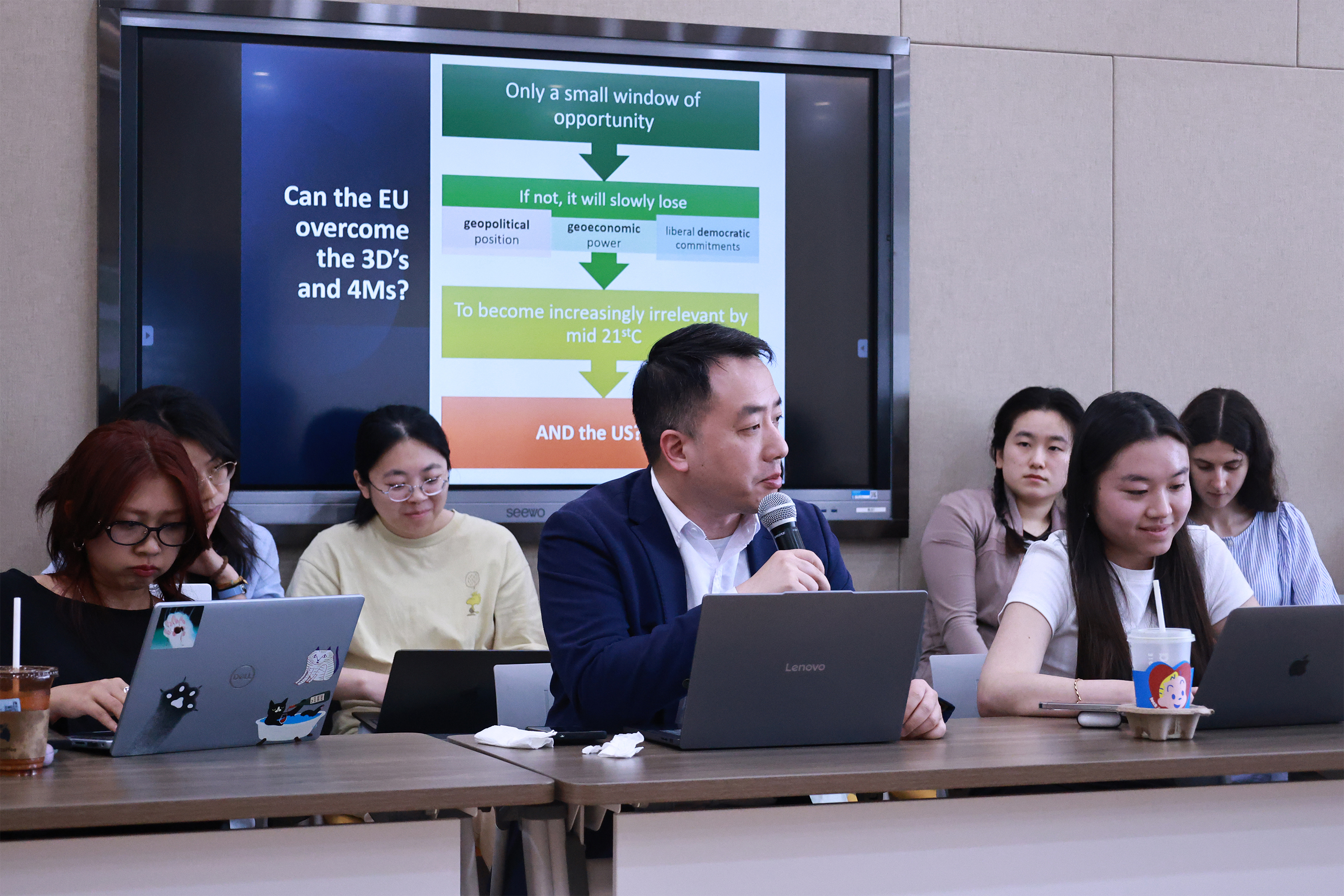
Professor Schmidt further argued that fluctuations in U.S. tariff policy, retreat from climate commitments, and the dismantling of international regulatory frameworks have increasingly weaponized economic interdependence through technological and financial instruments, contributing to both weakened public regulation and democratic backsliding. To explain what she described as a theoretical blind spot in traditional international relations and international political economy, she introduced a populist discourse framework centered on four interconnected dimensions: message, messenger, medium, and milieu. She argued that Donald Trump effectively leveraged social media algorithms to amplify public dissatisfaction while mobilizing support through identity politics and exclusionary nationalism. Turning to Europe, Professor Schmidt described the European Union as facing a profound institutional dilemma. Increasing political polarization, she argued, has replaced broad-based consensus with what she termed a “constraining dissensus,” making collective decision-making more difficult. She warned that Europe faces a narrowing window of opportunity to strengthen its institutional capacity and maintain its role within the international order.
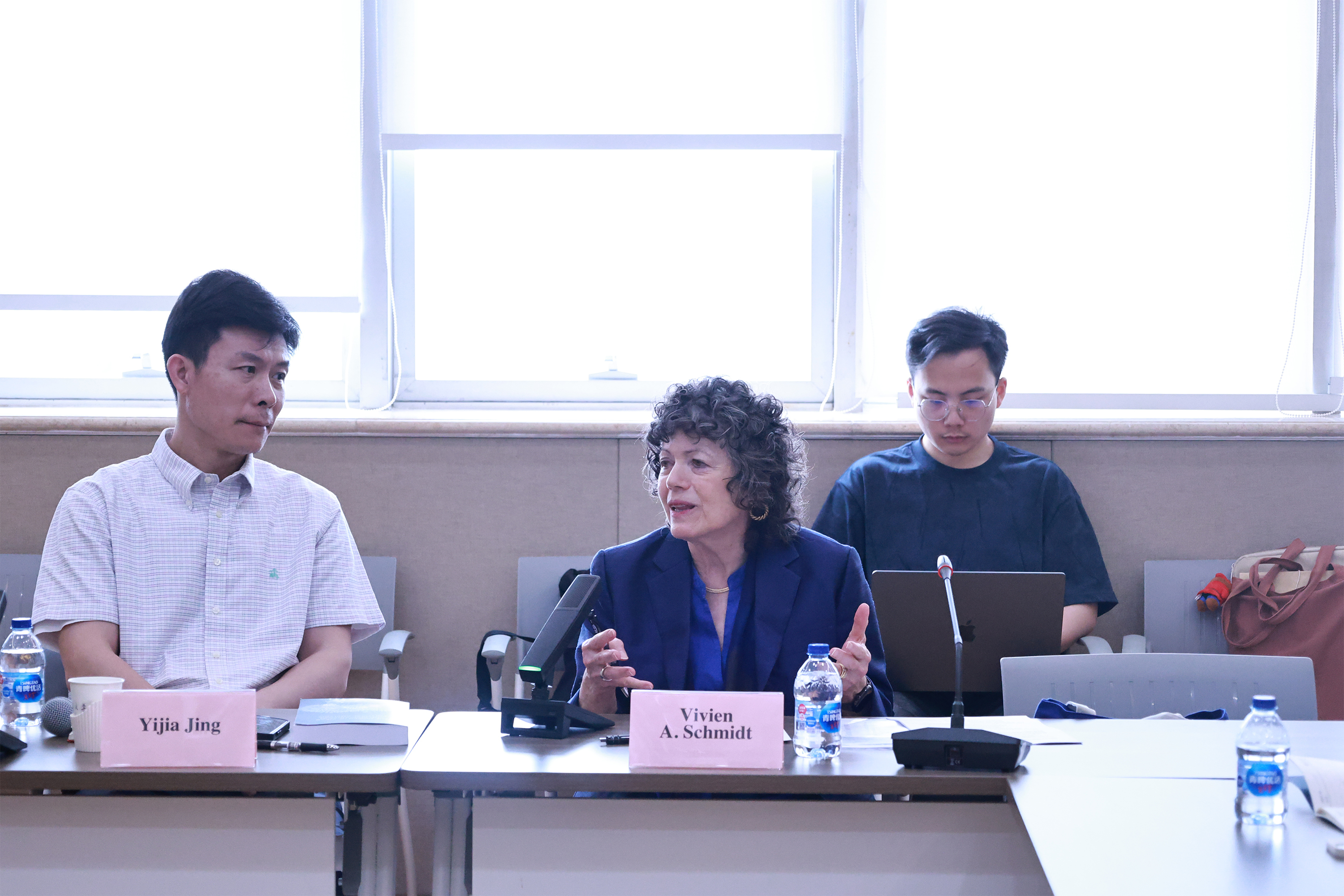
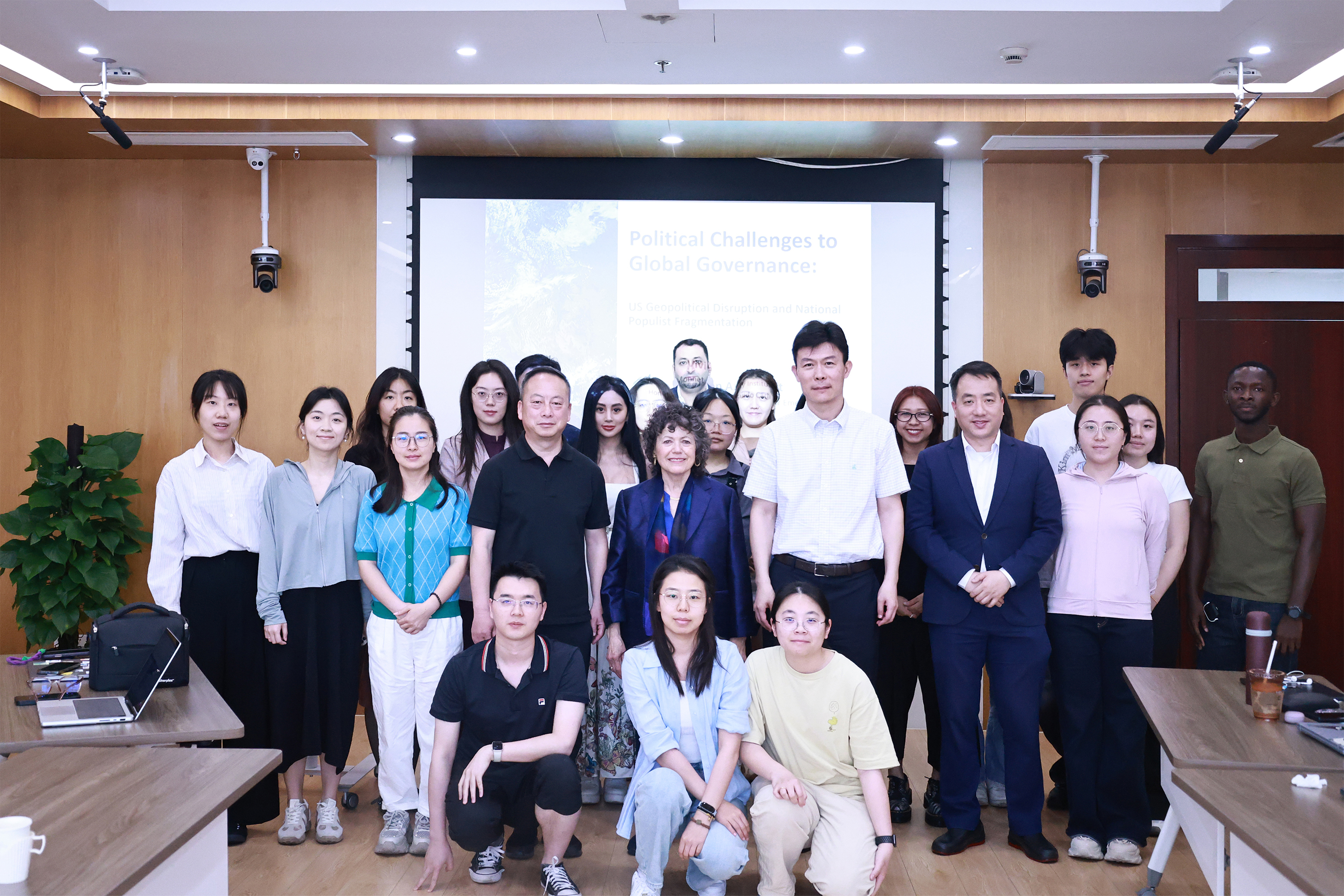
During the discussion session, faculty members and students engaged Professor Schmidt on a range of contemporary issues, including the prospects for rebuilding multilateralism and free trade cooperation among Europe, China, the United States, and Russia. After the lecture, Dean Jing presented commemorative gifts to Professor Schmidt. The event concluded with a group photo of the faculty and students.